
- Home
- Commercial
- Hospitality Restoration
Getting guest spaces dry after leaks
Dryline cleans up water and storm damage for hotels, motels, restaurants, and short term rentals across the Las Vegas valley while working around your guests.
- Phones answered 24 hours
- Six stocked response trucks
- IICRC WRT lead technicians
 Paradise · Demo photo
Hospitality spaces our crews dry
From stacked guest suites to busy dining rooms, our valley based crews contain wet areas and coordinate directly with your on-site management team.
Hotel and motel guest rooms
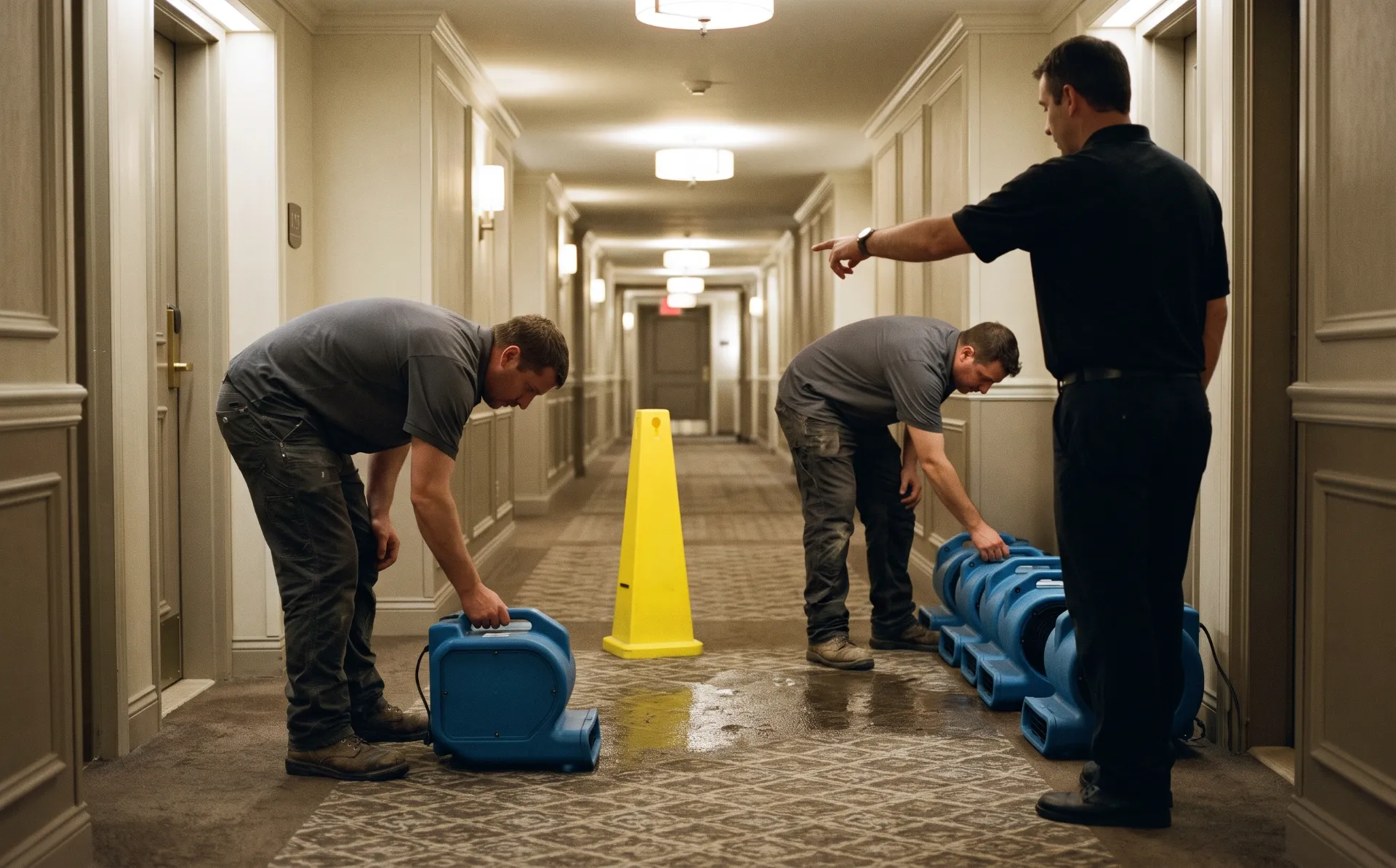
When a pipe or fixture leaks into a room, we extract water, map wet walls and carpet pad, and dry affected rooms in planned stages.
Guest corridors and stairwells
Water moving down hallways is extracted and contained so traffic paths stay clear and unaffected rooms can stay open where conditions allow.
Lobbies and reception areas
Storm runoff at entrances or overhead leaks in common spaces are cleaned and dried with careful equipment placement.
Back of house and laundry rooms
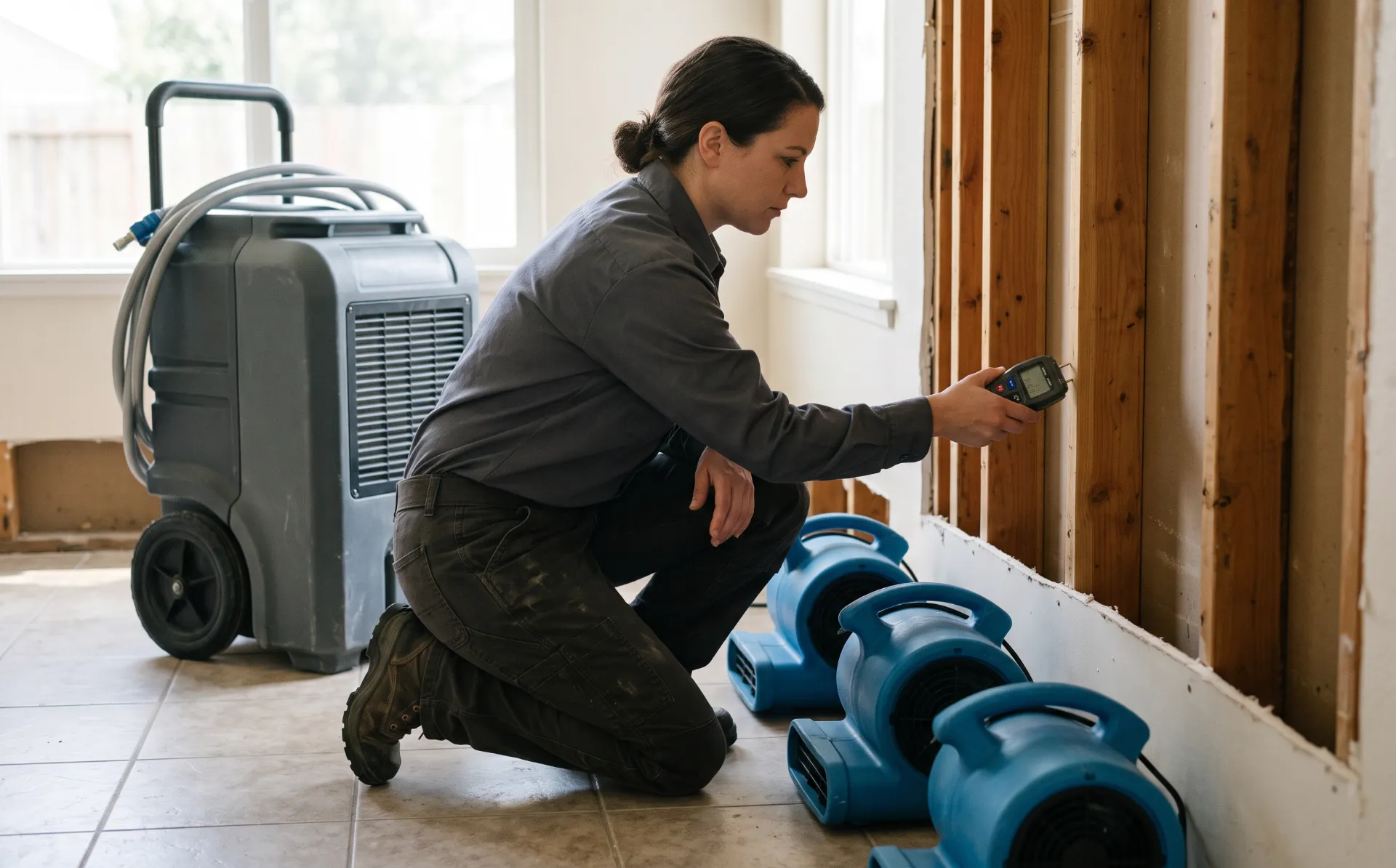
Utility rooms, linen storage, and staff hallways are inspected with moisture meters so hidden water does not spread behind walls.
Restaurants and kitchen spaces
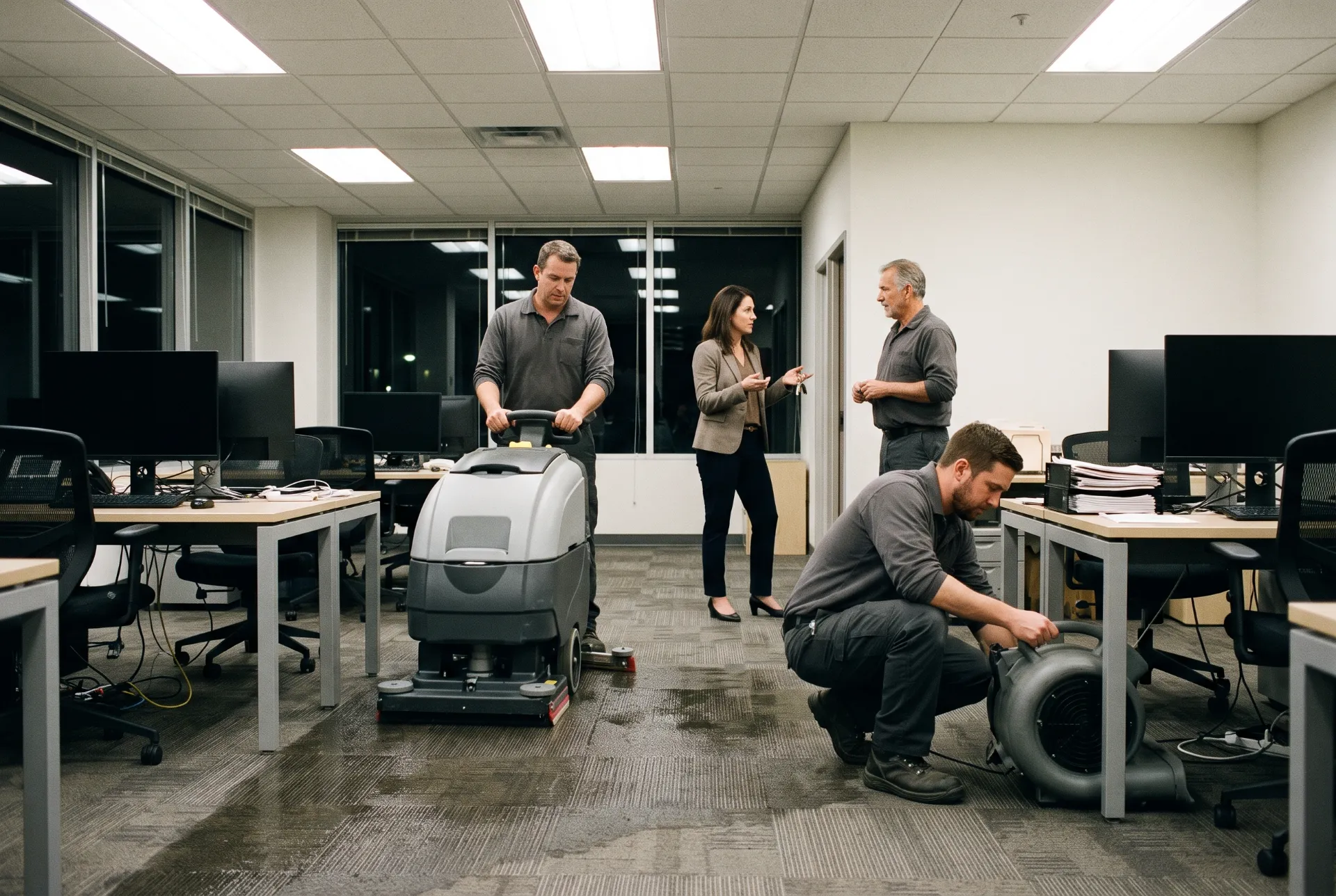
We extract standing water, clean affected dining and kitchen surfaces, and dry structural materials before repairs begin.
Short term rental properties
Hosts and managers of valley vacation homes get photo documentation, moisture logs, and licensed interior repairs under one project manager.
 Summerlin · Demo photo
Water incidents in hospitality buildings
Water in a guest building rarely stays in one room. Our technicians trace moisture across walls, ceilings, and floors before setting drying equipment.
Supply line and fixture leaks An overflowing tub or failed toilet line can soak ceilings below. We map moisture across every affected floor.
Kitchen drain backups When gray or black water backs up in a kitchen, crews wear protective equipment, remove soaked porous items, and disinfect.
Roof leaks over guest floors Monsoon rain coming through flat roofs or concrete tiles is extracted and dried, with temporary roof tarping if needed.
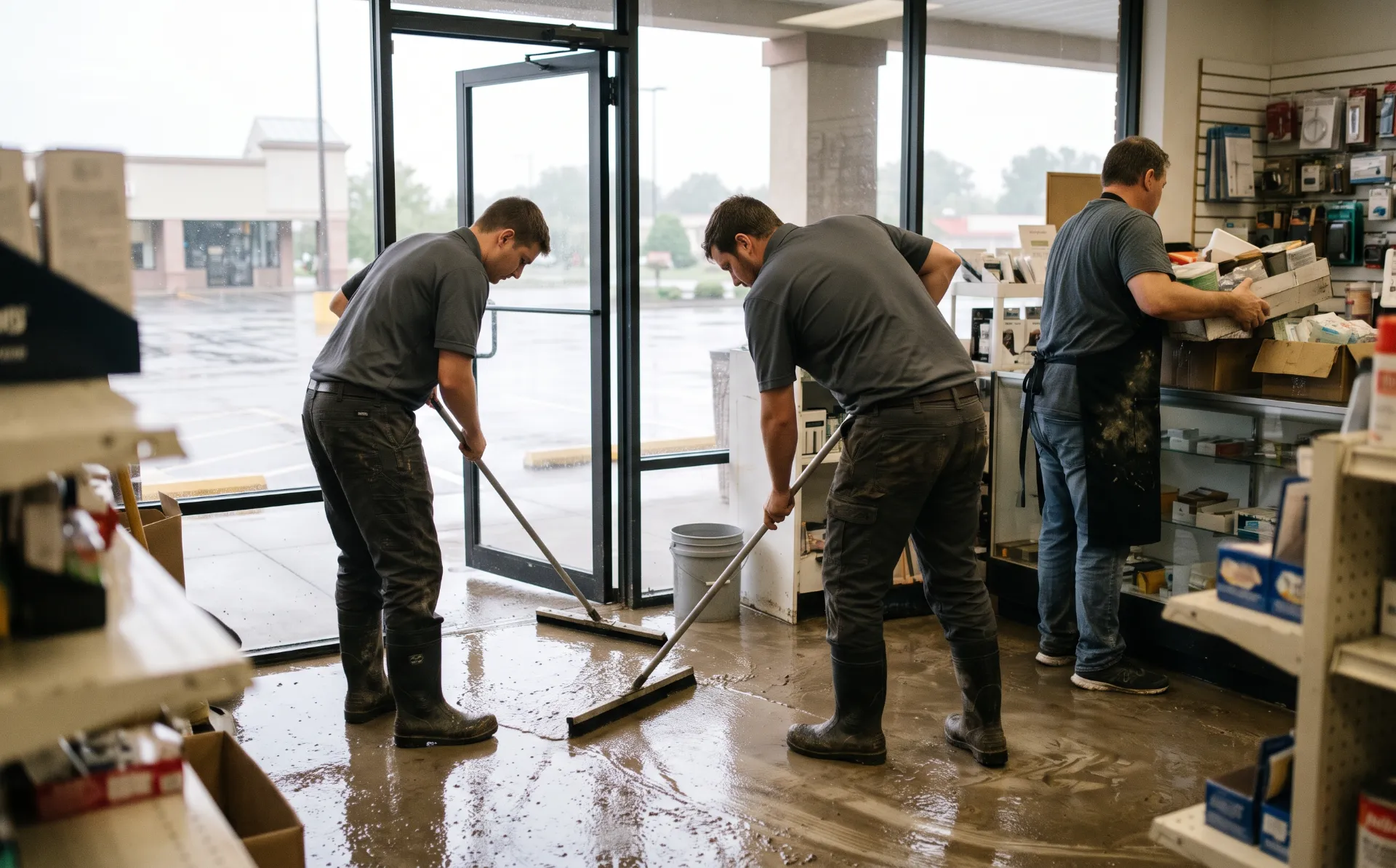
Storm water at building doors Valley flash flooding can push mud and debris under lobby or patio doors. We pump out water and clean hard surfaces.
Odors after water damage Mold can begin growing on wet materials within 24 to 48 hours. We remove wet sources first, then use air scrubbers for odor.
 Summerlin · Demo photo
Keeping unaffected rooms in service
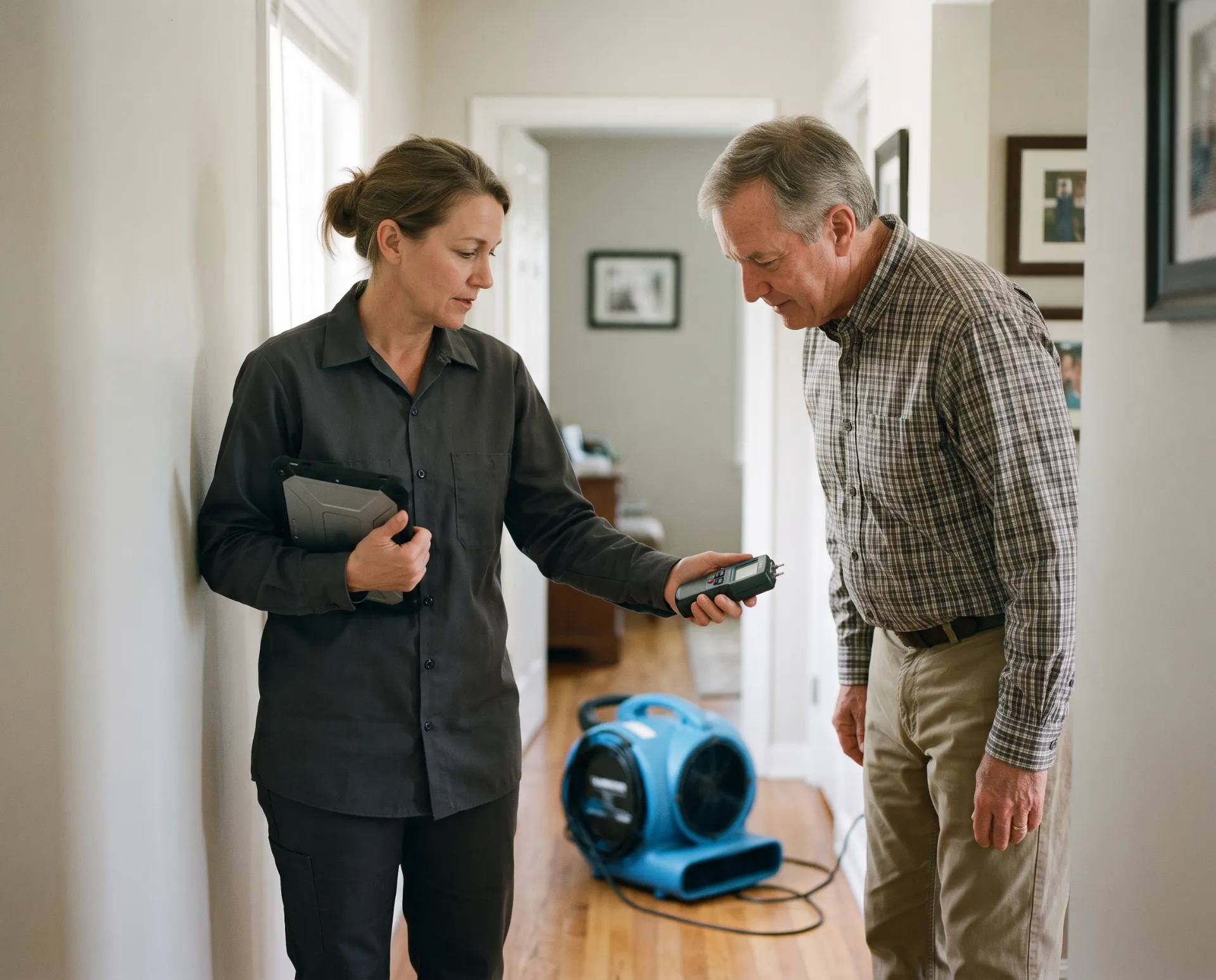
Putting an entire wing out of order disrupts guests, so we map moisture carefully to pinpoint which rooms must close. Affected suites are contained so open areas can stay in service where conditions allow. Your project manager reviews equipment noise and quiet hours with you before work starts.
We phase drying and interior repairs to hand rooms back as moisture readings reach target levels, rather than waiting for every room to finish together. Because drying time depends on the materials, water category, and length of exposure, it often takes several days and Dryline never promises a handback date. Updates are provided at each scheduled monitoring visit.
- Exact list of out of order rooms and open guest zones
- Quiet hours for noisy extraction or wet material removal
- Back of house access routes for hoses, gear, and crews
- The order in which rooms should be prioritized for return
From first call to room handback
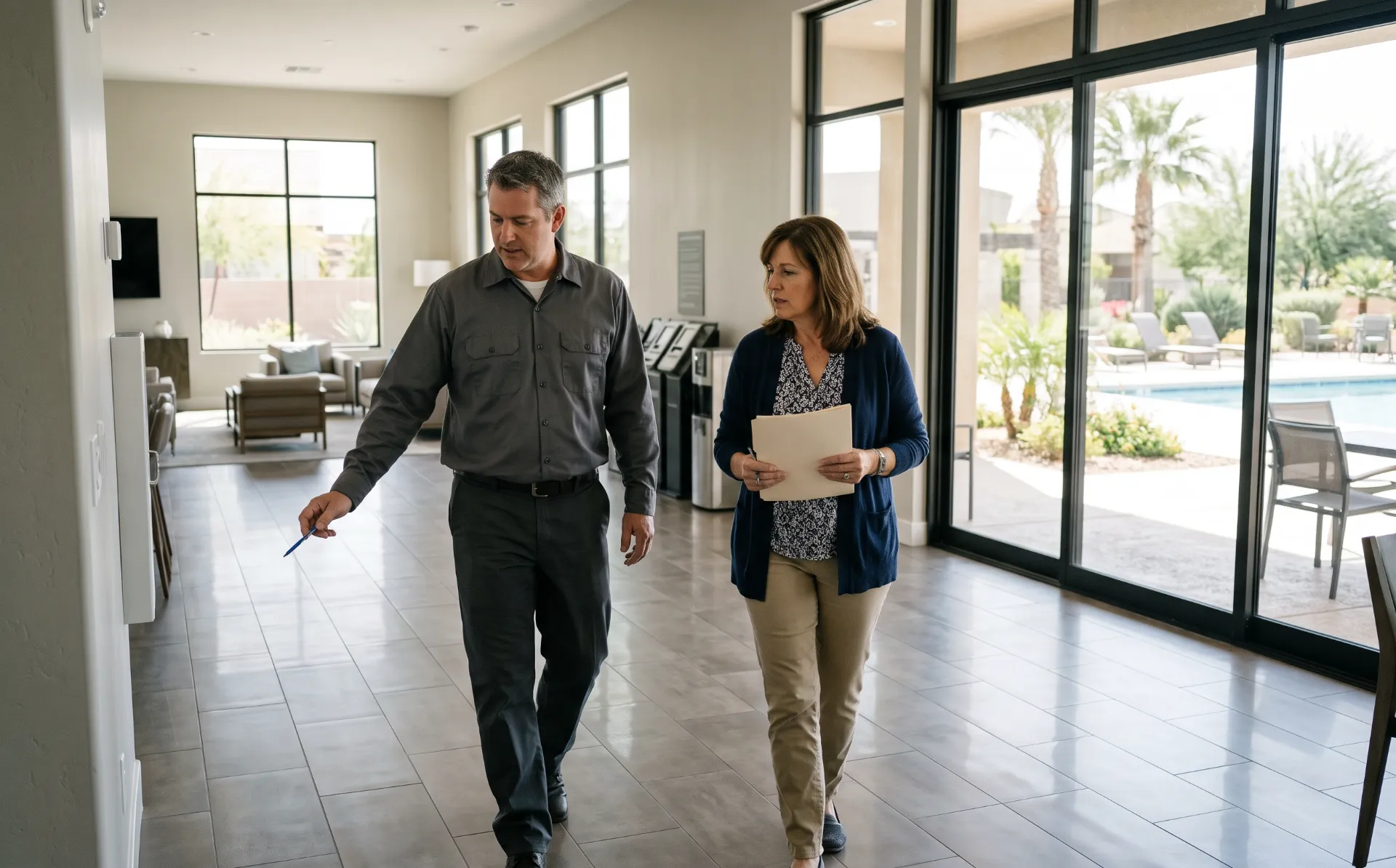
One Dryline project manager stays assigned to your property from the initial moisture inspection through final repairs and walkthrough.
- 1
Call and confirm site contact
Call our 24-hour line to speak with a team member who collects property details and gives an arrival estimate before you hang up.
- 2
Contain zones and extract
Crews isolate affected rooms, remove standing water, and pull unsalvageable carpet pad or drywall only after written explanation.
- 3
Dry and log room readings
Air movers and dehumidifiers run while technicians log moisture readings at scheduled visits so you can track each room's progress.
- 4
Repair and hand rooms back
Dryline completes drywall, paint, trim, and flooring repairs under our contractor license and walks finished rooms with your manager.
Records we share and details we need
Clear records help hospitality owners, corporate teams, and adjusters review every room affected by a leak or storm.
For your owner and adjuster
- Dated room by room damage and progress photos
- Moisture maps showing wet walls, floors, and ceilings
- Logged drying readings from each monitoring visit
- Equipment logs and adjuster formatted line-item estimate
- Final invoice and room completion documentation
What we need from your team
- Primary site contact and after-hours phone number
- Key cards, access codes, and service elevator rules
- List of affected rooms and adjacent occupied suites
- Locations of water shutoff valves and electrical panels
- Name of the person who can sign work authorizations
Free Priority Response enrollment puts your shutoff map, contacts, agreed rates, and insurance certificates on file ahead of time, with priority over non emergency calls in storms.
Hospitality restoration questions
How do you manage equipment noise and after-hours work around guests?
Drying equipment must run continuously to remove moisture, though we discuss placement and containment with your manager to reduce disruption near occupied rooms. Our crews are on call nights, weekends, and holidays, so noisy extraction or removal can often be timed around guest hours. Exact schedules depend on active water conditions.
How many wet guest rooms can Dryline handle at once?
Dryline has six response trucks and eighteen team members serving the Las Vegas valley only, and we assess room count and equipment needs during your first call. We tell you honestly what our crew can staff without stretching drying quality. We do not operate as a large loss catastrophe contractor.
How do you handle lingering odors in rooms or corridors?
Odor control starts by removing the wet or contaminated materials causing the smell, such as soaked carpet pad or affected drywall. Once the source is out and surfaces are cleaned, our crews run HEPA air scrubbers and deodorization treatments. Dryline never guarantees complete odor removal before inspecting the materials.
Can Dryline clear our restaurant kitchen for health inspection?
Dryline extracts water, cleans and disinfects affected surfaces, and dries structural materials, while plumbing repairs go to licensed plumbers. Health department approval and reopening clearance are the restaurant operator’s responsibility, and Dryline cannot advise on health inspections or confirm a kitchen is safe to reopen.
How does Dryline work with hospitality property insurance?
Your insurance carrier decides coverage, and Dryline never promises claim approval. With your permission, we work with any insurer’s adjuster and supply photos, moisture maps, drying logs, and an itemized estimate. Your business remains responsible for the policy deductible and any work not covered.
Related services

Cleanup when water hits your business
Dryline handles water extraction, structural drying, and repairs for offices, retail, hospitality, multifamily, and industrial properties across the Las Vegas valley.
Read more
Getting your shop dry after a flood
Dryline handles storefront flood cleanup, stock protection, and structural drying for shops, salons, and retail centers across the Las Vegas valley.
Read morePlanning before water hits your site
Dryline's free Priority Response Program prepares Las Vegas valley businesses, property managers, HOAs, and senior living teams before a leak or storm happens.
Read more
Call for water cleanup or Priority Response
Serving hotels, restaurants, and rentals across the Las Vegas valley. Call for active water or enroll free in Priority Response; website forms are read in office hours and never confirm a crew.