- Home
- Commercial
- Multifamily Restoration
Drying apartments and condo buildings
When water moves between units, Dryline inspects, extracts, dries, and documents every affected apartment or condo across the Las Vegas valley.
- Live team answers 24 hours
- Six stocked response trucks
- Over 5,000 properties dried
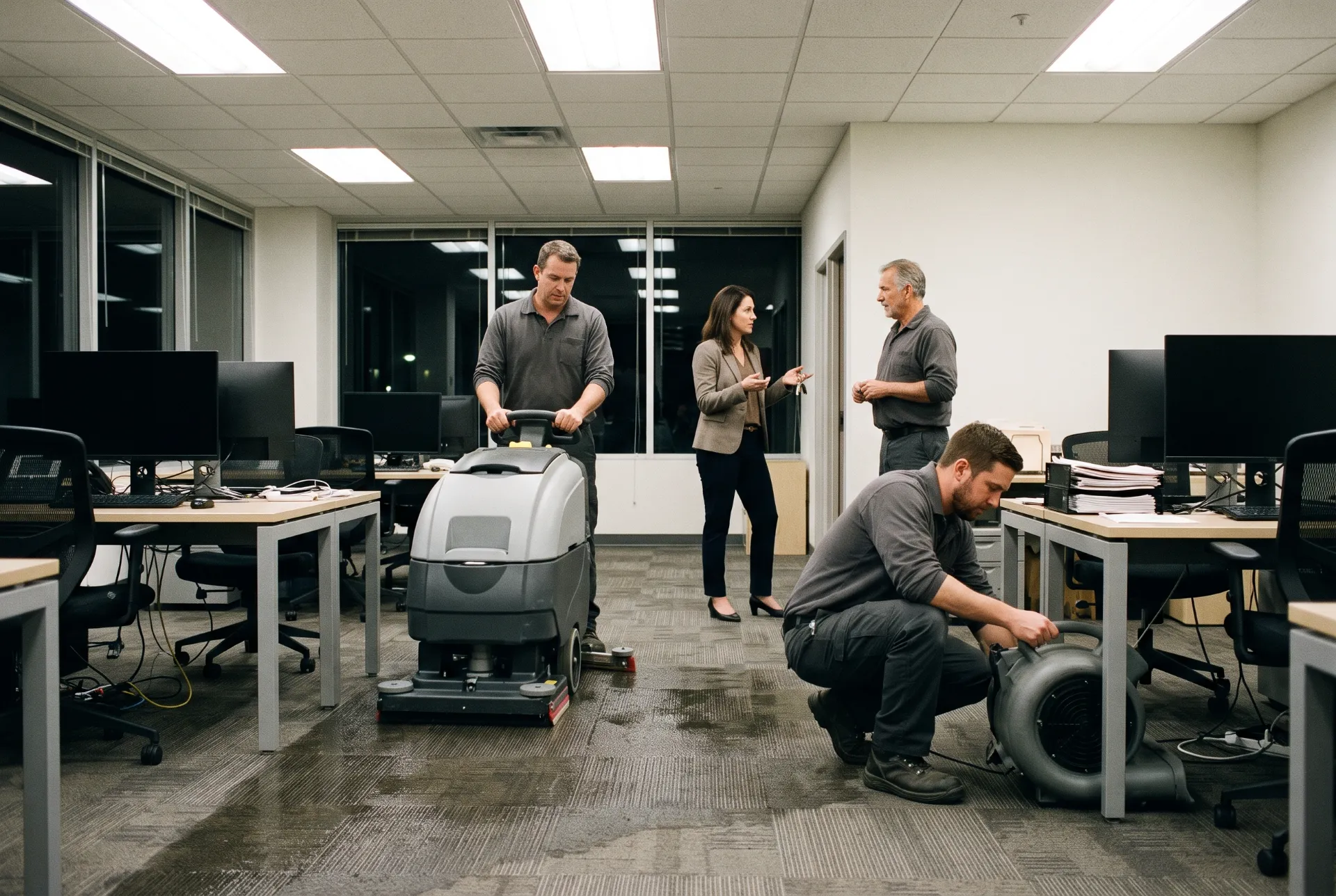
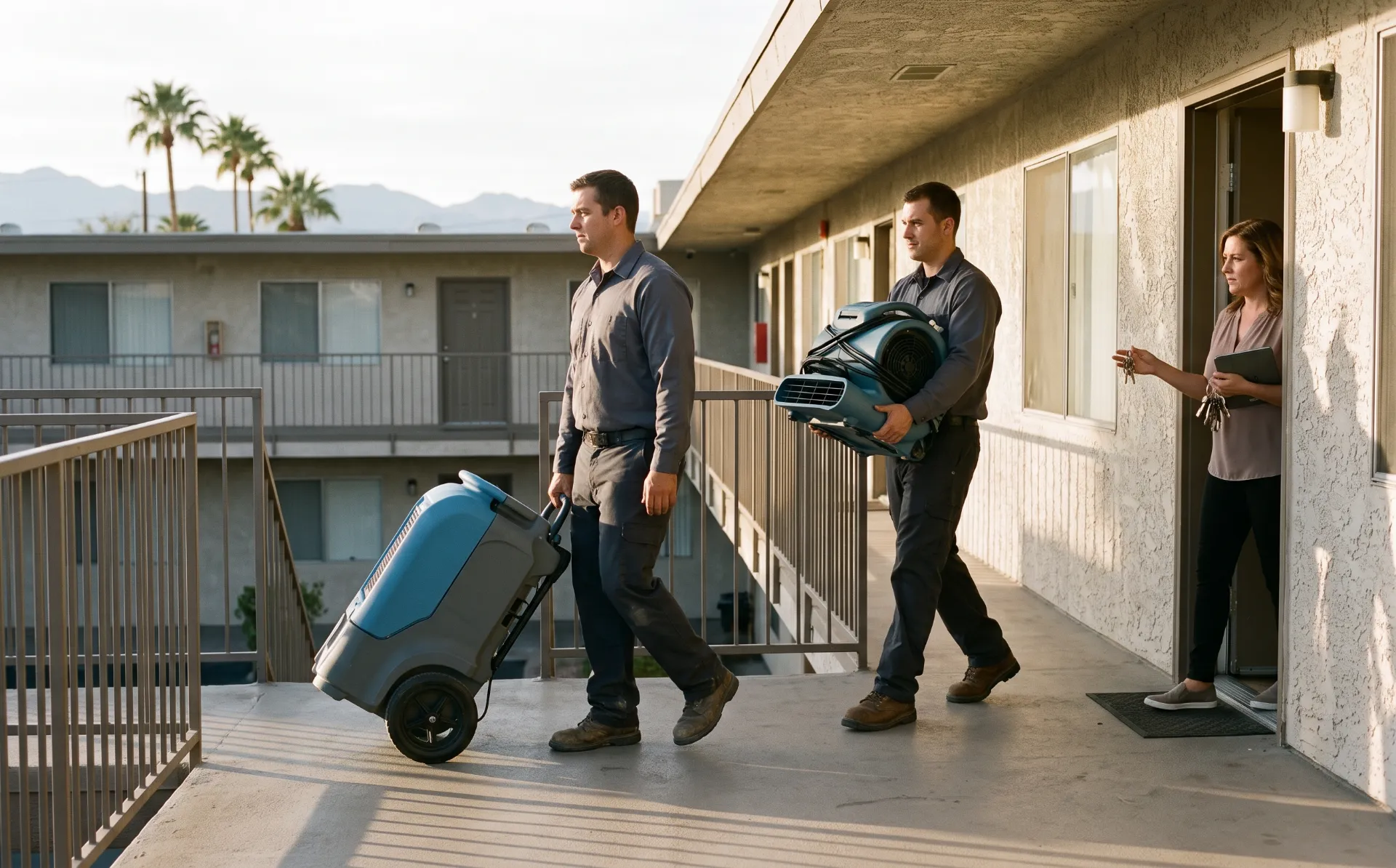 Spring Valley · Demo photo
Multifamily properties we restore
We serve apartment communities, condominium associations, and residential buildings across Clark County. Every job stays inside the Las Vegas valley so our crews remain local.
Garden style apartment buildings
Two and three story residential buildings where upstairs leaks travel down into lower kitchens, closets, and living rooms.
Condominium buildings
Owner occupied and leased condo units where water crosses between private interiors and shared association walls.
Townhome communities
Attached residences sharing rooflines and party walls where rain or pipe breaks affect neighboring homes at the same time.
Student and workforce housing
High occupancy apartment units where clear access schedules and individual unit logs keep turnovers organized.
Senior living communities
Residential care and independent living apartments where quiet coordination with on-site staff matters for resident comfort.
Clubhouses and HOA common areas
Leasing offices, laundry rooms, mail lobbies, and shared corridors affected by plumbing leaks or monsoon runoff.
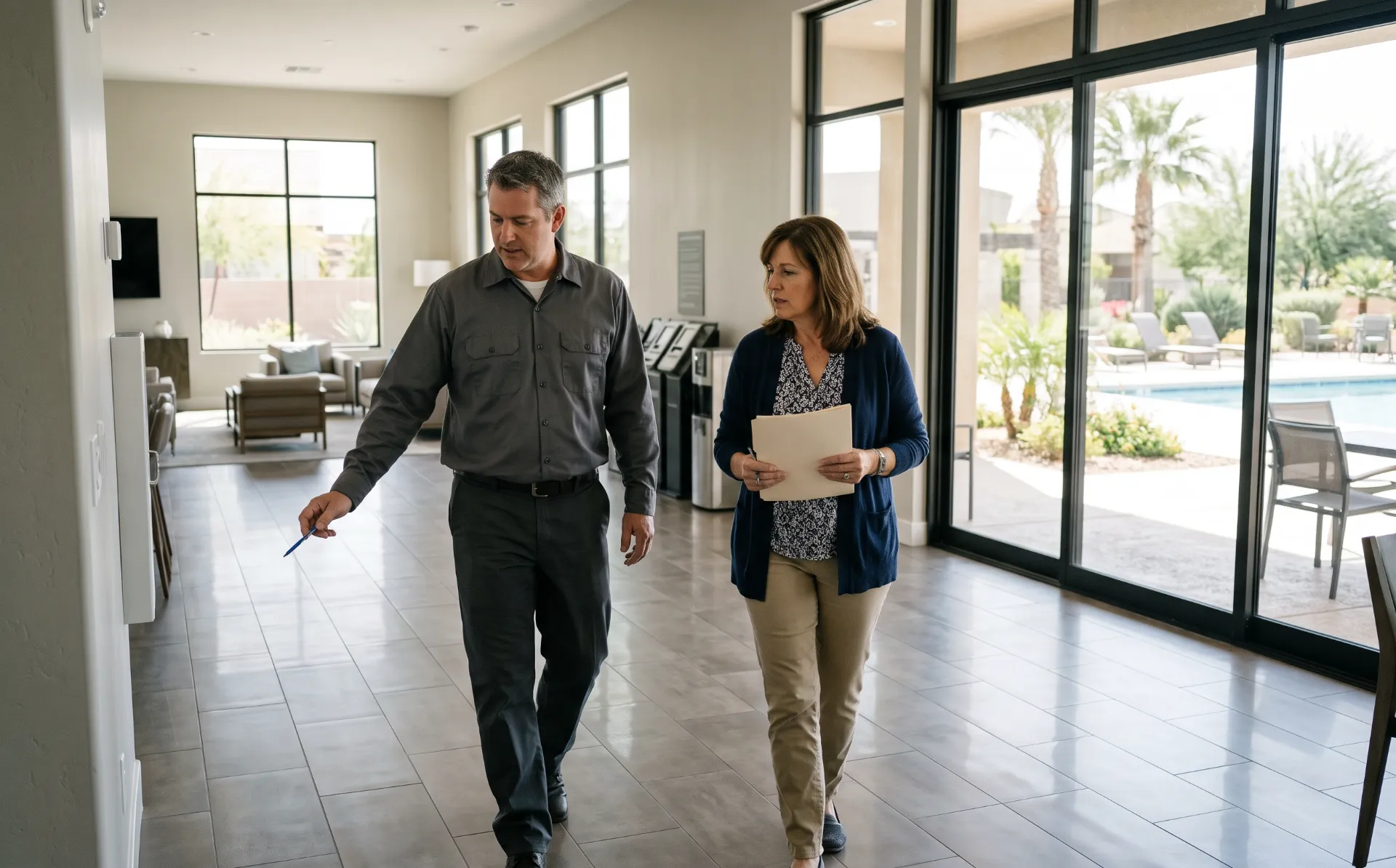
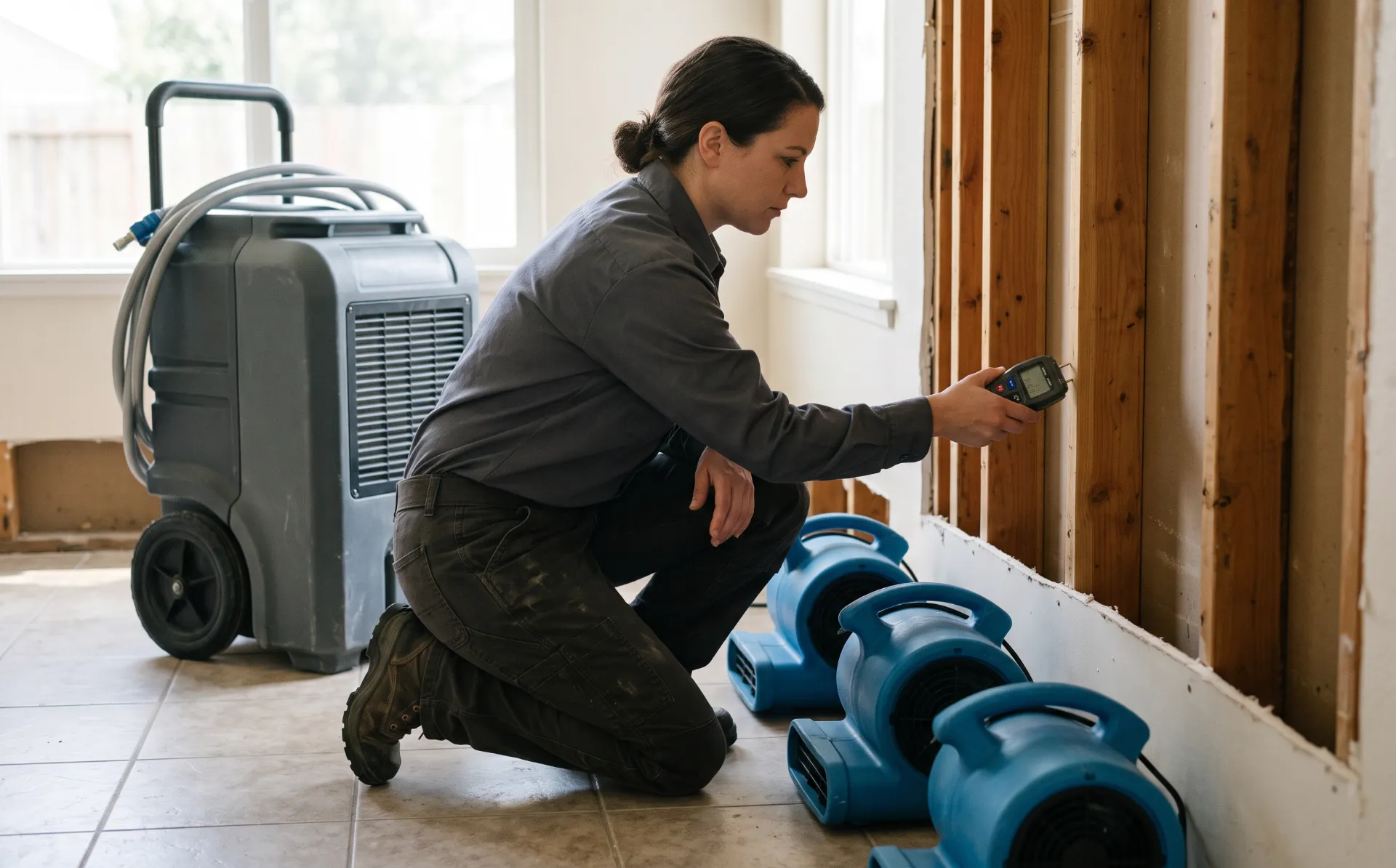 Summerlin · Demo photo
Water events that hit multiple units
Shared plumbing stacks and connected rooflines mean one failure rarely stays in a single apartment. We check adjacent and lower units with moisture meters.
Stacked unit supply leaks A burst washer hose or pipe in an upper apartment runs through ceilings and walls into every unit below.
Water heater failures A leaking tank in a utility closet saturates adjacent drywall, hallway flooring, and the apartment underneath.
Multiple unit sewage backups Main line backups push contaminated water into tubs and drains, requiring protective gear, removal, and disinfection.
Roof leaks on upper floors Rain entering past concrete tiles or a flat roof membrane soaks attic insulation and upper floor ceilings.
Storm runoff on ground floors Heavy desert rain flows across pavement and under patio doors into first floor apartments and ground level garages.
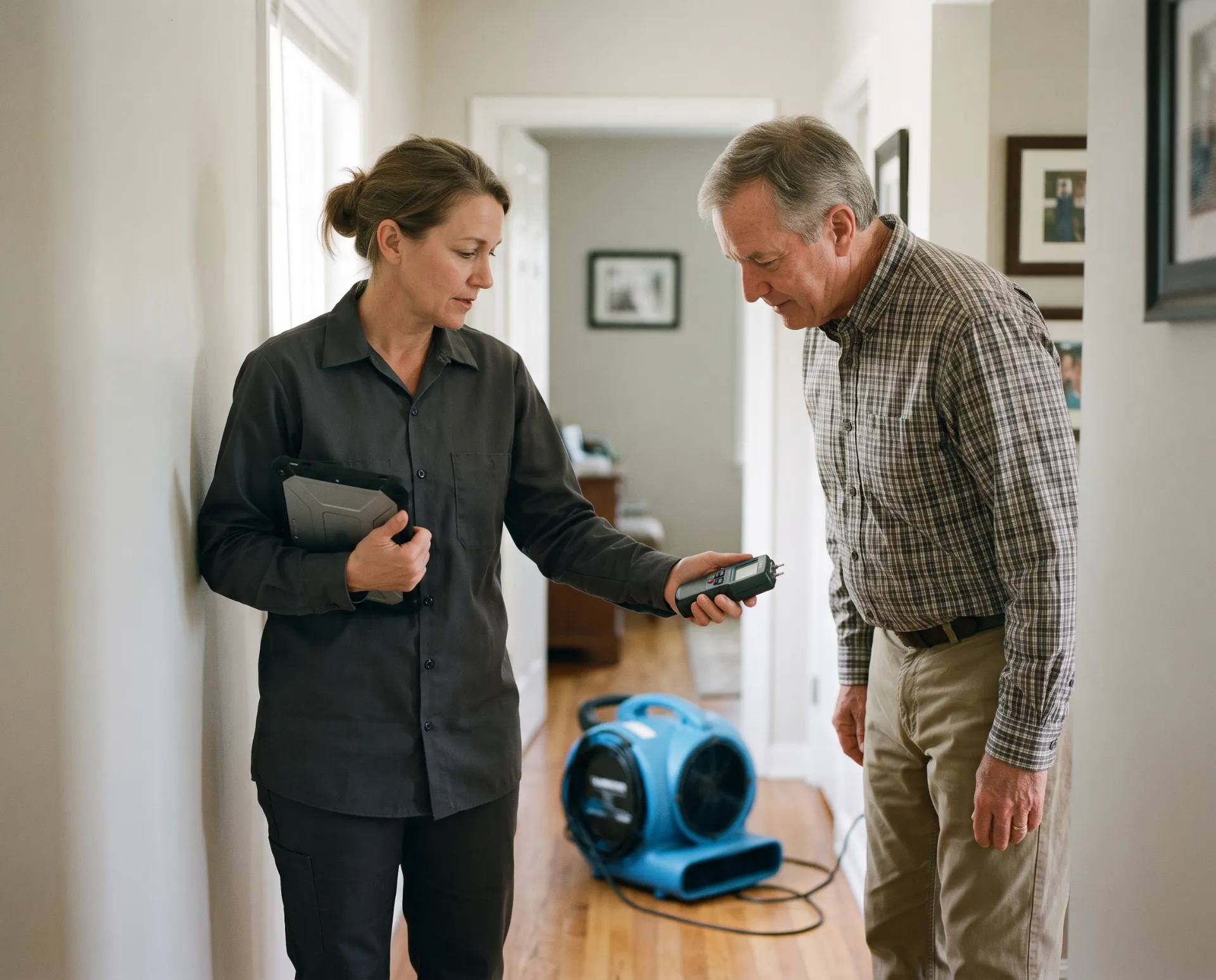 Summerlin · Demo photo
Working carefully in occupied units
Every affected apartment or condo is inspected and documented separately so management and insurers have a clear record for each address. We coordinate resident notices, entry windows, and equipment placement times through the property manager, and we explain what equipment noise to expect before machines are switched on.
Decisions about temporary relocation belong to the property owner, the manager, and the resident. Dryline cannot advise on whether a unit is habitable or tell anyone by phone that a building is safe to enter or live in. If plumbing or roof repairs are needed to stop the source, licensed trade partners handle that work.
- Dated photos of affected rooms before and after mitigation
- Unit specific moisture maps and baseline meter readings
- Written reasons before any drywall, pad, or trim is removed
- Equipment counts and drying readings logged at every visit
From first call to unit handback
A single Dryline project manager oversees the whole incident across all affected units and reports progress at each monitoring visit.
- 1
One call and one site contact
Call our 24-hour line for an honest arrival estimate. One project manager is assigned to the whole incident.
- 2
Unit by unit extraction
We map moisture in every affected and adjacent unit, extract liquid water, and remove unsalvageable wet materials with written reasons.
- 3
Drying with a log per unit
Air movers and dehumidifiers run under a written plan, and each unit keeps its own drying log updated at every visit.
- 4
Repairs and unit handback
Dryline completes drywall, paint, flooring, and cabinet repairs under our license and walks each finished unit with management.
Records built for multiple units
Separate unit files help property owners, condo associations, and insurers sort out what happened in each space without mixing photos or estimates.
What Dryline provides per loss
- Dated room photos and moisture maps for every unit
- Separate drying logs updated at each monitoring visit
- Equipment placement records by unit number
- Line item estimates in standard adjuster format
- Final invoices and signed completion records
What management provides
- Designated site contact and after-hours decision maker
- Unit keys, gate codes, and resident entry schedules
- Main and building water shutoff locations
- Signed work authorization from the responsible party
- Insurance certificate and vendor onboarding forms
Coverage is always decided by the insurance company. With permission, Dryline works with every insurer's adjuster. The customer owes the deductible and any uncovered costs.
Multifamily restoration questions
How many wet units can Dryline handle during one incident?
Capacity depends on the size of the loss, how many units are saturated, and current call volume across the valley. We operate six stocked response trucks with twelve technicians and two project managers in the Las Vegas valley. We assess the full building on-site and explain what we can staff right from the start.
How do you communicate with residents during drying?
We route notices, access times, and schedule updates through the property manager unless you ask us to contact a resident directly. Our crews explain equipment placement and monitoring visit timing so residents know when to expect us. Relocation choices remain between management and the resident.
Who pays when water affects a condo association and individual units?
Responsibility depends on association governing documents, leases, and the policies held by the owner, the HOA, or the resident. Each insurer decides what its policy covers, and Dryline does not give legal or coverage advice. With permission, we work with every insurer’s adjuster, and the responsible party owes the deductible and any uncovered balance.
Will mold grow in the walls if an apartment sits wet?
According to the EPA, mold can begin growing on wet materials within 24 to 48 hours, though growth depends on the material and conditions. Thorough extraction and structural drying reduce moisture, and Dryline cannot guarantee mold prevention. If remediation is needed, our AMRT supervised crew handles containment and removal, while independent third parties handle testing and clearance.
How does Priority Response work during valley storms?
Priority Response enrollment is free with no contract or retainer, and includes a walkthrough, a single page emergency sheet, rates agreed in advance, and vendor paperwork on file. During storms across the valley, enrolled properties are scheduled ahead of unenrolled routine work. Life safety calls always come first, and enrollment is not a guaranteed response time.
Related services

Water cleanup across your portfolio
Dryline handles water extraction, drying, and repairs for property managers, HOAs, and rental portfolios across the Las Vegas valley, with free Priority Response setup.
Read more
Cleanup when water hits your business
Dryline handles water extraction, structural drying, and repairs for offices, retail, hospitality, multifamily, and industrial properties across the Las Vegas valley.
Read morePlanning before water hits your site
Dryline's free Priority Response Program prepares Las Vegas valley businesses, property managers, HOAs, and senior living teams before a leak or storm happens.
Read more
Call for active water or enroll your community
Commercial multifamily service in the Las Vegas valley only. Call 24 hours for active leaks, or ask about free Priority Response. Forms are read in office hours and never confirm a crew.