Structural drying after water gets in
We dry walls, subfloors, and framing in Las Vegas valley homes and businesses using air movers, dehumidifiers, and logged moisture readings.
- IICRC Certified Firm
- Project managers hold ASD
- Serving the valley since 2012
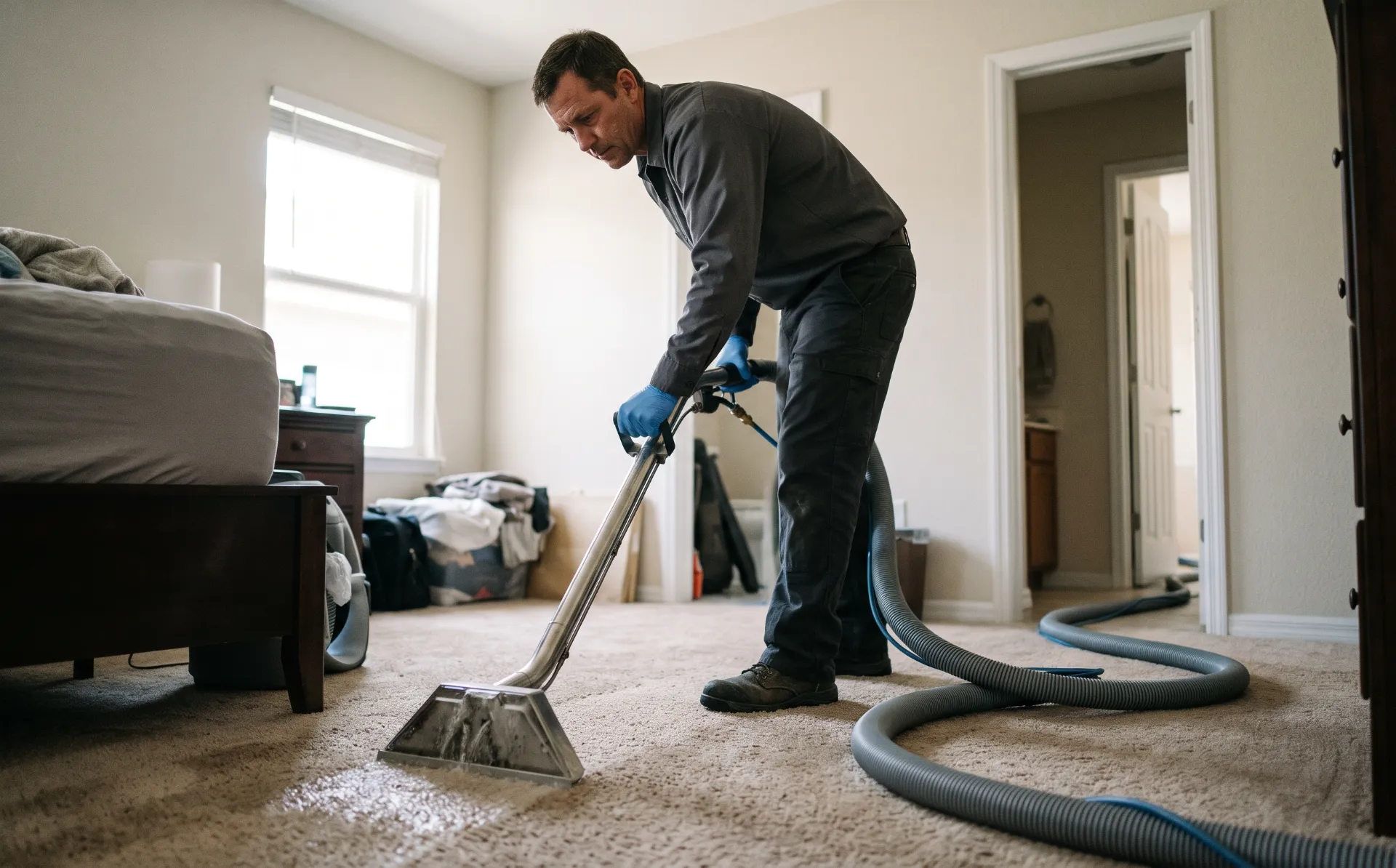
 Summerlin · Demo photo
When structural drying is needed
Removing standing water is only the first step. Moisture stays trapped inside building materials and air until controlled drying pulls it out.
Wet walls and framing
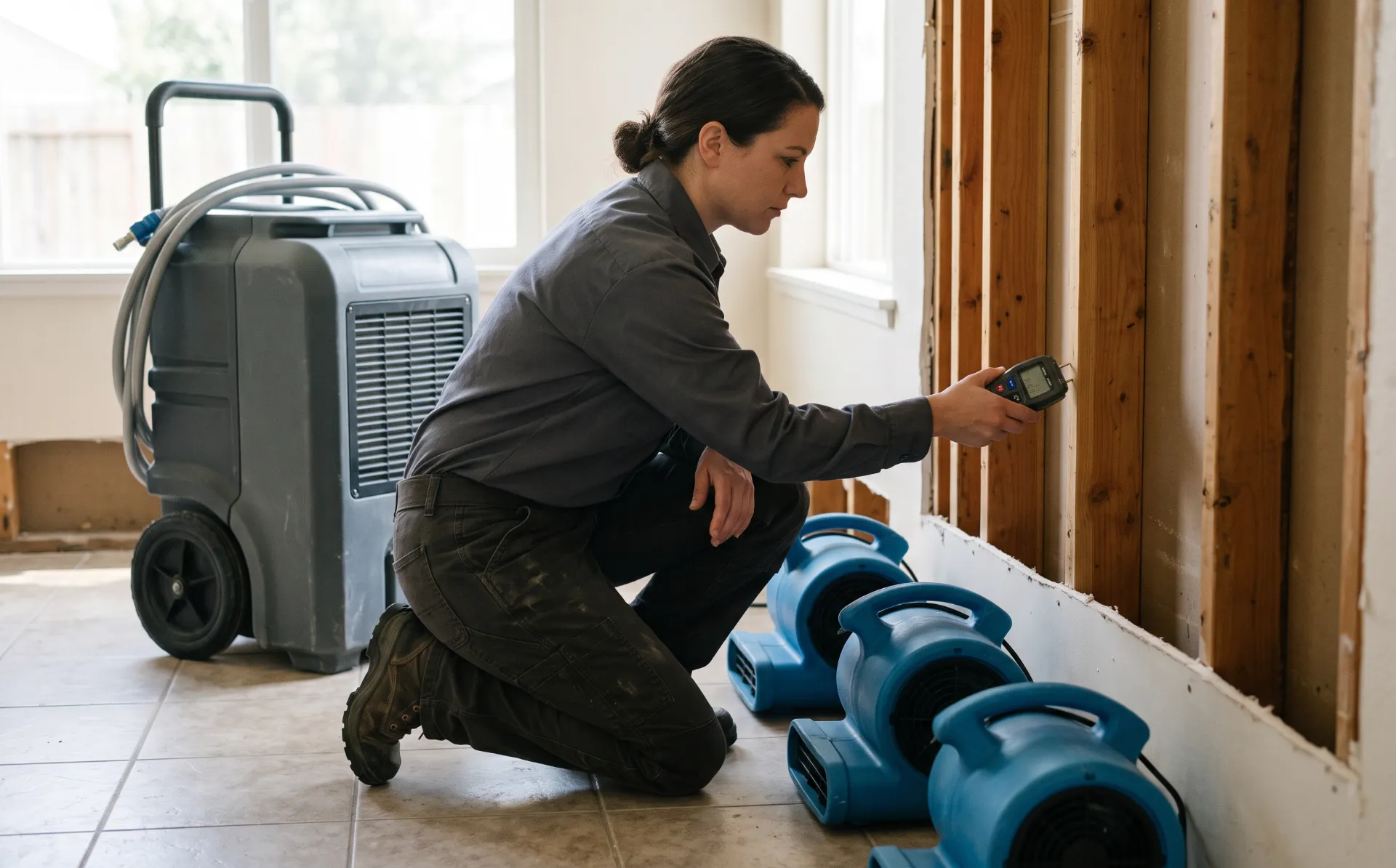
Drywall and wood studs absorb water upward from the floor or down from a roof leak, holding moisture long after surfaces feel dry.
Saturated flooring and subfloors
Water slips beneath wood, laminate, carpet, and tile into the subfloor or concrete slab, where surface drying alone cannot reach.
Hidden moisture in cavities
Water often collects behind cabinets, under baseboards, and inside wall cavities where it stays damp without airflow.
Wet insulation
Damp insulation holds water against framing and slows evaporation. Some wet insulation must be removed before the cavity can dry.
High indoor humidity
Evaporating water raises indoor humidity inside a closed building, which can allow moisture to settle on unaffected walls and contents.
Drying after water extraction
Extractors and pumps remove liquid water, leaving bound moisture inside porous materials that requires air movement and dehumidification.
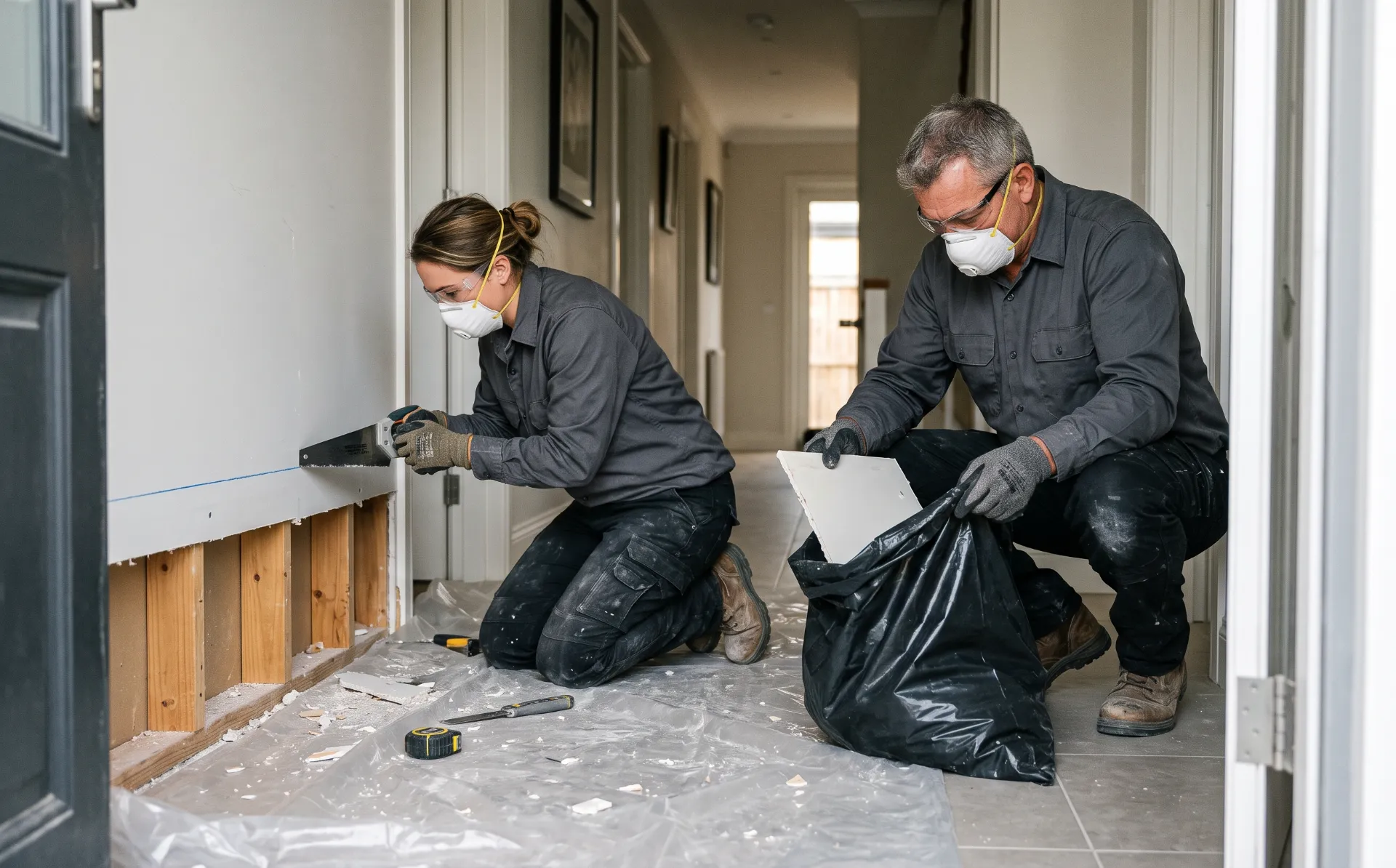
 Henderson · Demo photo
What our structural drying includes
Every drying plan is built around measured moisture levels in your building rather than guesswork.
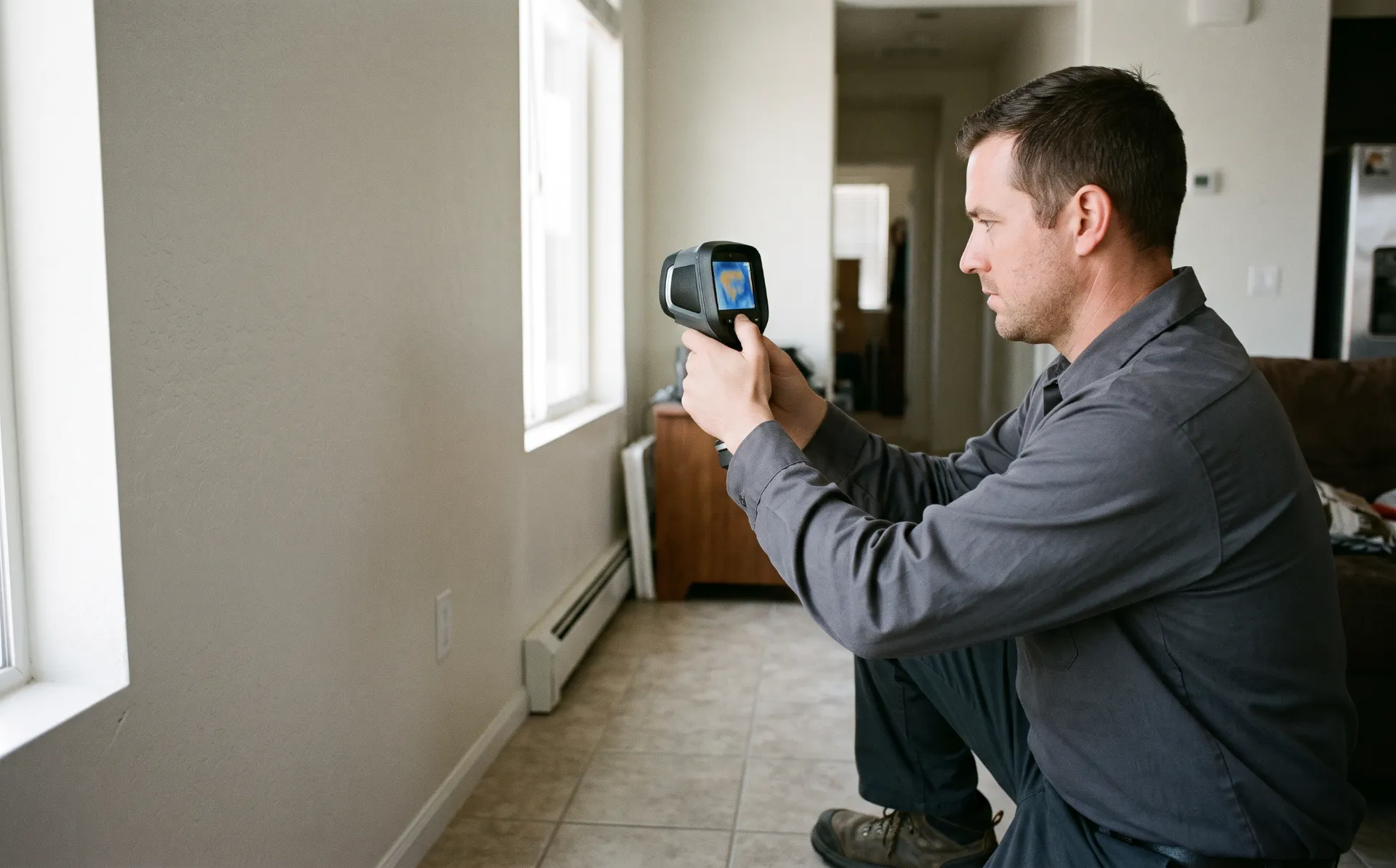
Moisture inspection Technicians check walls, floors, and trim with moisture meters and thermal cameras to map every wet area.
Targeted air movement Commercial air movers direct steady airflow across damp surfaces to speed evaporation into the air.
Dehumidification Dehumidifiers pull evaporated moisture out of the indoor air so building materials can continue releasing water.
Reading based setup Equipment type, count, and placement are chosen from your initial moisture readings and room layout.
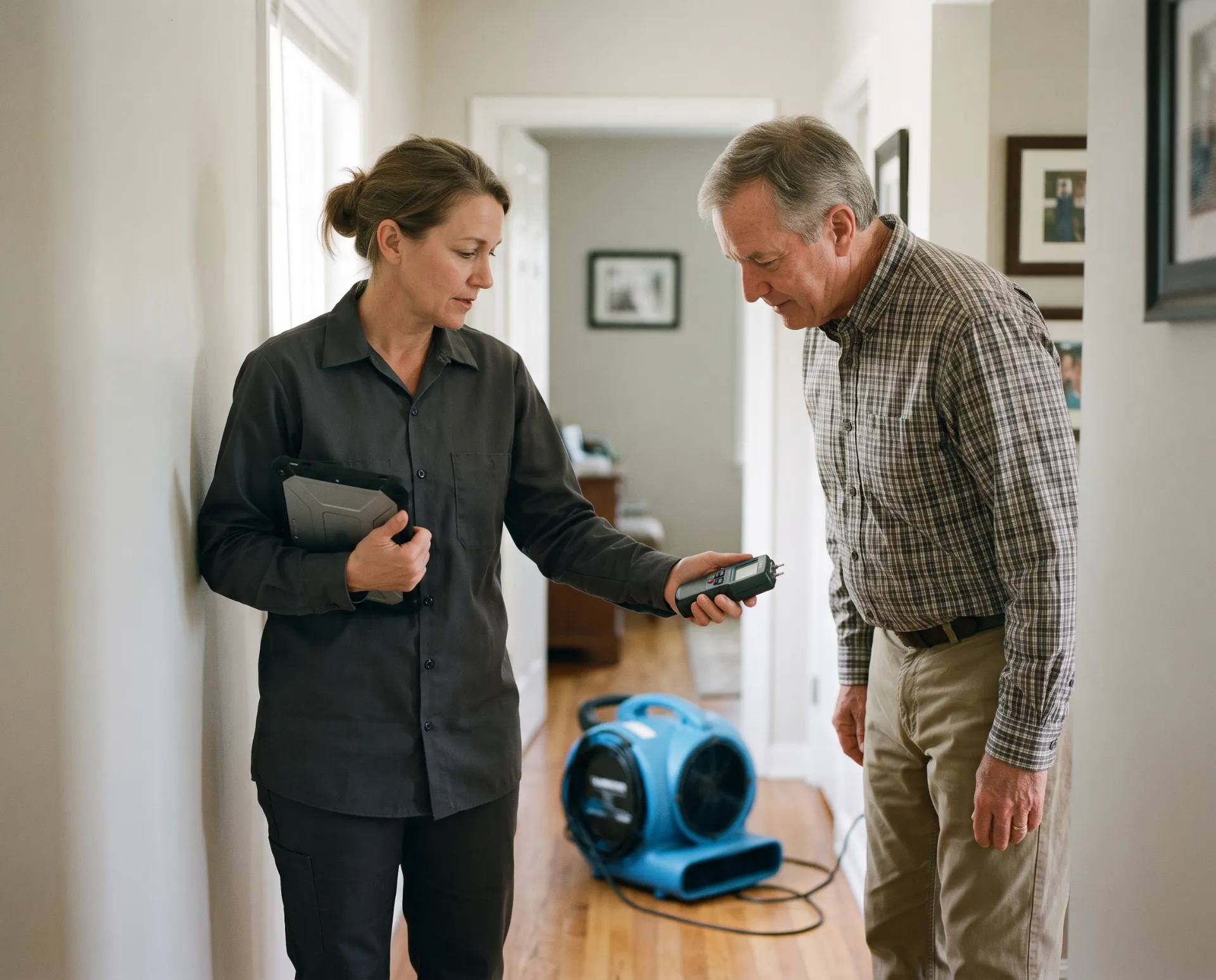
Scheduled monitoring visits Technicians return on the schedule in your drying plan to take new readings, log progress, and adjust equipment.
Claim ready documentation We provide dated photos, moisture maps, equipment records, and the drying log for your records or insurer.
 Summerlin · Demo photo
Equipment matched to your building
Dryline crews set up air movers to speed evaporation and low-grain refrigerant dehumidifiers to pull moisture from the air. For large or dense commercial and residential structures, we may use desiccant dehumidifiers. When isolating a wet room helps control humidity and airflow, our team builds temporary drying containment.
Technicians use thermal imaging cameras to spot temperature differences that point to damp zones, then confirm every reading with a moisture meter. Readings are recorded in a drying log during each monitoring visit, and you can review that log at any time. One project manager stays your contact from the first visit to the final walkthrough.
- Moisture meter readings in affected walls, floors, and framing
- Indoor temperature and relative humidity levels at each visit
- Equipment placement and any adjustments made as areas dry
- Progress toward target dryness across the affected spaces
How structural drying works
We follow ANSI/IICRC S500 practices and let measured readings guide every step from setup to pickup.
- 1
Assess and plan
We measure moisture levels, map affected areas, and write a clear drying plan with a written scope and price before work starts.
- 2
Set up equipment
Crews place air movers, dehumidifiers, and containment when helpful, matching each unit to the materials and room size.
- 3
Monitor and adjust
On the visits written into your plan, technicians check readings, update the drying log, and move or remove units as areas dry.
- 4
Verify dryness
Completion is decided by moisture meter readings reaching target levels, not by the calendar, before equipment is picked up.
What structural drying does not cover
Drying does not fix the source of the water. Licensed plumbing, roof, or electrical trade partners handle pipe repairs, permanent roof work, and wiring. Dryline does not perform mold or environmental testing, which is done by an independent third-party assessor you hire. We never promise a specific drying time or that mold will be prevented.
Questions about structural drying
How long does structural drying usually take?
Drying time depends on the materials, how long they were wet, and indoor conditions, and it often takes several days. Dense materials or heavy saturation take longer than light surface dampness. We never promise a set number of days, and equipment stays in place until moisture readings show the structure is dry.
Is the equipment loud, and can I turn it off at night?
Commercial air movers and dehumidifiers make steady airflow noise while they run. Turning equipment off slows evaporation and extends the drying timeline, which can also affect whether materials are saved. Your project manager can discuss placement options before setup begins.
Can we stay in the home while drying equipment runs?
Whether a home is suitable to stay in depends on the water source, affected rooms, noise, and power needs. Dryline cannot tell anyone by phone that a building is safe to enter or live in. Discuss your situation with your project manager during the on-site visit.
How do you monitor drying progress?
Technicians return on the visit schedule written into your drying plan to take moisture meter and humidity readings. Every reading is entered into the drying log, which you can review whenever you want. Equipment is adjusted or removed only as readings confirm progress.
When do materials need to be removed instead of dried?
Salvage depends on the water category, how long materials stayed wet, and the material itself. Soaked carpet pad is usually replaced, and porous materials exposed to contaminated water are generally not salvageable. We always give a written reason before anything is cut out.
Will my insurance cover structural drying?
Your insurance company decides what is covered under your policy, and standard homeowners policies generally do not cover flood from rising surface water. With your permission, Dryline works with every insurer’s adjuster and provides drying logs, photos, and itemized estimates. You owe your deductible and anything not covered.
Related services

Getting the water out after a flood
Dryline extracts standing water, dries affected building materials, and cleans residential and commercial properties across the Las Vegas valley.
Read moreMoisture checks to find hidden water
We inspect Las Vegas valley homes and businesses with moisture meters and thermal cameras to trace hidden dampness before you decide on repairs.
Read moreRemoving wet drywall and flooring
When drywall, insulation, or flooring cannot be dried in place, we explain why in writing, protect clean rooms, and remove only what is needed.
Read more
Schedule a free drying inspection
Serving Las Vegas, Henderson, North Las Vegas, Boulder City, and surrounding Clark County areas. Website forms are read during office hours only and never confirm a crew.