
Cleaning up when desert storms get in
From summer monsoon downpours to winter rain events, Dryline provides water extraction, temporary tarping, and drying for Las Vegas valley homes and businesses.
- Six stocked response trucks
- Locally owned in Las Vegas
- Free monsoon readiness check
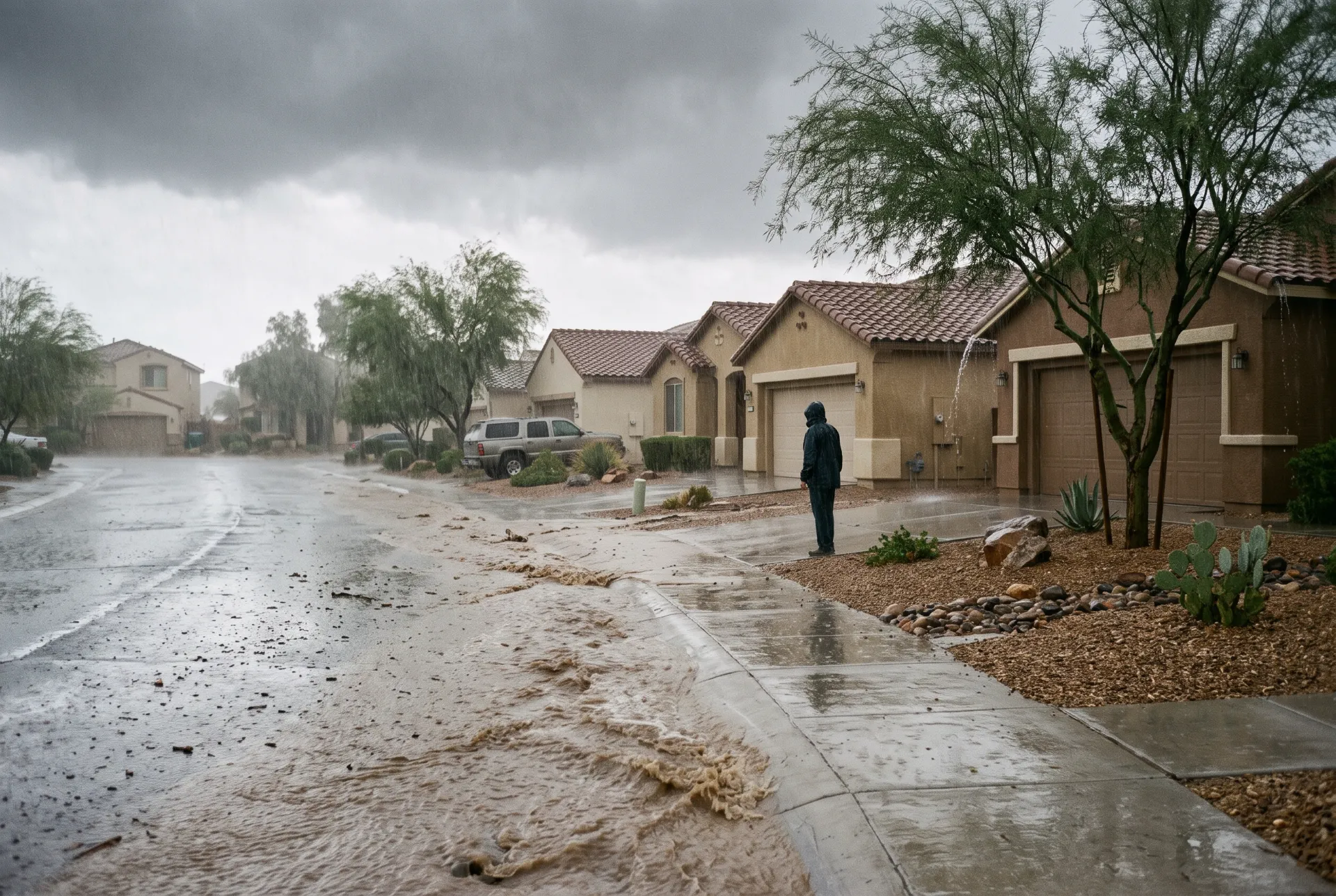 Las Vegas valley · Demo photo
Severe weather risks across the valley
Las Vegas averages 4.18 inches of rain a year, the driest major metro area in the continental United States. When heavy rain hits hard soil and pavement, water builds up with little warning.
Summer monsoon thunderstorms
Official monsoon season runs June 15 to September 30, with most valley storms arriving in July, August, and early September.
Street and wash flash flooding
Short storms lasting a couple of hours can overwhelm paved streets and send runoff downstream even where rain is not falling.
Wind driven rain at openings
Gusty storm fronts push rain horizontally against window seals, sliding doors, stucco cracks, and roof transitions.
Microbursts and high winds
Sudden downdrafts can shift concrete roof tiles, peel flat roof edges, or break windows, opening buildings to rain.
Hail and winter rain events
Seasonal storms outside summer can still drop hail or steady rain that finds weak spots in roof flashing and drains.
Tropical storm remnants
Hurricanes do not make landfall in Nevada, though moisture from tropical storm remnants can still bring heavy valley rainfall.
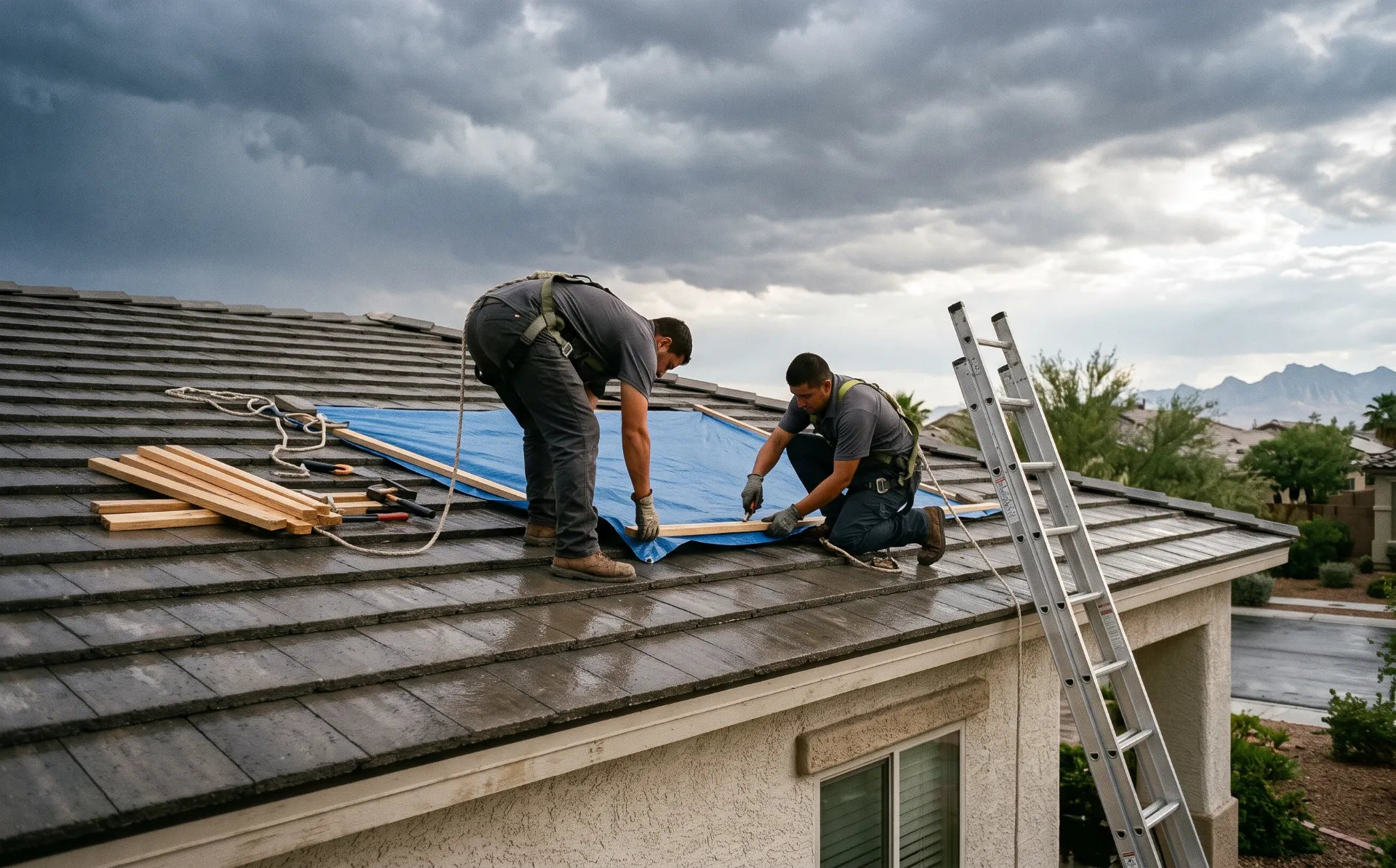 North Las Vegas · Demo photo
Storm damage our crews handle
Storm water is not automatically Category 3; our technicians assess the source on-site and tailor extraction, cleaning, and drying to your property.
Ground level runoff entry We pump and extract street runoff that enters across door thresholds, patios, or low perimeter walls.
Roof, window, and door leaks Crews provide temporary roof tarping and board-up for broken openings while drying wet framing inside.
Wet ceilings and walls Thermal cameras and meters locate trapped rain behind drywall and insulation so drying targets every damp pocket.
Flooded garages and bays We clear water from residential garages and commercial bays, checking shared walls and stored items for moisture.
Interior storm debris Technicians remove storm debris brought inside the building and clear affected entry points before drying begins.
Commercial storefront flooding Dryline dries retail spaces, offices, HOA common areas, and warehouses with equipment scaled to the structure.
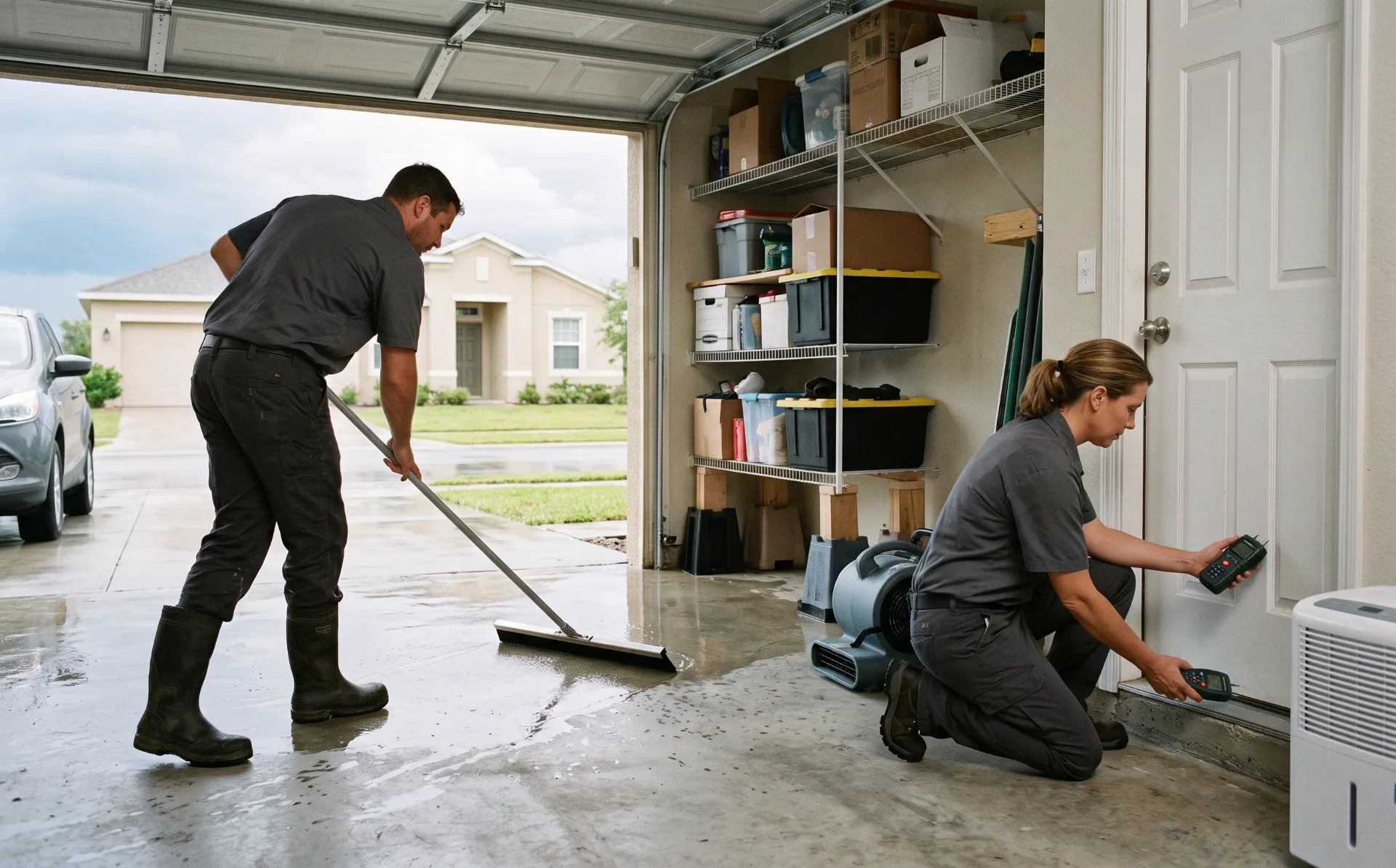 Enterprise · Demo photo
Safety first during valley-wide storms
When a major monsoon storm hits the valley, personal safety comes before property cleanup. Dryline cannot tell anyone over the phone whether a storm damaged building is safe to enter or live in. Stay clear of electrical hazards, damaged roofs, and flooded roadways until conditions are safe.
During widespread storms, flooded roads and high call volume affect every restoration company in town. Dryline sends crews in order of safety risk and active water, so arrival takes longer than on a normal day. Our coordinator reviews current conditions and gives you an honest estimate before you hang up.
- Stay out of moving floodwater on foot and in vehicles
- Keep clear of standing water near outlets, cords, and panels
- Stay off wet concrete tile and flat roofs during or after wind
- Avoid washes, drainage channels, and flooded low streets
What happens after you call
We keep the steps straightforward during busy weather so you know what we are doing at your property and what comes next.
- 1
Call and describe the damage
A Dryline team member answers 24 hours a day, gathers details on active water and safety risks, and gives an arrival estimate for your address.
- 2
Inspect and add protection
On site, we map moisture, assess the water category, and install temporary roof tarping or window board-up where needed.
- 3
Extract, clean, and dry
Crews remove standing water, clear interior debris, remove unsalvageable materials with written approval, and run drying equipment.
- 4
Document and plan repairs
We compile photos, moisture maps, and drying logs, then handle drywall, flooring, and paint repairs or coordinate roofing partners.
Honest limits during major storms
During valley-wide weather events, flooded roads, high phone volume, crew capacity, and equipment demand cause response delays. Calls are prioritized by safety risk and active water, and no arrival time is ever promised. Dryline serves the Las Vegas valley only and does not do tree removal, permanent roof replacement, or out of state storm deployment.
Monsoon and storm cleanup questions
When is monsoon season in the Las Vegas valley?
According to the National Weather Service, Southwest monsoon season officially runs from June 15 through September 30. Most Las Vegas valley storms hit in July, August, and early September, though winter rains and tropical storm remnants can cause leaks outside those months. Most individual storms last only a couple of hours, which is still enough to trigger localized flooding.
What should I do first when storm water gets inside?
Focus on safety first by staying out of standing water near electrical panels or outlets and avoiding damaged ceilings or wet roofs. When water is actively entering, call our phone line rather than using a website form so a coordinator can log your address and discuss arrival timing. Do not assume a damaged structure is safe without an in person check.
How soon can a crew arrive during a valley-wide storm?
Arrival depends on road access, call volume, and crew availability across the valley, and we never promise a set arrival time. During widespread storms, Dryline dispatches crews in order of safety risk and active water, which means wait times are longer than usual. On your first call, our coordinator gives you an honest estimate for your address before you hang up.
Does homeowners insurance cover monsoon flood damage?
Your insurer decides coverage based on your policy and how water entered. Standard homeowners policies generally exclude flood from rising surface water, which takes a separate policy; National Flood Insurance Program policies usually have a 30 day waiting period. With your permission, Dryline works with every adjuster, and you owe your deductible and uncovered costs.
How can I prepare my home before monsoon season?
From June 15 to September 30, Dryline offers a free monsoon readiness check, limited to one per address. A technician spends 30 minutes walking your exterior drainage paths, door thresholds, window wells, and roof drains and gives you a written list of items to fix. Dryline also helps at neighborhood sandbag filling events before storm season.
Does emergency roof tarping count as a permanent repair?
No, roof tarping and window board-up are temporary steps to limit further rain entry until permanent work can be done. Dryline does not perform permanent roof repairs or replacements on concrete tile or flat roofs. When you are ready for permanent roofing, our project manager can coordinate a licensed roofing partner.
Related services

Cleaning up after storm water gets in
When monsoon rain or wind pushes water through a roof, window, door, or wall, Dryline cleans up the intrusion and dries affected homes and businesses.
Read moreCleaning up after a flash flood
When rising surface water or wash runoff pushes mud and debris inside, Dryline extracts water, removes contaminated materials, and dries valley properties.
Read moreCleaning up after microburst winds
Dryline boards up broken openings, tarps exposed roofs, clears interior storm debris, and dries water damage for Las Vegas valley homes and businesses.
Read more
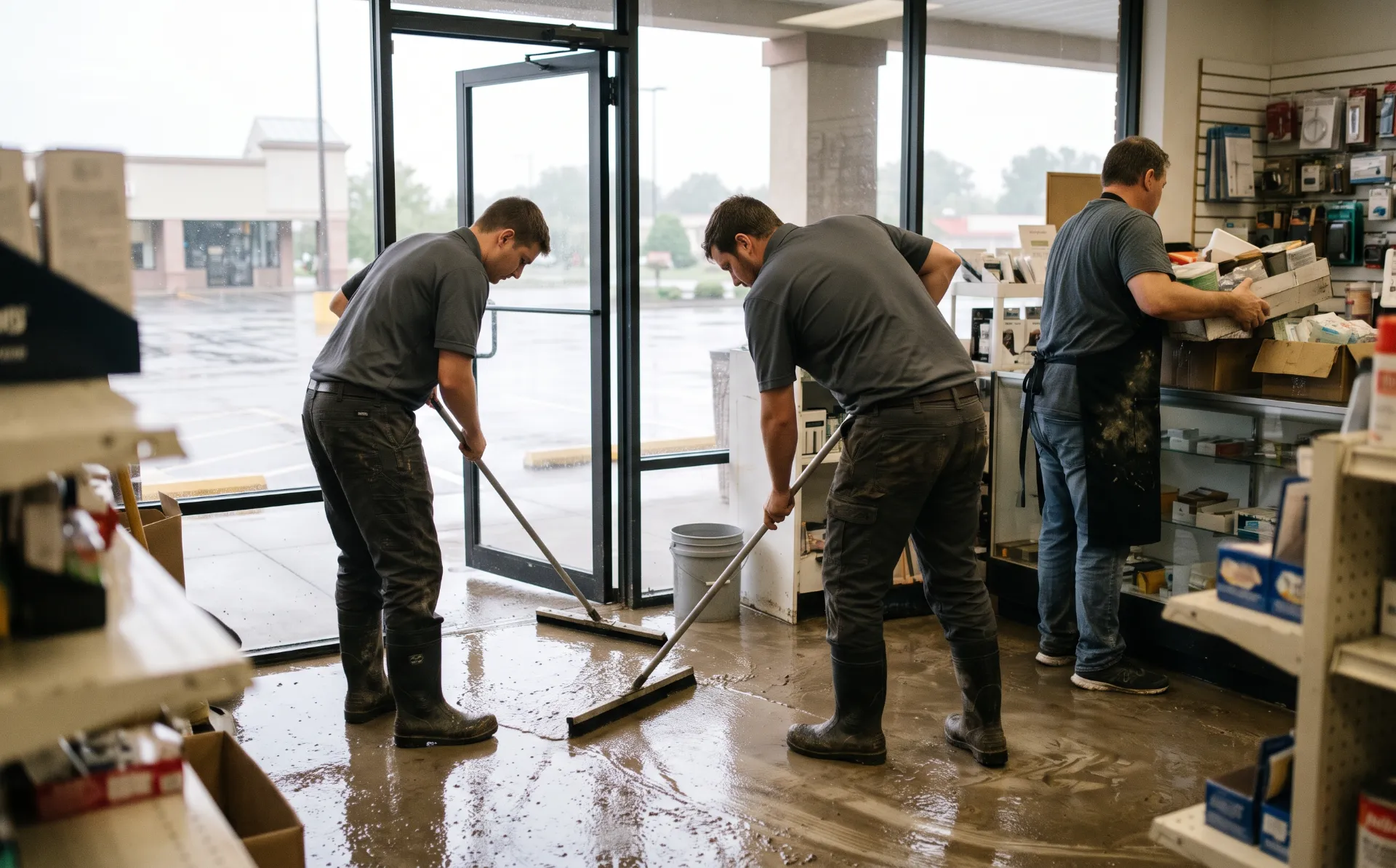
Call for storm cleanup or readiness checks
Serving homes and businesses across Clark County's Las Vegas valley. Call for active water; website forms are read during office hours and never confirm a crew.