
Cleaning up after a flash flood
When rising surface water or wash runoff pushes mud and debris inside, Dryline extracts water, removes contaminated materials, and dries valley properties.
- Local Las Vegas team of 18
- One contact start to finish
- Written scope before work
 Paradise · Demo photo
Where flash floods hit valley properties
Even with 113 detention basins and about 722 miles of channels and storm drains across Clark County, intense rain can send runoff into low lying buildings.
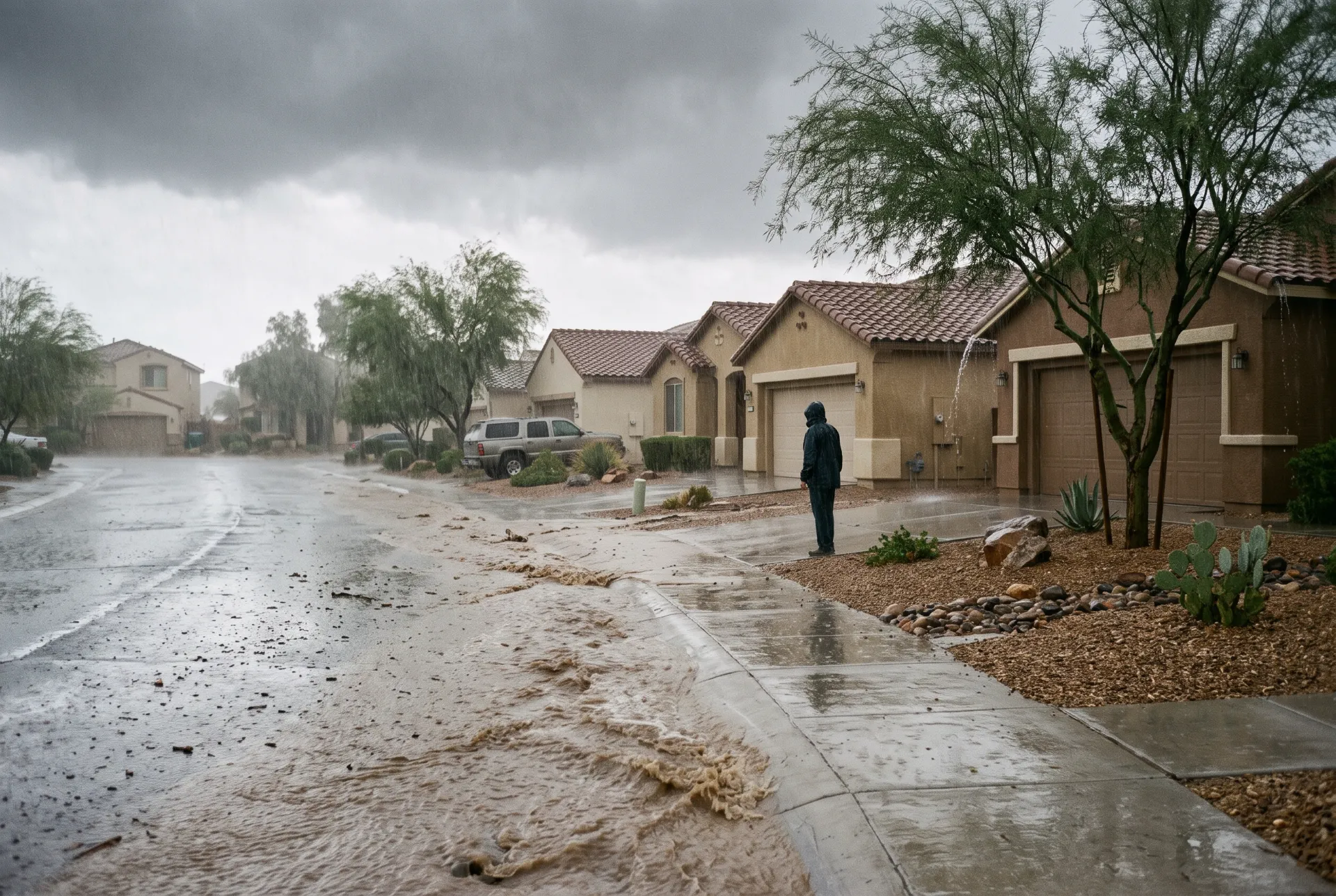
Street runoff into ground floors
Deep street water can jump curbs and flow past front doors, sliding glass doors, and garage entries into lower living areas.
Overtopping washes and channels
Runoff heading toward the Las Vegas Wash can spill over nearby channels and reach properties even when skies overhead are dry.
Mud and silt left on floors
Once floodwater recedes, thick desert silt, grit, and yard debris remain coated across tile, concrete, and carpet.
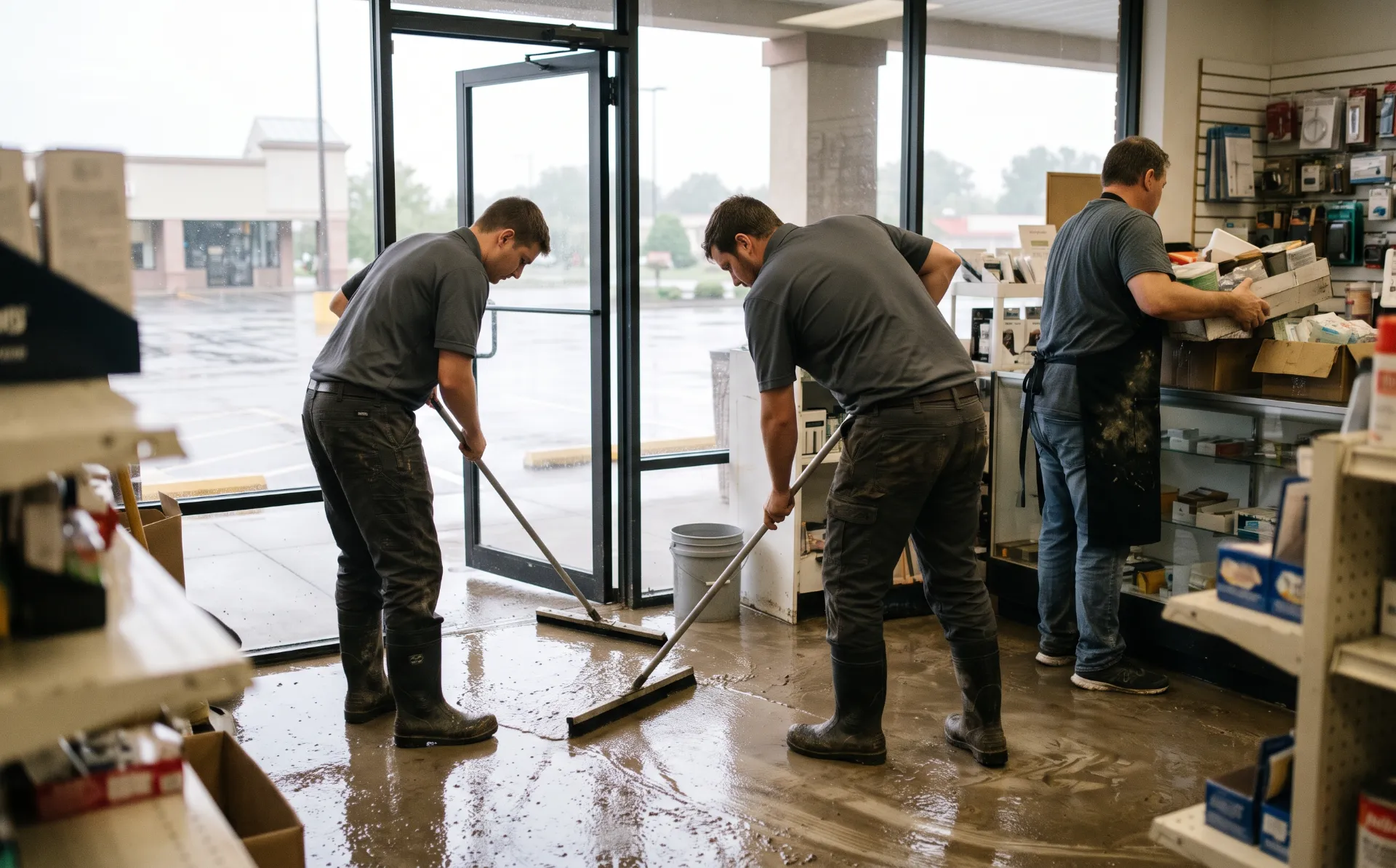
Water entering storefronts
Retail shops and offices facing sloped parking lots can take on inches of surface water through entry doors and service bays.
Flooded parking and lower levels
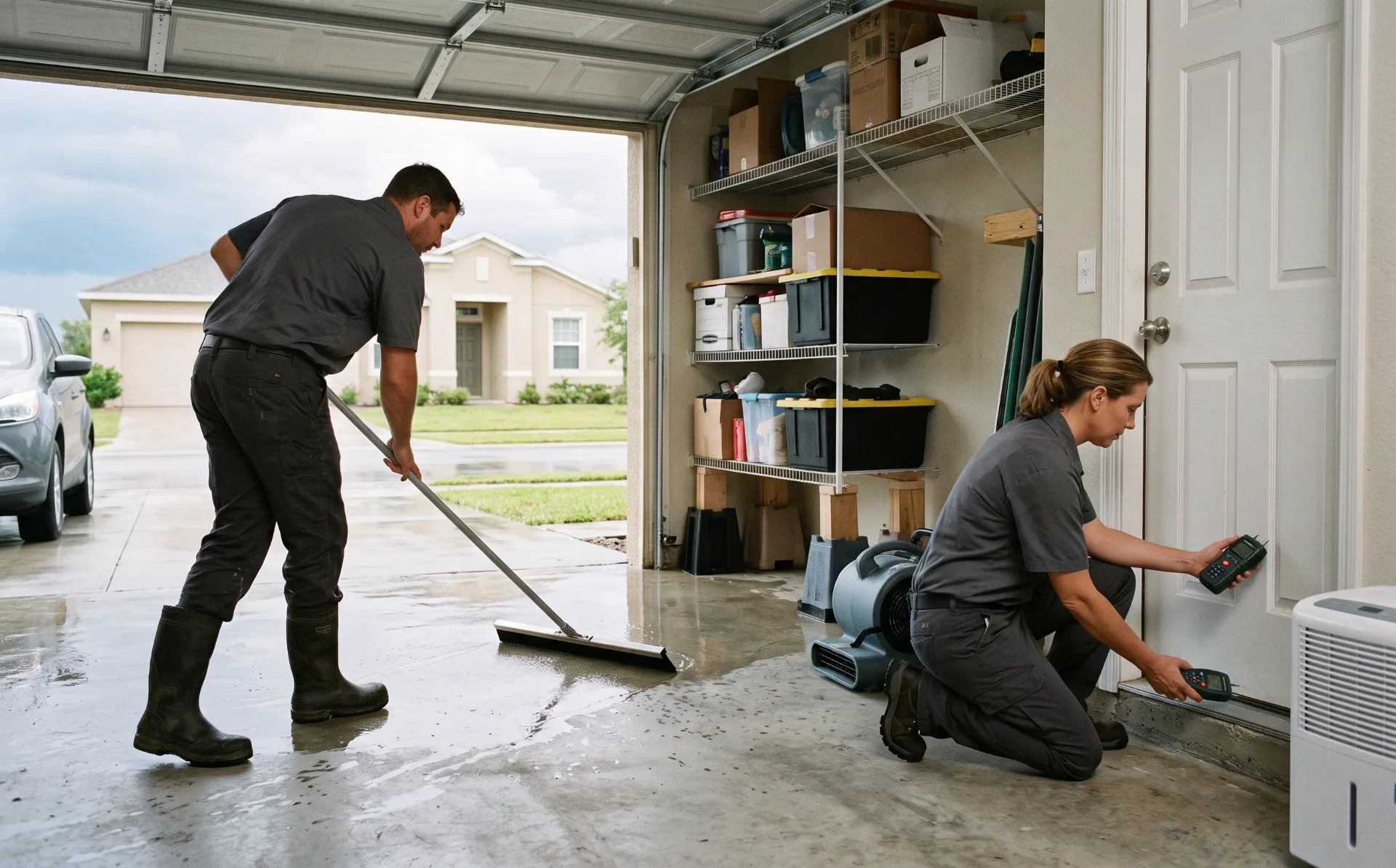
Subterranean garages, loading docks, and the uncommon valley basement collect runoff when drains back up during storms.
Saturated lower walls and trim
Even shallow floodwater wicks upward into baseboards, drywall, and insulation along every exterior and interior wall it touches.
 Las Vegas valley · Demo photo
What flash flood cleanup includes
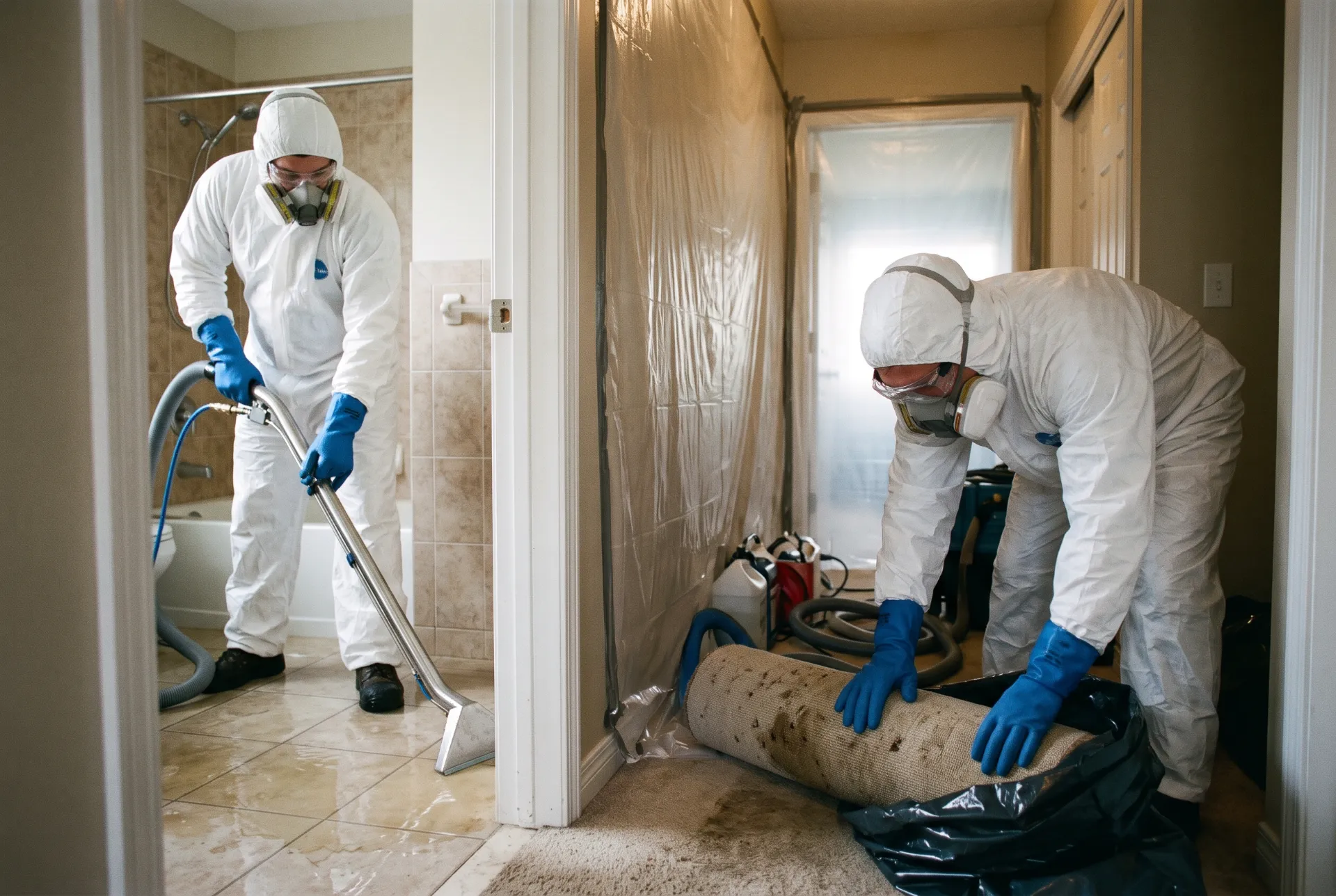
Crews wear protective equipment and follow ANSI/IICRC S500 procedures for contaminated floodwater, documenting every step for your records.
Water, mud, and silt removal Submersible pumps, extractors, and hand clearing remove standing floodwater, mud, and sediment from floors.
Contaminated material removal Porous drywall, carpet pad, and insulation soaked by outdoor water are removed after a written explanation.
Cleaning and disinfection Remaining framing and hard surfaces are washed, cleaned, and treated with antimicrobial products.
Structural drying and logging Air movers, dehumidifiers, and HEPA air scrubbers dry the building while moisture readings are logged on visits.
Careful contents handling We separate salvageable items from contaminated porous goods, with itemized photo inventory and storage when needed.
Complete claim paperwork You receive dated photos, moisture maps, drying logs, equipment records, itemized estimates, and completion records.
 North Las Vegas · Demo photo
Why outdoor floodwater is treated as Category 3
Clark County Regional Flood Control District data notes that valley floodwater can move up to 30 mph and carries chemicals, motor oil, pet waste, and debris. Under ANSI/IICRC S500 standards, water that rose from outside is classified as Category 3, meaning it is grossly contaminated and requires protective equipment during cleanup.
Because porous materials absorb contaminants that cleaning cannot reliably remove, soaked carpet pad, drywall, insulation, and laminate are generally taken out rather than dried in place. Wait for an on-site evaluation before disturbing wet materials or assuming the building is safe to occupy.
- Do not wade into standing floodwater or handle silt barehanded
- Do not touch electrical panels, outlets, or wet appliances
- Do not run household fans that blow contaminated air through rooms
- Do not discard damaged belongings before documenting them for claims
Four stages of flash flood cleanup
Flood recovery follows a clear order so contaminated materials come out before drying equipment runs across the structure.
- 1
Make safe and document
We inspect hazards on-site, photograph the waterline and silt, map moisture, and give you a written scope or work authorization.
- 2
Extract water and clear silt
Crews in protective equipment pump out standing water and shovel or extract mud and debris from floors and entryways.
- 3
Remove soaked items and clean
Contaminated porous materials are removed with written approval, then framing and hard surfaces are cleaned and disinfected.
- 4
Dry, monitor, and repair
Drying equipment runs until meter logs confirm dry targets, followed by interior repairs like drywall, trim, and flooring as needed.
Coverage limits and outside work
Standard homeowners policies generally do not cover flood from rising surface water; flood coverage requires a separate policy, and only your insurer decides coverage. Check your policy or ask your agent. Drainage correction, yard regrading, waterproofing, foundation work, and structural engineering are handled by other licensed contractors.
Flash flood cleanup questions
Is flash floodwater in Las Vegas dangerous?
Yes, both while moving and after it settles. Valley floodwater can move up to 30 mph and picks up chemicals, oil, pet waste, and debris from streets and washes. Because rising outdoor water is treated as Category 3 contaminated water, crews wear protective gear and handle cleanup differently from a clean indoor pipe leak.
What materials can be saved after a flash flood?
Salvage depends on the material, how long it stayed wet, and what the water touched, and no material is guaranteed to be saved. Hard nonporous surfaces like concrete, tile, and metal can often be cleaned and disinfected. Porous materials soaked by Category 3 floodwater, including carpet pad, drywall, and insulation, are generally removed.
How do crews handle mud and desert silt left behind?
After standing water is pumped out, crews clear mud, grit, and debris from floors and around wall bases before disinfecting. Silt can hide underneath baseboards and inside wall cavities, so technicians check those areas with moisture meters and remove soaked lower drywall where needed. Hard surfaces are washed and treated once debris is gone.
How soon should flash flood cleanup begin?
Starting once conditions are safe helps limit how far water wicks into framing and stored items. According to the EPA, mold can begin growing on wet materials within 24 to 48 hours. Drying time still depends on materials and conditions and often takes several days, with no fixed timeline promised.
Does flood insurance cover flash flood cleanup?
Standard homeowners policies generally exclude flood from rising surface water, so check your policy or ask your agent about separate flood coverage. Your insurer decides every coverage question. With your permission, Dryline works with every insurance company’s adjuster, and you owe your deductible and any amount not covered.
Does Dryline send crews out during the storm?
Crews are on call nights, weekends, and holidays, though widespread storms affect road access and call volume across the Las Vegas valley. We dispatch in order of safety risk and active water, so arrival takes longer during major events and no arrival time is ever promised. Call us live and we tell you when to expect us before you hang up.
Related services

Cleaning up when desert storms get in
From summer monsoon downpours to winter rain events, Dryline provides water extraction, temporary tarping, and drying for Las Vegas valley homes and businesses.
Read more
Getting water out of a flooded garage
Dryline clears standing water, checks the wall shared with your home, and dries garage structures for homeowners across the Las Vegas valley.
Read moreCleanup for sewage and waste backups
Dryline extracts, cleans, and dries valley homes and commercial spaces after sewer backups, waste overflows, and outside floodwater.
Read more
Call for flash flood cleanup in the valley
Serving Las Vegas, Henderson, Summerlin, and surrounding Clark County communities. Call for active water; website forms are read in office hours and never confirm a crew.