
Clearing water from under your home
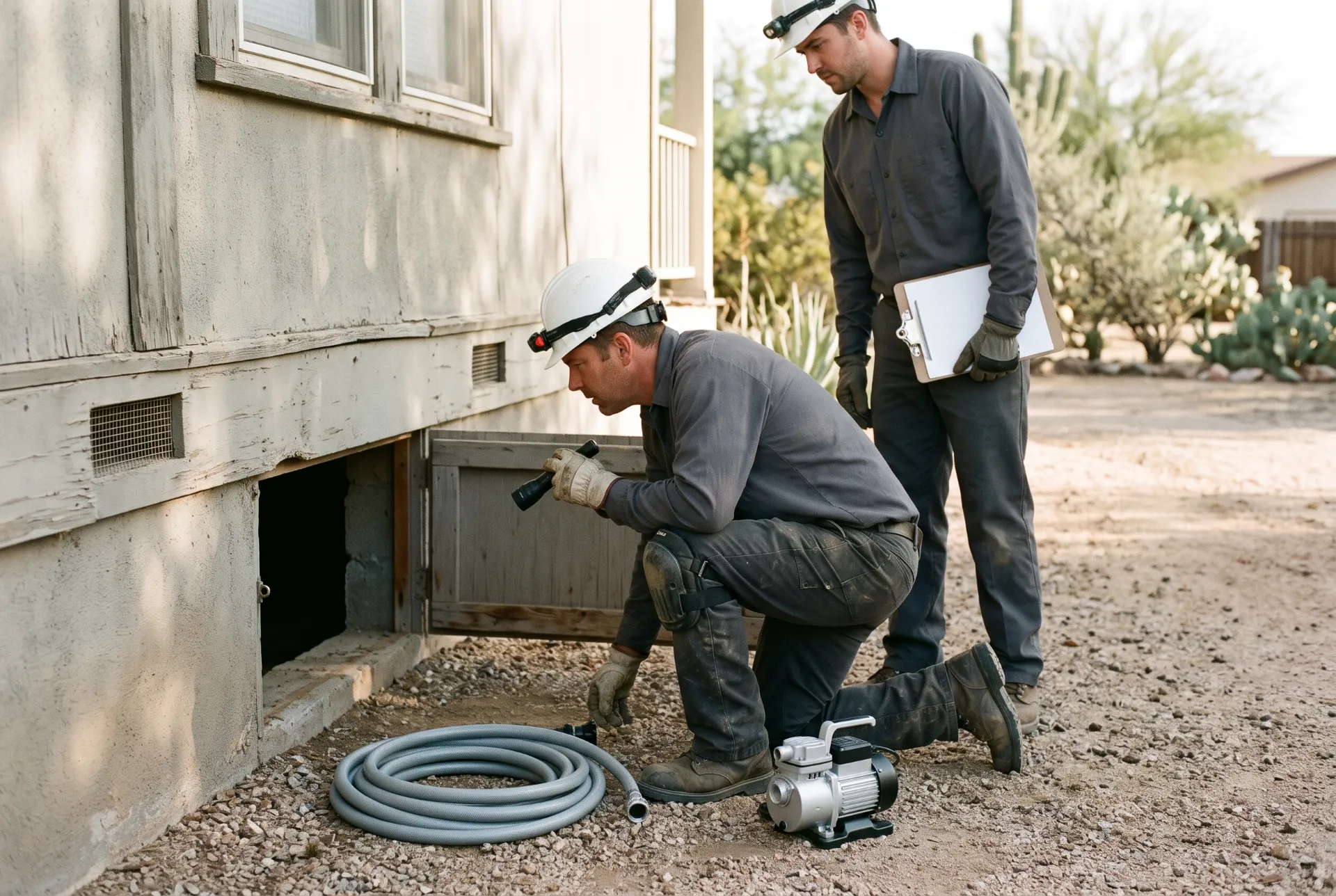
While most Las Vegas homes sit on concrete slabs, older raised foundation and manufactured homes have crawlspaces that Dryline pumps, cleans, and dries.
- WRT certified lead techs
- Over 5,000 properties dried
- 24-hour live phone answer
 Boulder City · Demo photo
Where crawlspace water comes from
Moisture trapped beneath a raised floor can sit unnoticed until odors or floor changes appear upstairs. These are the crawlspace water issues we see in the valley.
Runoff through vents and doors
Heavy rain can pool around the perimeter and flow through foundation vents or low access openings into the space beneath the floor.
Plumbing leaks under the floor
Supply pipes and drain lines running through the crawlspace can drip or burst, soaking wood joists and soil out of sight.
Standing water after heavy rain
Hard, dry valley soil absorbs water slowly, so sudden downpours can leave puddles collecting in low crawlspace areas.
Wet hanging subfloor insulation
Waterlogged batt insulation sags away from the subfloor, holding moisture directly against wood framing and slowing evaporation.
Water under manufactured homes
Storm runoff or plumbing leaks beneath skirting can saturate belly wrap, insulation, and support areas under manufactured homes.
Moisture wicking into flooring
Damp air trapped in an enclosed space below the home can raise humidity and push moisture upward into wood subfloors and finish floors.
 Summerlin · Demo photo
What crawlspace cleanup covers
Working beneath a home requires compact equipment and careful moisture tracking from both sides of the floor. Our scope is written before work begins.
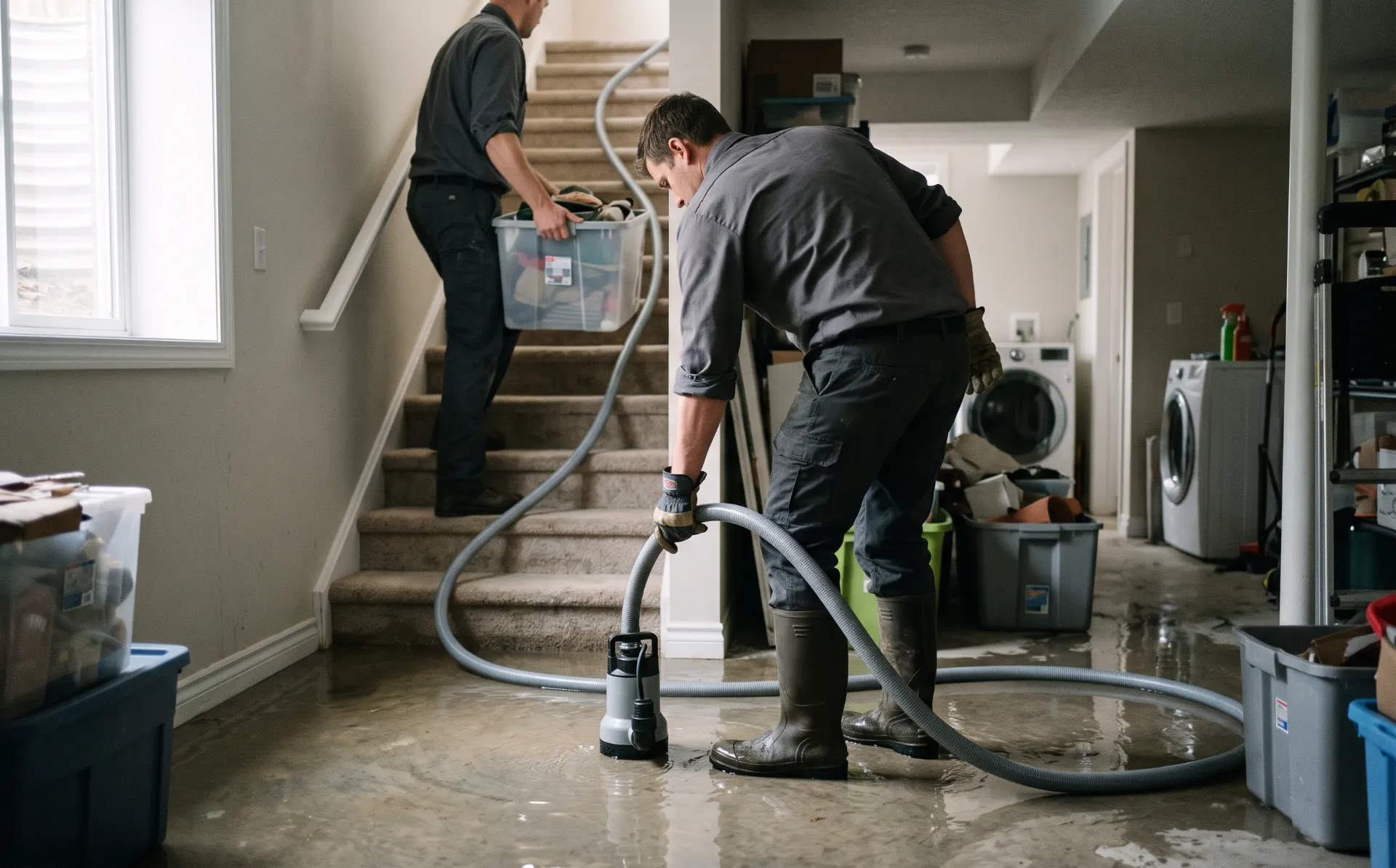
Pumping and water extraction Crews deploy submersible pumps and portable extractors to remove standing water from low spots beneath the structure.
Wet insulation removal Saturated insulation and storm debris are bagged and removed after we give you a written reason for removal.
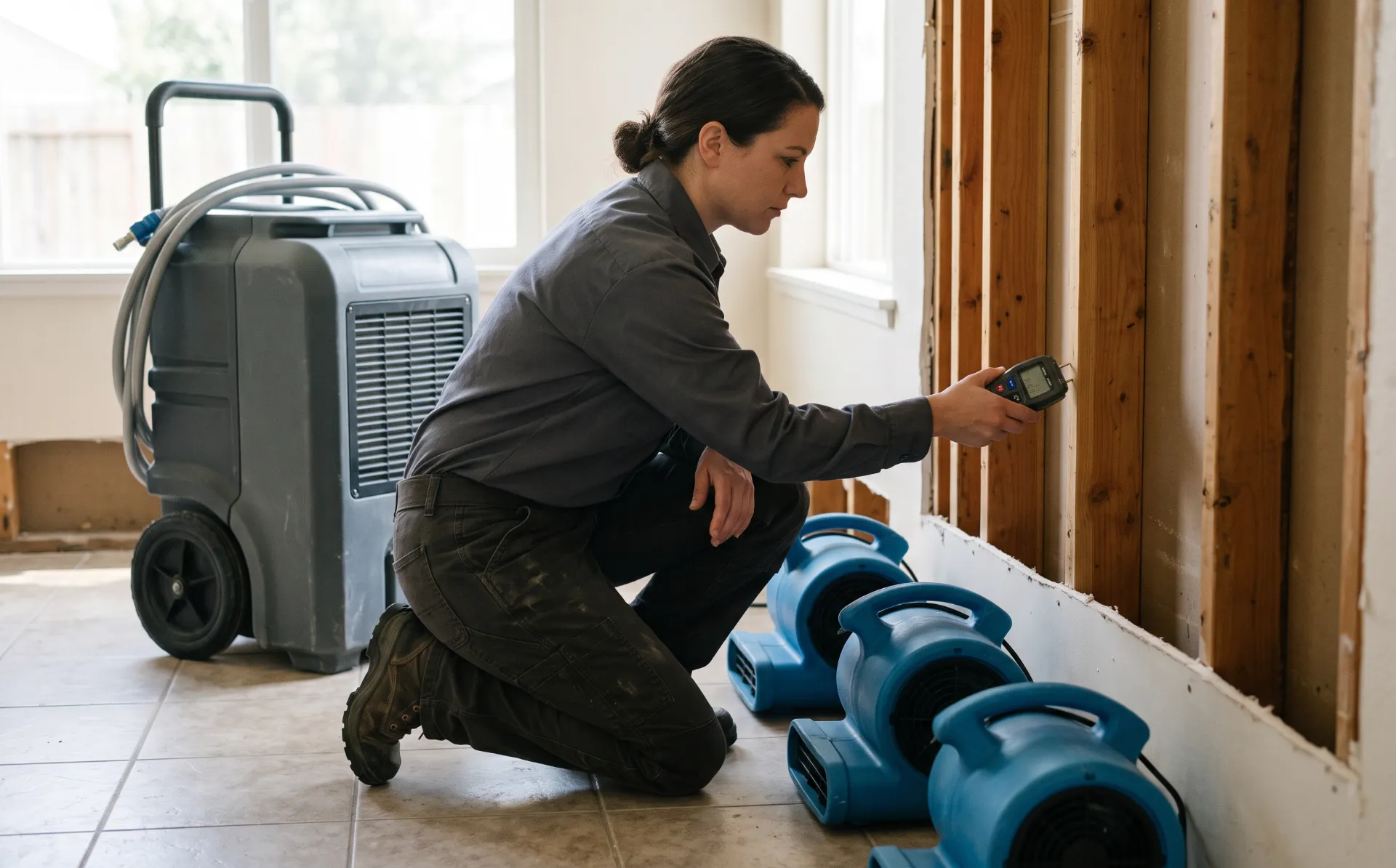
Framing and subfloor drying Air movers and dehumidifiers circulate dry air across joists, beams, and subfloor panels until moisture drops.
Cleaning and surface treatment Where the water source calls for it, crews clean affected surfaces and apply antimicrobial treatment.
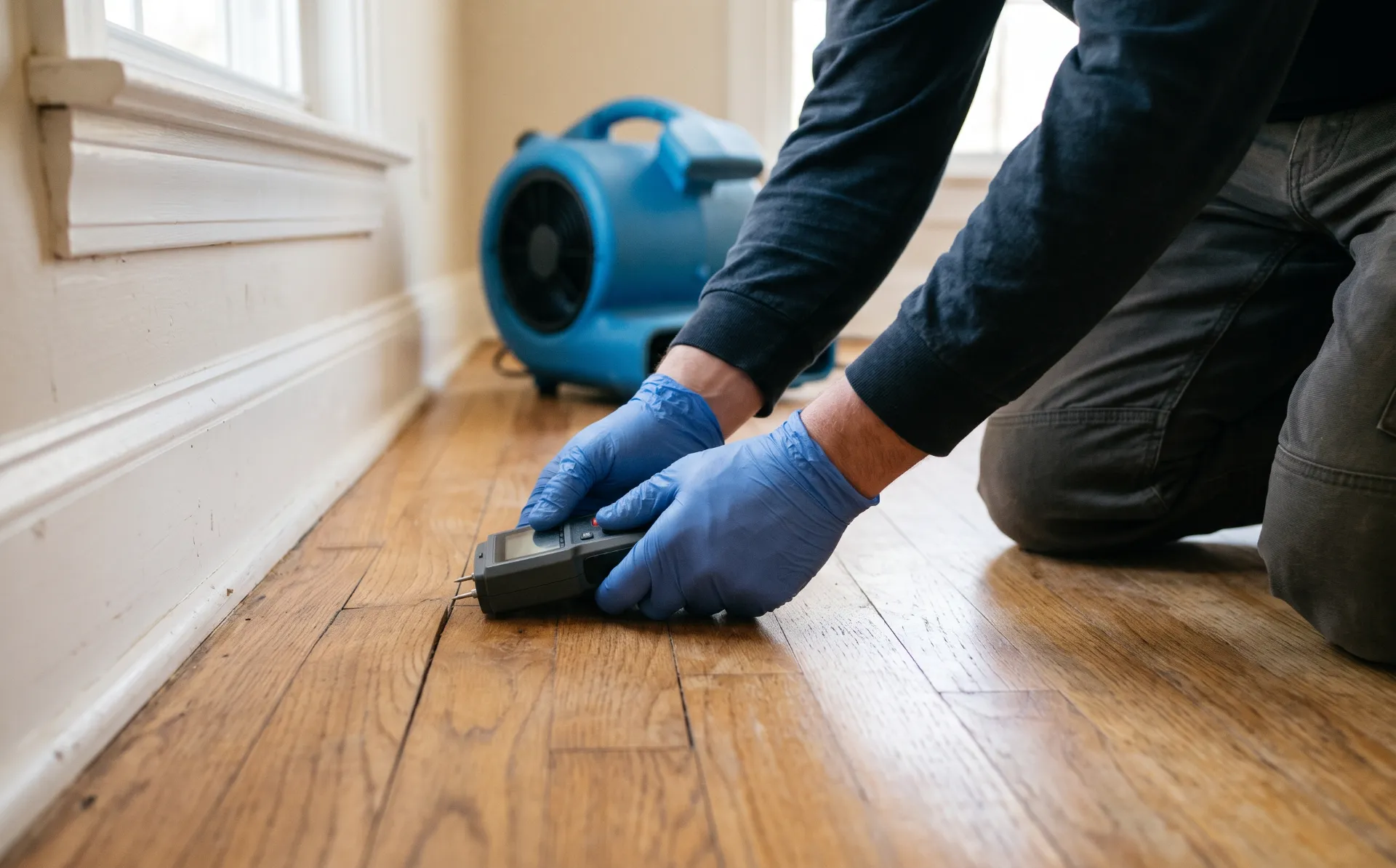
Above and below meter checks Technicians log moisture readings on the subfloor from underneath and check interior flooring above with meters.
Full claim documentation We provide dated photos, moisture logs, equipment records, and an itemized estimate in the format adjusters use.
 Summerlin · Demo photo
Warning signs you can notice inside
Because few homeowners open a crawlspace hatch regularly, water underneath often announces itself inside the living space first. Rising moisture can move through the subfloor, affecting indoor air and finish flooring well before anyone sees a puddle at the access door.
Damp wood framing and sagging insulation create conditions where mold can begin growing within 24 to 48 hours, according to the EPA. If you notice changes in how your floors feel or how your home smells after a storm or plumbing issue, an on-site inspection can check both the crawlspace and the rooms above.
- A musty or earthy odor rising from floor vents or closets
- Floors that feel soft, bouncy, or begin to cup at the seams
- Higher indoor humidity or condensation on interior windows
- More insects indoors or visible water at the access opening
Steps in crawlspace water cleanup
We check clearance and safety first, explain what we find in writing, and keep one project manager assigned from start to finish.
- 1
Inspect below and from above
We check the access opening, test moisture in the subfloor and upstairs rooms, and determine the water category on-site.
- 2
Pump and clear wet materials
Crews pump out standing water and remove wet insulation or debris that cannot be dried in place, following a written scope.
- 3
Dry and monitor the framing
Drying equipment runs under the home while technicians return on the scheduled visit plan to record framing moisture readings.
- 4
Document and hand off repairs
We deliver completion records and moisture logs, handle covered flooring or trim repairs, and coordinate trade partners as needed.
Limits and work done by others
Crawlspace height and access openings can limit what equipment fits and what our crews can reach safely. Vapor barrier installation, yard drainage correction, foundation and structural repairs, pest control, and plumbing fixes are handled by other licensed contractors. We can refer or coordinate plumbing partners when repairs overlap with drying.
Crawlspace cleanup questions
How can I tell if my crawlspace has water in it?
Look for indirect signs inside first, such as musty odors, cupping or soft flooring, higher indoor humidity, or water visible near the access opening. Because moisture can sit in low spots out of view from the hatch, a moisture meter inspection from both below and above is the most reliable way to check. Dryline offers a free on-site inspection across the Las Vegas valley.
Does wet crawlspace insulation always have to be removed?
Often it does, especially when insulation is saturated, sagging, or soaked by outdoor runoff or sewage. Wet insulation holds water against wood joists and prevents air movers from drying the subfloor. Dryline provides a written reason before removing any material, and salvage always depends on the water source and condition.
How long does crawlspace drying take?
Drying time depends on the amount of water, the wood and soil conditions, airflow, and how long materials stayed wet. It often takes several days, and we never promise a fixed timeline. Our technicians log moisture readings on scheduled visits so you can see progress in the drying log.
What if I am worried about mold under the house?
Mold can start growing on wet materials within 24 to 48 hours, according to the EPA, and no company can promise mold prevention. Dryline provides IICRC trained mold remediation supervised by an AMRT certified technician when needed. Any mold testing before work or clearance testing afterward must be done by an independent third-party assessor you hire.
Do you clean crawlspaces under manufactured homes?
Yes, Dryline works on manufactured homes as well as older raised foundation houses across the valley. Cleanup depends on safe access beneath the skirting and the condition of the underbelly wrap and insulation. We inspect the space on-site and give you a written scope and price before work starts.
Does insurance cover crawlspace flood cleanup?
Coverage depends on your policy and what caused the water, and only your insurer decides. Sudden plumbing leaks are often handled differently from rising outdoor floodwater, which standard homeowners policies generally exclude. With your permission, Dryline works with every insurance company’s adjuster, and you are responsible for your deductible and uncovered costs.
Related services

Pumping and drying flooded basements
While basements are uncommon in the valley, custom homes, newer builds, and below grade commercial spaces need dedicated pumping and drying when water enters.
Read moreStructural drying after water gets in
We dry walls, subfloors, and framing in Las Vegas valley homes and businesses using air movers, dehumidifiers, and logged moisture readings.
Read moreWhen water damage leads to mold
Dryline inspects lingering moisture, dries wet structures, and performs IICRC trained mold remediation for Las Vegas valley homes and businesses.
Read more
Schedule a crawlspace moisture check
Serving raised foundation and manufactured homes across the Las Vegas valley. Call for active leaks; website forms are read in office hours and do not confirm a crew.