
Cleanup for sewage and waste backups
Dryline extracts, cleans, and dries valley homes and commercial spaces after sewer backups, waste overflows, and outside floodwater.
- WRT certified lead techs
- IICRC Certified Firm
- Over 5,000 properties dried
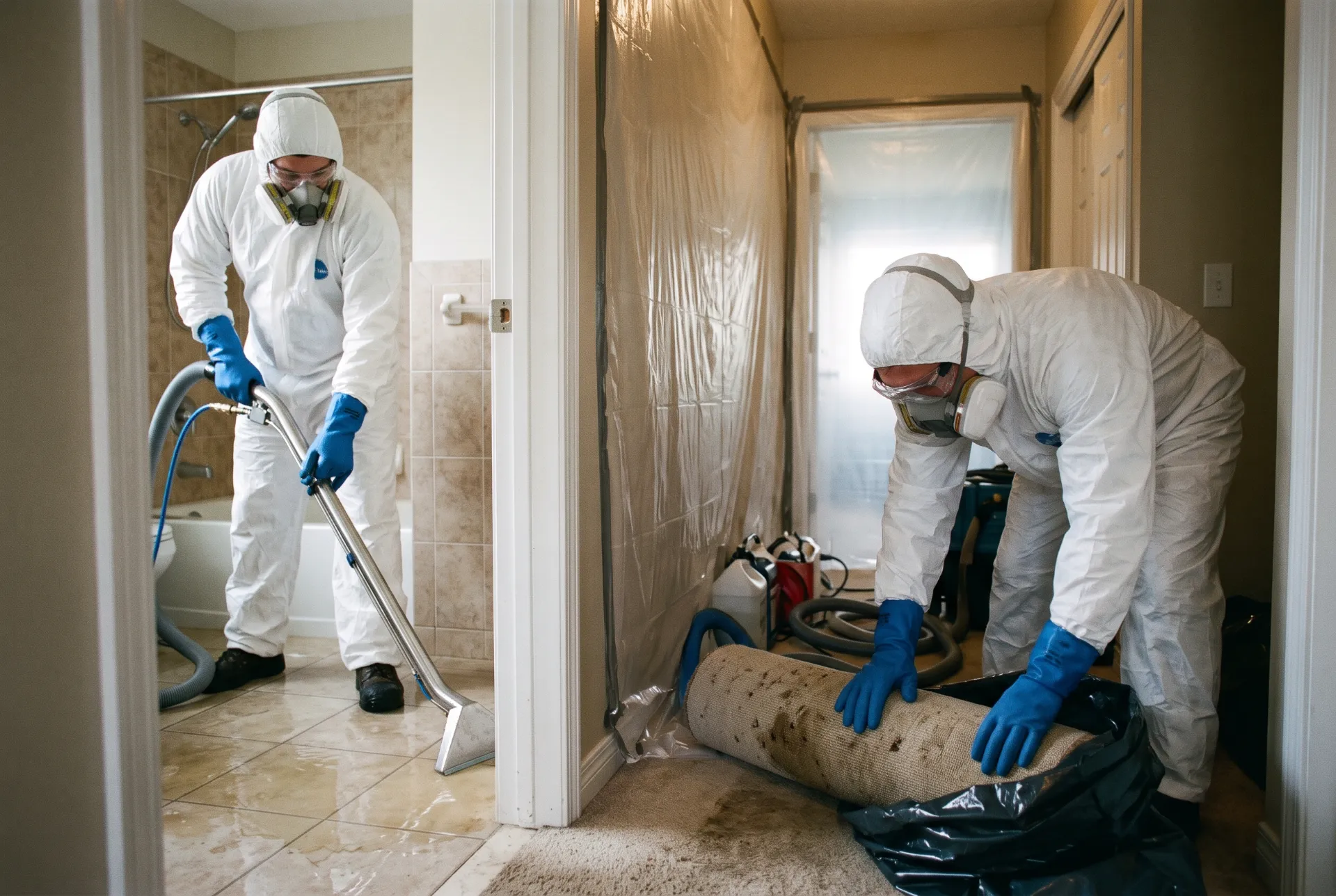 North Las Vegas · Demo photo
Contaminated water situations we handle
Under ANSI/IICRC S500, sewage, rising outdoor floodwater, and water that has degraded over time require strict containment and specialized cleanup.
Sewer line backups
When a main sewer line backs up through floor drains, tubs, or toilets, waste water can spread across flooring and soak lower wall framing.
Toilet overflows with waste
An overflow containing solid or liquid waste is treated as contaminated water, requiring protective gear, removal of soaked pad, and disinfection.
Floodwater from outside
Surface water rising into a building from outside is classified as Category 3 because valley runoff carries oil, chemicals, pet waste, and debris.
Commercial drain and sump backups
Backed up floor drains or sumps in retail, hospitality, warehouse, or office spaces require containment to separate affected zones from clean areas.
Standing water left for days
Even water from a clean pipe does not stay clean if it sits stagnant. After enough time, trapped water may need full contaminated water procedures.
Multi unit and HOA backups
Shared plumbing stacks in apartments, condos, and senior living buildings can send wastewater into several rooms or common areas at once.
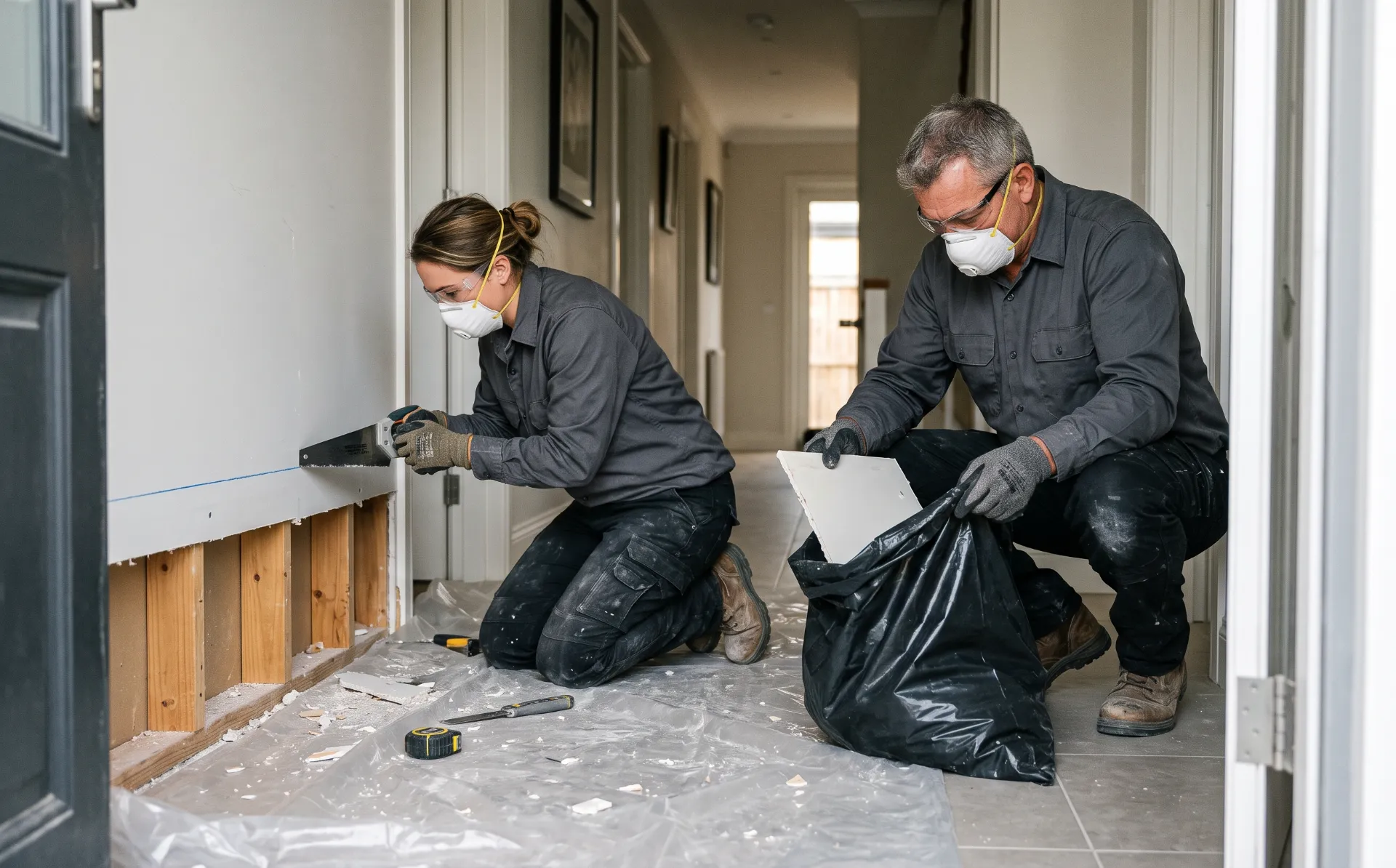 Spring Valley · Demo photo
What sewage cleanup work includes
Contaminated water work follows a strict sequence to protect unaffected rooms, remove unsalvageable materials, and document every stage.
Protective gear and barriers Crews wear personal protective equipment and set containment barriers to help keep contamination from spreading.
Contaminated water extraction We pump and extract standing sewage and sludge using dedicated equipment suited for contaminated water.
Porous material removal Soaked carpet, pad, drywall, and insulation generally cannot be saved after Category 3 contact and are removed with written notes.
Cleaning and disinfection Remaining structural surfaces like concrete, framing, and nonporous tile are thoroughly cleaned and treated with antimicrobials.
Drying and odor control After source removal, we run dehumidifiers, air movers, and HEPA air scrubbers to dry framing and address lingering odors.
Claim and drying records You receive dated photos, moisture readings, a drying log, equipment records, and an itemized estimate for your records.
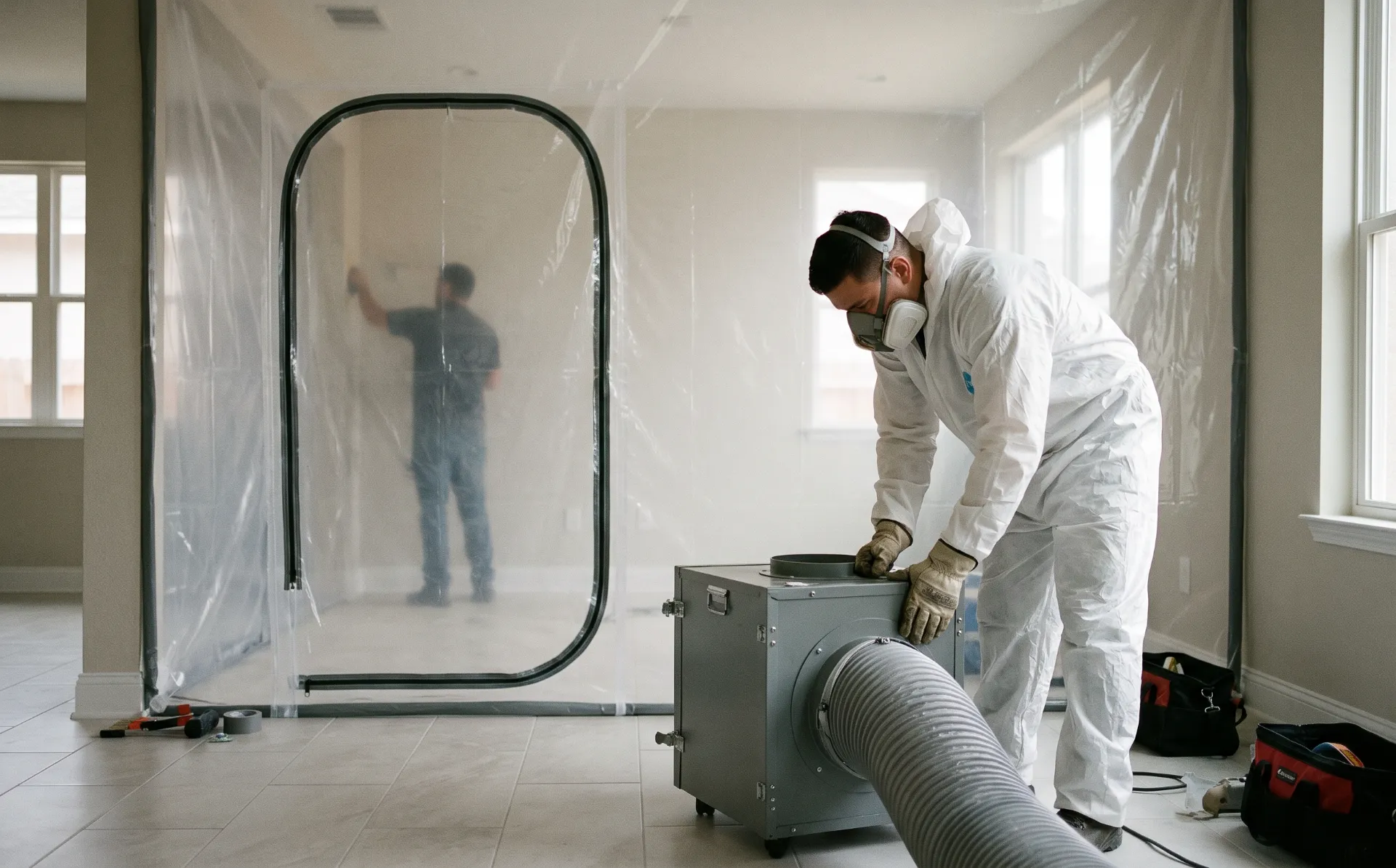 Summerlin · Demo photo
Staying safe around contaminated water
Sewage backups and rising outdoor floodwater are handled as Category 3 water under the ANSI/IICRC S500 standard because they contain gross contamination. Keep family members, employees, and pets completely out of affected rooms. Dryline cannot tell anyone by phone that a building or room is safe to enter or stay in.
Avoid running fans or your HVAC system while contaminated water is present, since moving air can carry droplets and odors into clean rooms. Do not attempt to mop, vacuum, or dry sewage yourself with household tools. Leaving the area undisturbed until a properly equipped crew arrives limits exposure and cross contamination.
- Do not let children, adults, or pets walk through affected rooms.
- Do not run household fans or the HVAC system near wet waste water.
- Do not try to clean or dry sewage with household mops or vacuums.
- Do not handle soaked porous items without proper protective gear.
How sewage cleanup moves step by step
Every job starts with safety and containment before any drying equipment turns on, with one project manager guiding the process.
- 1
Contain and protect the area
Our crew arrives in protective gear, inspects the affected footprint, and sets containment to isolate contaminated zones from clean rooms.
- 2
Extract and remove materials
We extract liquid waste and remove contaminated porous materials like carpet pad, drywall, and insulation after giving a written reason.
- 3
Clean and disinfect surfaces
Exposed concrete, subfloors, and framing are washed and treated with antimicrobial products, paired with HEPA air scrubbing for odor control.
- 4
Dry, verify, and document
We dry remaining structural materials, log moisture readings on scheduled visits, and provide full photo and drying documentation.
Work Dryline refers to other specialists
Dryline does not clear clogged drains or repair sewer lines, which requires a licensed plumber. We also do not perform environmental or mold testing, asbestos abatement, or public adjusting. If you want clearance testing after cleanup, an independent third-party assessor you hire performs that testing.
Common questions about sewage cleanup
Is it safe to stay in my home during a sewage backup?
Dryline cannot tell you by phone that your home is safe to occupy. Stay out of any affected room and keep pets away from the water. Whether other parts of the building can be used depends on the size of the backup, containment, and your comfort level once evaluated on-site.
Which materials have to be thrown away after sewage contact?
Porous materials soaked by Category 3 water are generally not salvageable. Carpet, carpet pad, wet drywall, insulation, and many upholstered items usually need removal, though exact decisions depend on the material and how far water traveled. We provide a written reason before cutting anything out.
How long does sewage cleanup and drying take?
Timing depends on the square footage affected, how deeply water soaked into framing, and what materials need removal. Extraction and cleaning often happen first, while structural drying often takes several days. We never promise a fixed drying schedule because every property responds differently.
Will the sewage smell go away completely?
Odor control starts with removing contaminated water and unsalvageable porous materials, followed by disinfecting remaining surfaces and running HEPA air scrubbers and deodorization. Results depend on finding every wet cavity, and we cannot promise a specific outcome before inspecting.
Does homeowners insurance cover a sewer backup?
Water and sewer backup coverage is often a separate endorsement, and standard policies generally exclude flood from rising surface water. Check your policy or ask your agent because your insurer decides coverage. With your permission, we work with any adjuster, and you owe your deductible and uncovered items.
Who clears the clogged line or repairs the broken sewer pipe?
A licensed plumber must clear the blockage or repair the sewer line so waste stops backing up. Dryline handles the cleanup, disinfection, drying, and interior repairs afterward. If you need a plumber, our project manager can coordinate with a licensed plumbing partner.
Related services

Cleaning up after a toilet overflows
From clean tank overflows to waste backups that reach hallways or ceilings below, Dryline inspects, cleans, and dries valley homes and commercial restrooms.
Read moreClearing odors after water damage
We address musty and water related odors in Las Vegas valley homes and businesses by removing the wet source first, then cleaning, drying, and filtering the air.
Read moreGetting the water out after a flood
Dryline extracts standing water, dries affected building materials, and cleans residential and commercial properties across the Las Vegas valley.
Read more
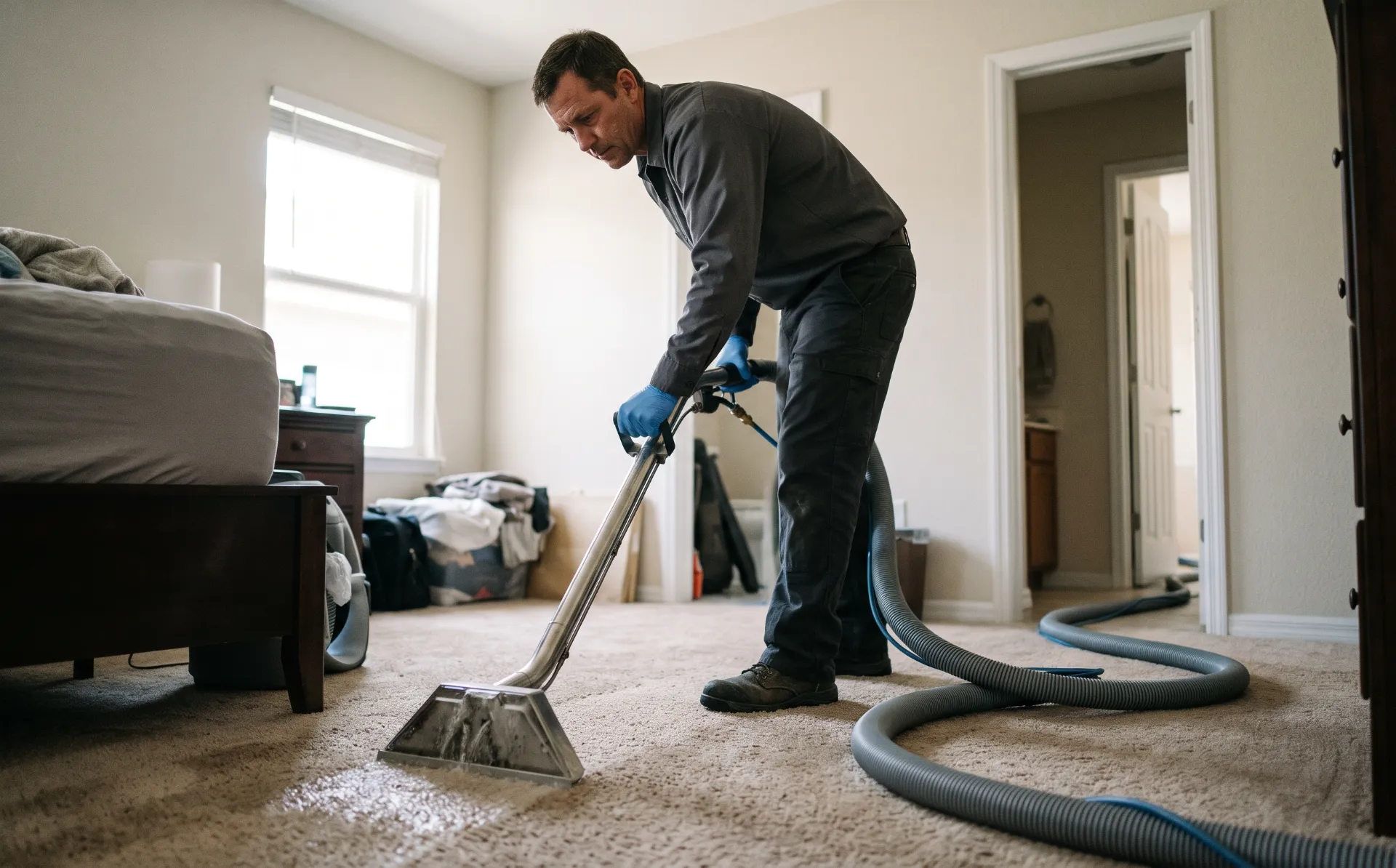
Speak with our sewage cleanup team
Serving homes and businesses across the Las Vegas valley and Boulder City. Website forms are reviewed during office hours only and never confirm a crew visit.