Clearing odors after water damage
We address musty and water related odors in Las Vegas valley homes and businesses by removing the wet source first, then cleaning, drying, and filtering the air.
- Source removal comes first
- HEPA air scrubber filtration
- AMRT supervised mold work
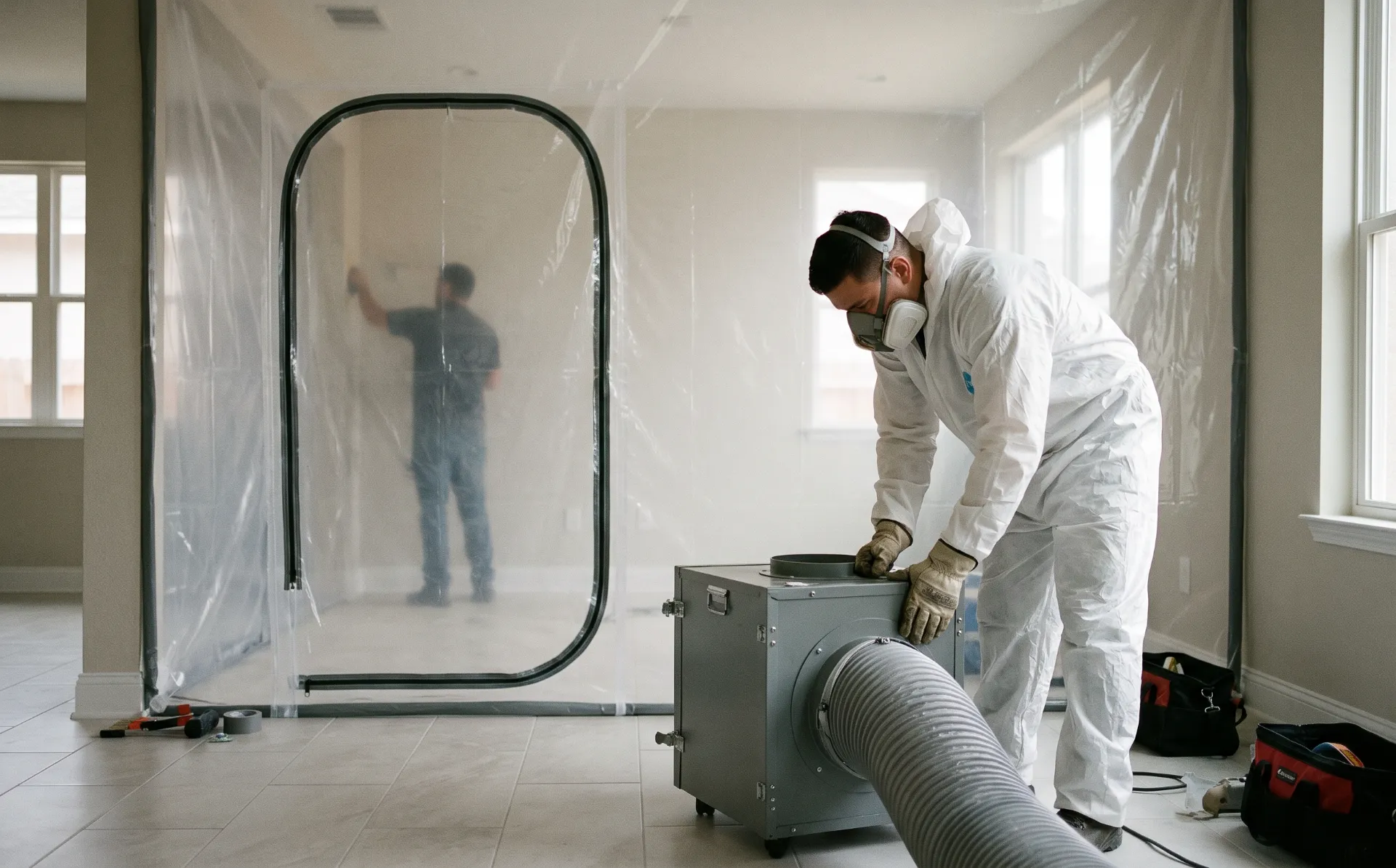 Summerlin · Demo photo
Where water damage odors come from
Lingering smells after a leak or flood usually point to trapped moisture or contaminated materials that still need attention.
Wet carpet pad
Soaked pad holds water beneath the carpet backing, creating strong musty smells that return until the wet pad is removed.
Damp drywall
Paper facing and gypsum absorb moisture from leaks or runoff and release stale odors while they stay wet inside walls.
Soaked insulation
Wet insulation traps water in wall and ceiling cavities with little airflow, holding damp odors long after floors dry.
Sewage or contaminated water
Category 3 water from backups or outside floodwater leaves organic residue in porous surfaces that requires removal and disinfection.
Standing water in closed rooms
Water left sitting in a closed home or commercial space raises indoor humidity and lets damp smells settle across surfaces.
Materials wet for several days
When building materials stay damp beyond 24 to 48 hours, microbial activity can begin and produce persistent musty odors.
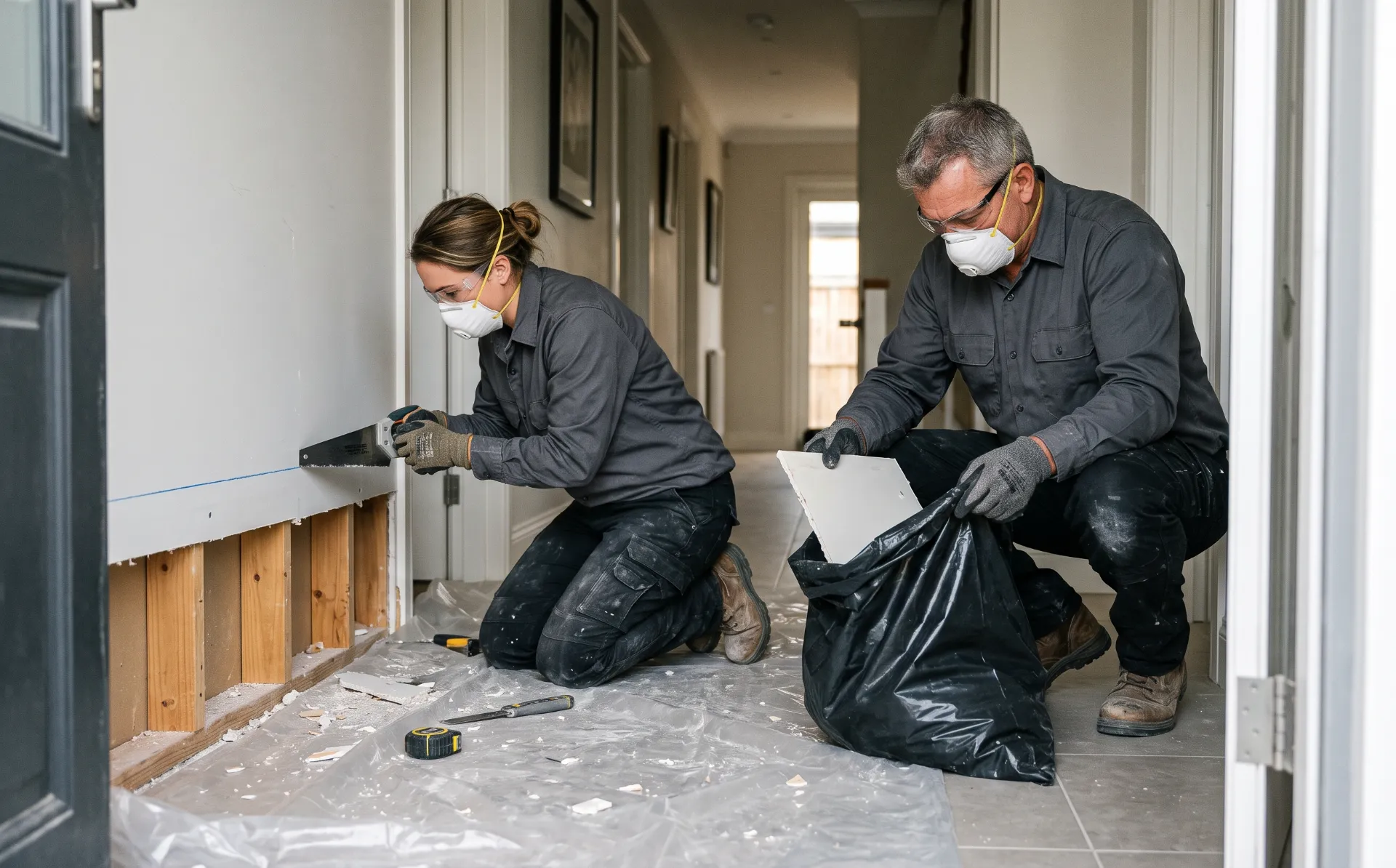 Spring Valley · Demo photo
What our odor control service includes
Masking a smell rarely lasts. Our crews address the moisture and residue causing the odor before any deodorizer is applied.
Source inspection We use moisture meters and thermal cameras to find hidden damp areas or residue causing the smell.
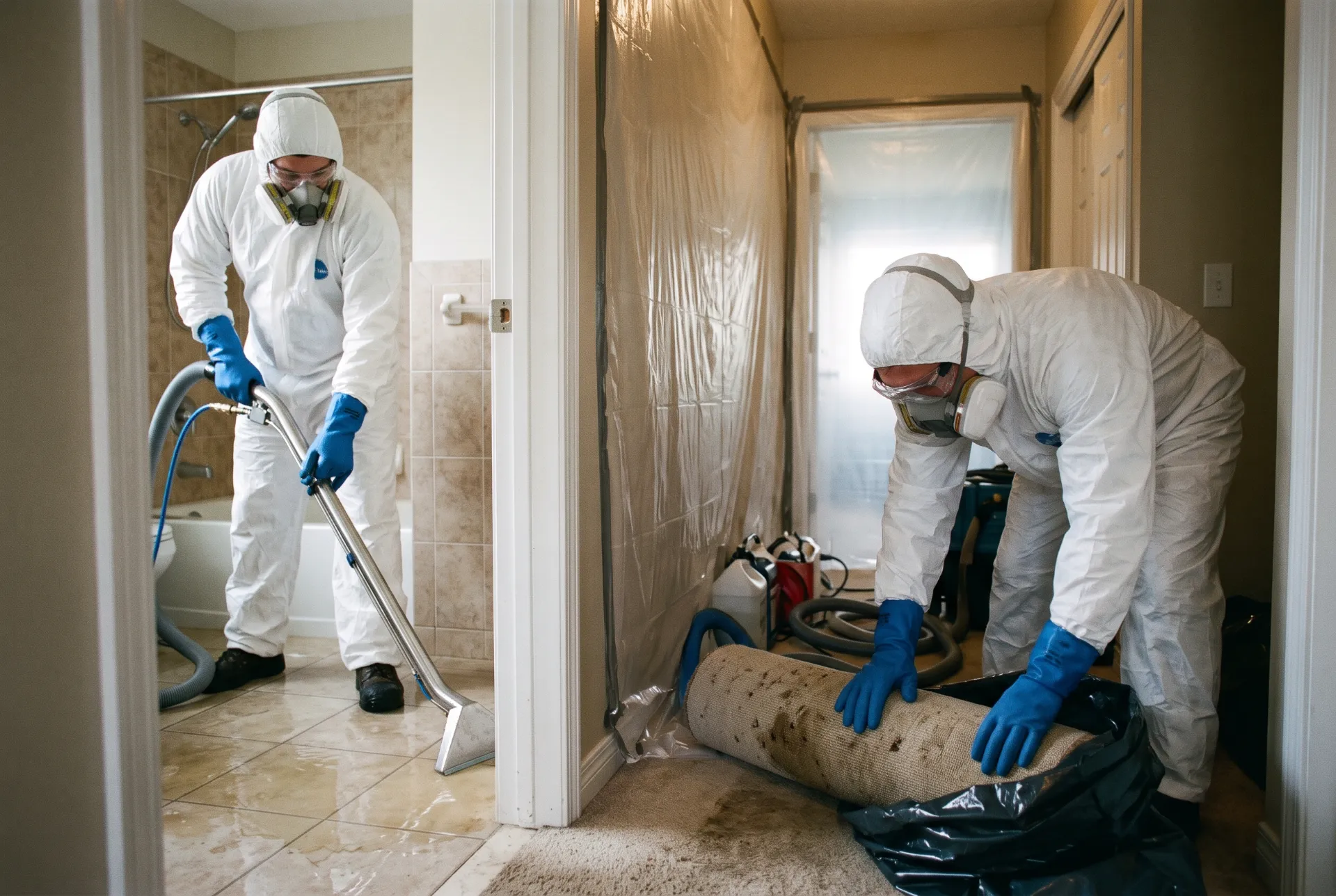
Contaminated source removal Unsalvageable wet carpet pad, drywall, or contaminated porous materials are removed after written explanation.
Cleaning and antimicrobials Affected hard surfaces and exposed framing are cleaned and treated where the water source calls for it.
Structural drying Air movers and dehumidifiers dry the remaining structure to target readings so moisture cannot feed new odors.
HEPA air scrubbing Air scrubbers filter airborne particles from the room through HEPA filters while cleanup and drying are underway.
Final deodorization Once wet and contaminated sources are gone and materials are dry, we apply targeted deodorization treatments.
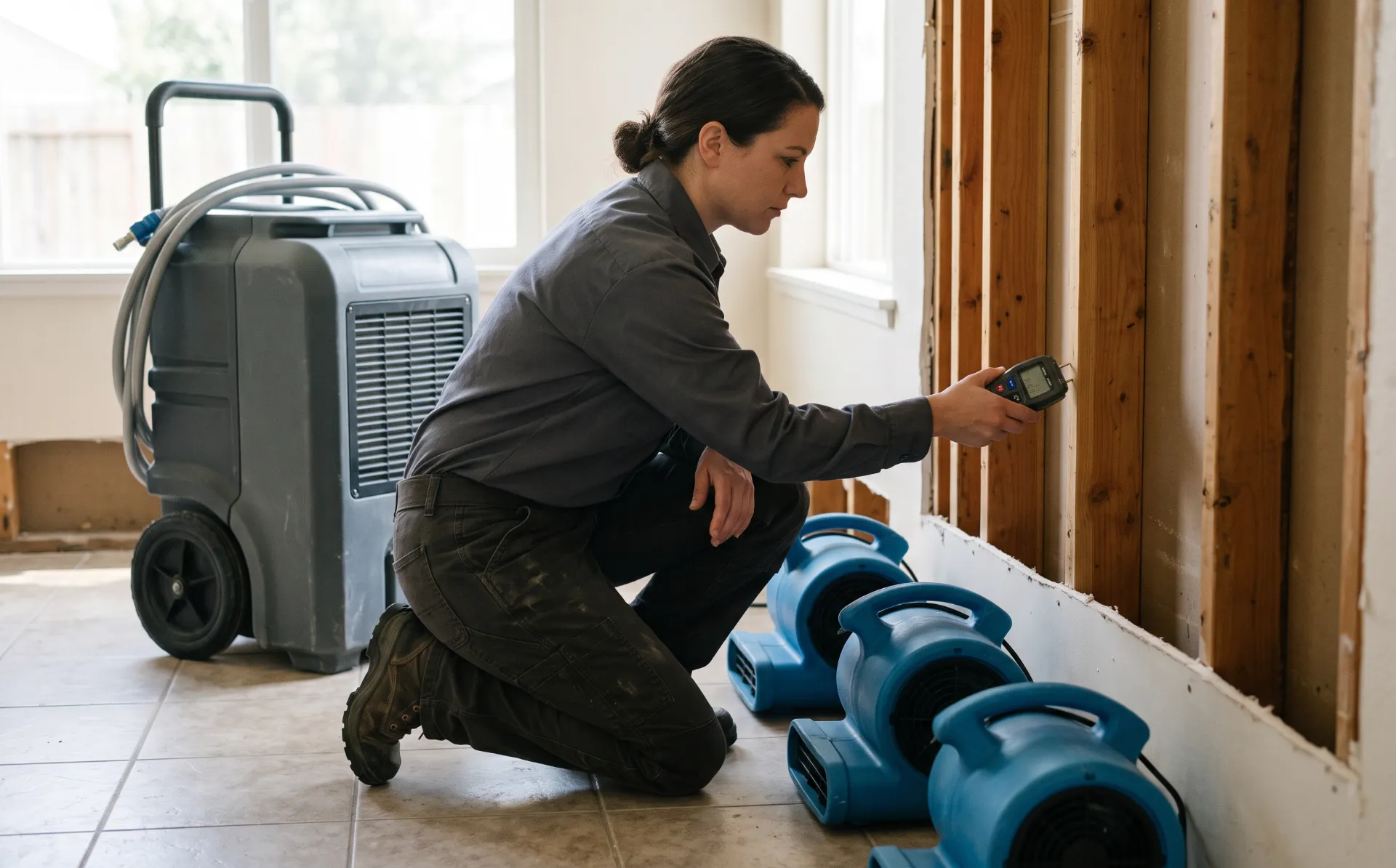 Summerlin · Demo photo
Why removing the source comes first
Spraying a deodorizer over wet carpet pad, damp drywall, or contaminated residue only covers the smell for a short time. As long as moisture or organic waste remains inside the building, the odor comes back. In most water losses, smells fade naturally once unsalvageable materials are removed, surfaces are cleaned, and the structure reaches dry readings.
After the source is gone, air scrubbers with HEPA filters help clean the indoor air and targeted deodorization addresses remaining traces. Every building and water event is different, and Dryline does not promise that every odor will be completely eliminated. Your project manager walks through what is realistic for your space before work begins.
- Find and remove wet or contaminated materials causing the smell
- Clean and apply antimicrobial treatment to affected surfaces
- Dry the building structure completely and run HEPA air scrubbers
- Apply deodorization after the source is gone and recheck the space
How we address water damage odors
We follow a clear four step sequence so odors are handled at their root instead of covered up.
- 1
Inspect for the source
We trace the smell using moisture meters and thermal imaging to locate damp materials or contaminated areas.
- 2
Remove or clean it
With written explanation first, we remove unsalvageable porous materials and clean affected framing and hard surfaces.
- 3
Dry and filter the air
We dry the structure using air movers and dehumidifiers while HEPA air scrubbers filter particles from indoor air.
- 4
Deodorize and recheck
Once readings confirm dryness and sources are gone, we apply deodorization and walk through the space with you.
What odor control does not cover
Dryline handles odors connected to water, storm, and sewage damage. Odors caused by smoke, pets, or plumbing vents may require another specialist or a licensed plumber. We do not perform mold or environmental testing. If you want air or surface testing before or after work, an independent third-party assessor you hire handles it.
Questions about water damage odors
Does a musty smell after a leak always mean mold?
A musty odor can be a sign of mold, and EPA guidance notes mold can start growing on wet materials within 24 to 48 hours. Still, damp materials alone can also smell stale without confirmed growth. To confirm whether mold is present, an independent third-party assessor performs testing.
How long do water damage odors usually last?
How long an odor lingers depends on the water source, how long materials stayed wet, and how deeply moisture soaked into the structure. Smells often fade steadily as wet sources are removed and drying progresses. Dryline never promises a set timeline or complete elimination of every odor.
Are the cleaning and deodorizing products safe to be around?
The products used depend on the water category and affected surfaces in your building. Ask your project manager about the specific cleaning, antimicrobial, or deodorizing products planned for your space before application. Dryline cannot give occupancy advice by phone.
Can smelly wet carpet be saved, or does it need to go?
Whether carpet can be saved depends on the water category and how long it stayed wet. Soaked carpet pad is usually replaced because it holds water and odor, and carpet exposed to contaminated water is generally not salvageable. We assess the carpet on-site and explain options in writing.
How do you handle odors from sewage backups?
Sewage is Category 3 contaminated water, so source removal comes first. Crews in protective equipment remove contaminated porous materials, clean and disinfect affected hard surfaces, dry the structure, and run HEPA air scrubbers before any deodorization is applied.
Will insurance cover odor control after water damage?
Your carrier determines whether odor treatment is covered, and rising surface water floods are generally outside standard homeowners policies. With your permission, we work with every insurer’s adjuster and provide logs, photos, and itemized estimates. You remain responsible for the deductible and uncovered balances.
Related services

Cleanup for sewage and waste backups
Dryline extracts, cleans, and dries valley homes and commercial spaces after sewer backups, waste overflows, and outside floodwater.
Read more
Removing mold under containment
Dryline provides IICRC trained mold remediation after water damage for Las Vegas valley homes and businesses, supervised by an AMRT certified technician.
Read moreStructural drying after water gets in
We dry walls, subfloors, and framing in Las Vegas valley homes and businesses using air movers, dehumidifiers, and logged moisture readings.
Read more
Schedule a free odor and moisture check
Dryline serves residential and commercial properties across the Las Vegas valley, from Centennial Hills to Henderson. Web forms are checked during office hours only and do not confirm a visit.