Cleaning up after storm water gets in
When monsoon rain or wind pushes water through a roof, window, door, or wall, Dryline cleans up the intrusion and dries affected homes and businesses.
- Our crews tarp and board-up
- Six stocked response trucks
- Free on-site storm estimates
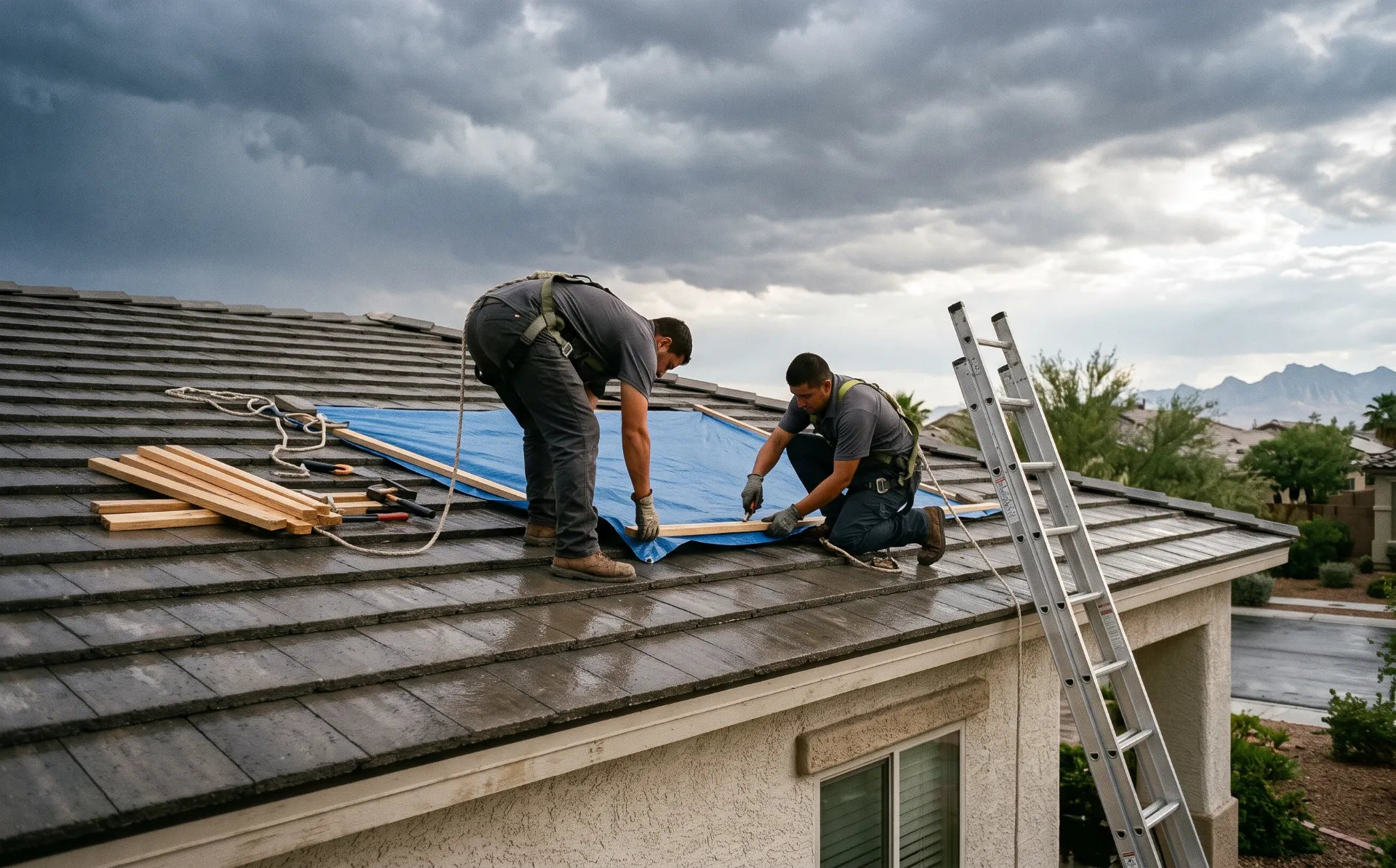 North Las Vegas · Demo photo
Storm water problems we see across the valley
Most valley storms arrive between July and early September, dropping heavy rain onto hard, dry soil. Water can reach your property from wind, roof openings, or runoff flowing from miles away.
Wind driven rain intrusion
Strong gusts push rain sideways into eaves, vents, and siding gaps. We inspect where moisture entered and assess whether the water is clean or dirty.
Roof leaks during storms
Damaged tiles or flashing let rainwater drip into attics and ceilings. We dry interior framing and place temporary tarping when needed.
Window and door leaks
Broken glass or overwhelmed thresholds let rain pour onto indoor floors. We remove standing water and board-up broken openings temporarily.
Flash flooding and monsoon runoff
Runoff can flow downstream to a property even when rain falls elsewhere. We extract floodwater and clean surfaces affected by outdoor debris.
Debris related water entry
Windblown grit, leaves, and storm debris can block drains or breach entryways. Our crews clear debris from inside the building and entry points.
Commercial storm water damage
Flat roofs, loading doors, and storefronts take a hit during monsoon bursts. We dry retail, office, warehouse, and multifamily buildings.
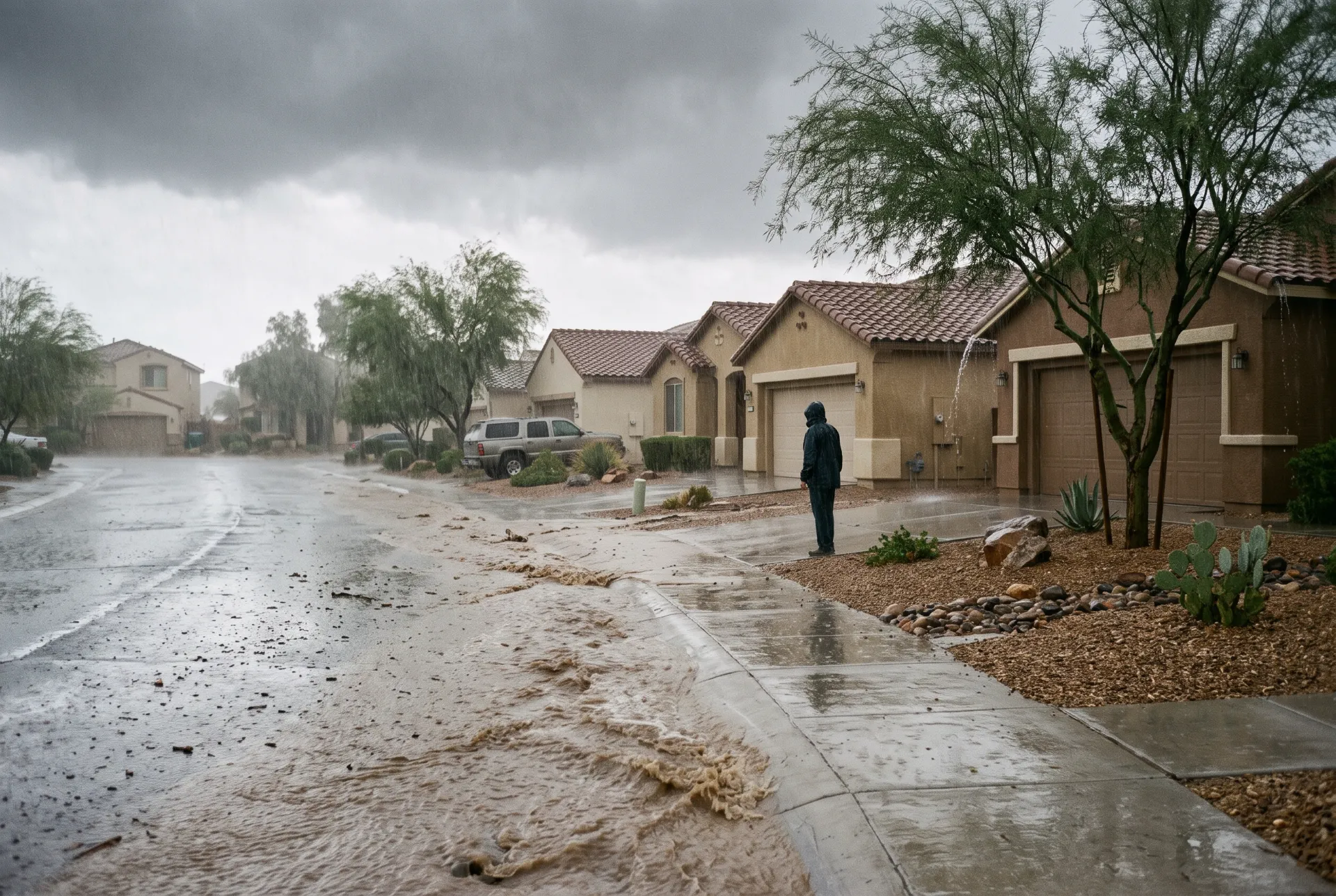 Las Vegas valley · Demo photo
What storm damage cleanup can include
The exact steps depend on how water entered and which materials got wet. We check the property first and confirm your written scope before starting full cleanup.
Temporary tarping and board-up We cover exposed roof areas and board-up broken windows or doors. This protection is temporary and is not a permanent repair.
Damage and moisture inspection Technicians check ceilings, walls, and floors with moisture meters and thermal cameras to map hidden dampness.
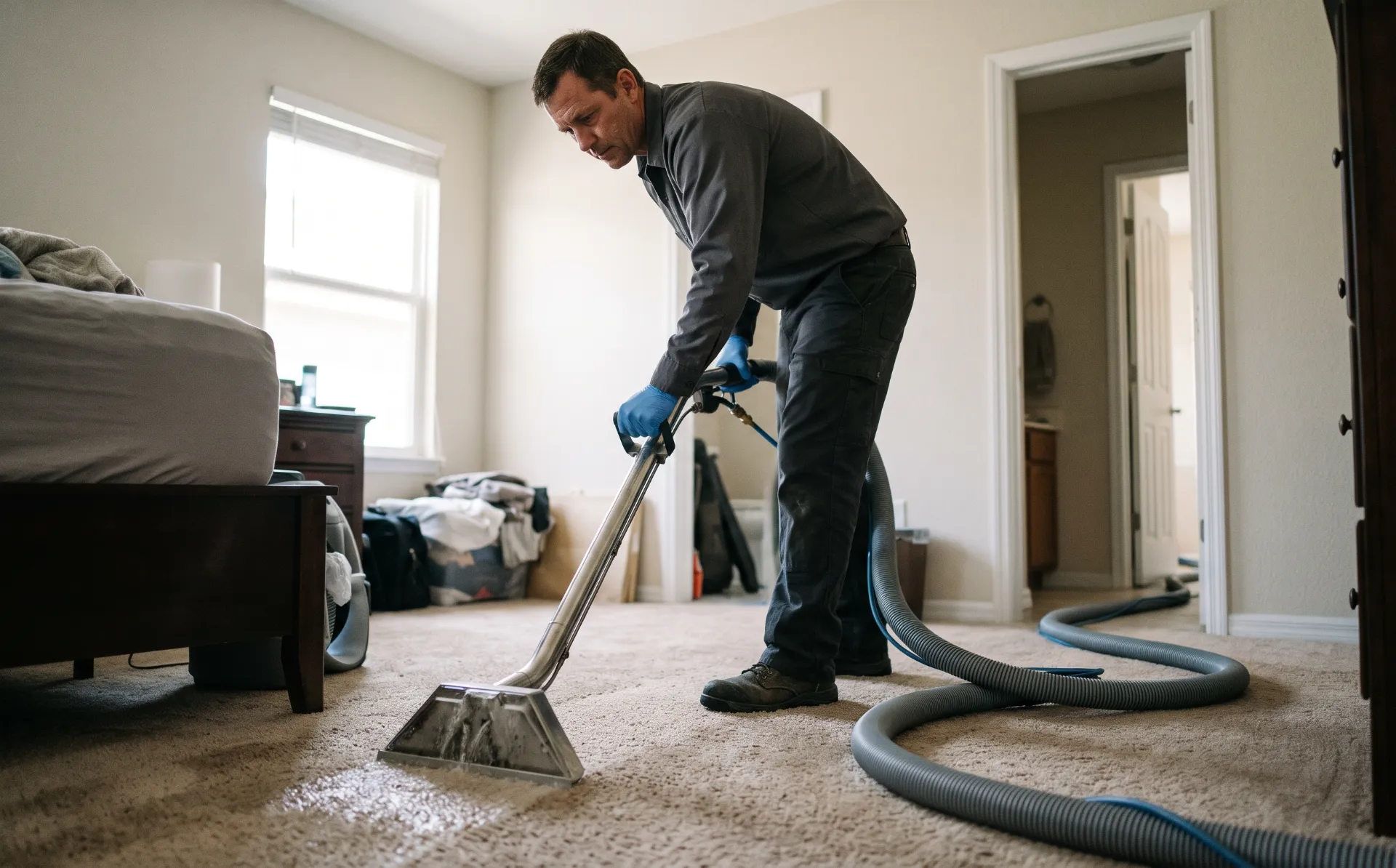
Water extraction and debris Crews pump out stormwater and clear storm debris from inside the building and around damaged entry points.
Wet material handling We dry salvageable materials in place and provide a written reason before removing soaked drywall, insulation, or flooring.
Structural drying and cleaning Air movers, dehumidifiers, and scheduled monitoring dry the structure, with cleaning and odor control where needed.
Claim records and repairs We document the loss for your insurer, handle licensed interior repairs, and coordinate licensed roof or trade partners.
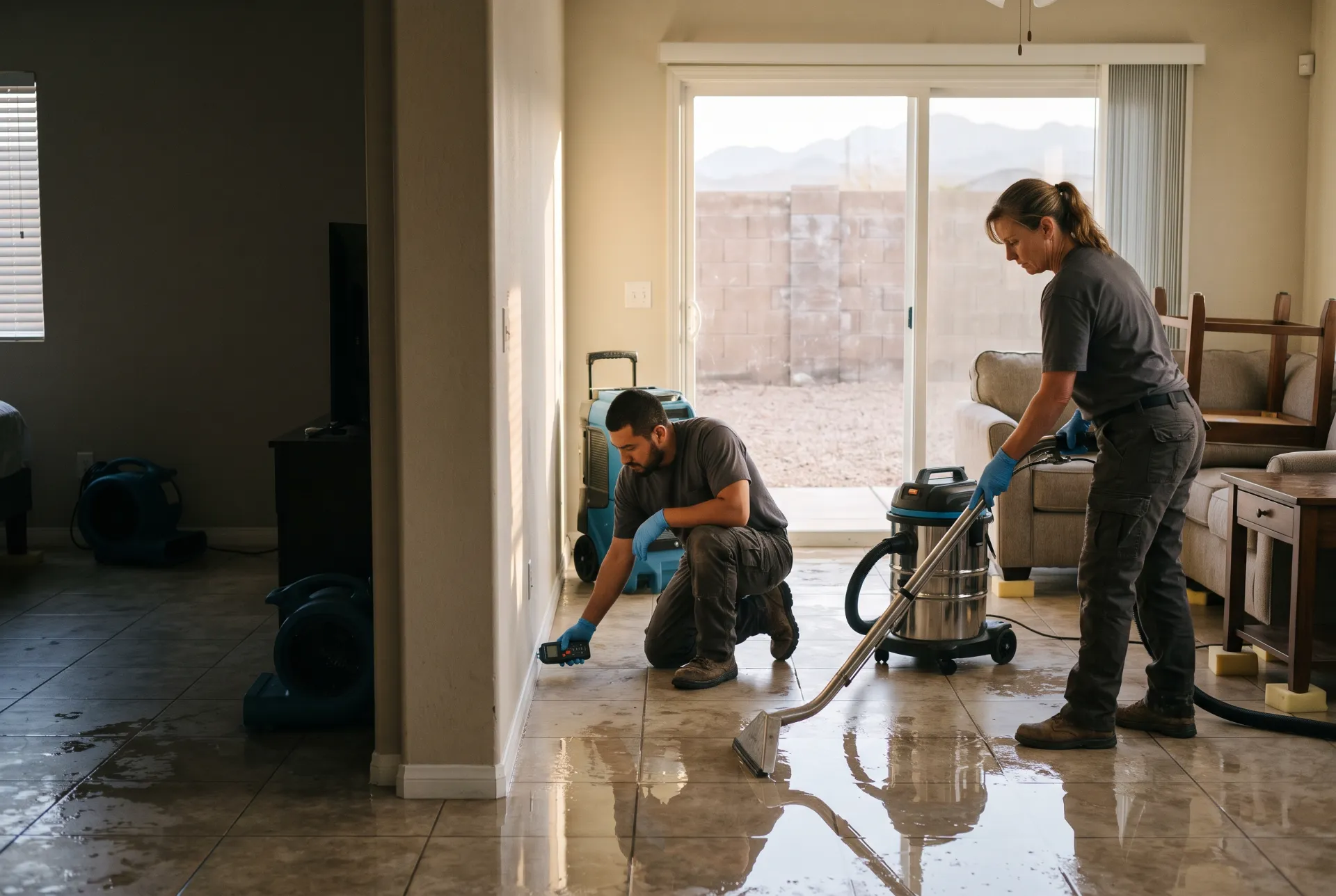 Henderson · Demo photo
First safety steps after a storm
Your safety comes before cleanup. Dryline cannot confirm by phone that a building is safe to enter, so take basic precautions while you wait for an on-site inspection.
Report life safety hazards If you smell gas, see downed lines, or face any life safety threat, leave the area and contact 911 or your utility first.
Stay out of unstable areas Avoid sagging ceilings, damaged walls, or rooms with standing water near electrical outlets, cords, or panels.
Keep off a damaged roof Do not climb onto a wet or wind damaged roof to inspect tiles or place a tarp. Wait for trained crews with proper gear.
Limit extra exposure if safe Only if it is clearly safe to do so, move dry belongings away from drips or place a bucket under an active ceiling leak.
Photograph visible damage Take clear photos of water entry points and wet rooms from a safe spot before anything is moved or covered.
Notify your insurer and call Contact your insurance company to ask about your policy, and call Dryline so we can schedule an inspection.
How storm damage cleanup moves forward
A single project manager stays with your job from first visit to final walkthrough, keeping you updated as cleanup moves into repairs.
- 1
Call and describe the damage
A Dryline team member answers 24 hours a day, gathers details on where water is entering, and gives an honest arrival estimate.
- 2
Inspect and protect openings
We inspect affected rooms at no charge, write a clear scope, and place temporary roof tarps or window board-ups if needed.
- 3
Extract, clean, and dry
Crews remove standing water and indoor storm debris, set drying equipment, and log moisture readings on your planned visit schedule.
- 4
Document and complete repairs
We deliver your claim documentation, perform licensed interior repairs, and coordinate licensed roof or trade partners when required.
Cleanup, repairs, and who handles each
Storm losses often involve both water mitigation and rebuilding. Here is what Dryline crews handle directly, what we coordinate, and what we refer out.
Cleanup done by Dryline crews
- Stormwater extraction and indoor debris clearing
- Temporary roof tarping and window or door board-up
- Moisture mapping, structural drying, and monitoring
- Wet material removal with written approval first
- Surface cleaning, odor control, and claim documentation
Repairs and who handles them
- Interior drywall, flooring, paint, and trim rebuilt by Dryline's own licensed crew
- Permanent roofing by licensed trade partners
- Electrical, plumbing, and HVAC via trade partners
- Tree removal is not offered and is referred out
- Structural engineering is not offered and is referred
- Waterproofing, drainage, and mold testing referred out
Dryline does interior repairs under NV License #0000000, coordinates licensed trade partners for roofing and utilities, and refers tree or structural work. Your insurer decides coverage.
Storm damage cleanup questions
Can Dryline respond at night or on weekends during a storm?
Yes, a Dryline team member answers our phone 24 hours a day, and crews are on call nights, weekends, and holidays. We do not promise a set arrival time, because travel and active calls vary. Before you hang up, our coordinator gives you an honest arrival estimate for your address.
Does temporary roof tarping or board-up fix the roof?
No, roof tarping and window or door board-up are temporary steps to help limit further rain from entering while permanent repairs are arranged. They are not a roof replacement or structural repair. Once the property is dry, a licensed roofing partner can handle the permanent roof work.
Is rain that enters through a roof or window always contaminated?
Storm and wind-driven rain is not automatically Category 3 contaminated water. Under ANSI/IICRC S500, our technicians assess the water on-site based on what it passed through and how long it sat. That assessment guides whether materials can be dried and cleaned or need to be removed.
What happens to response times during valley-wide storms?
When a heavy monsoon hits across the Las Vegas valley, call volume rises and arrival takes longer than on a typical day. We prioritize calls in order of safety risk and active water entering a building. Dryline works only in the Las Vegas valley and never deploys crews out of state.
Will insurance cover storm water damage to my property?
Coverage depends on your specific policy and how water entered the building, since standard homeowners policies generally exclude flooding from rising surface water. Check your policy or ask your agent about your terms. Your insurer decides coverage, and Dryline provides dated photos, moisture logs, and line-item estimates to support your claim.
Does Dryline handle repairs after storm cleanup is finished?
Dryline’s own licensed crew handles interior reconstruction such as drywall, insulation, texture, paint, trim, flooring, and cabinets, backed by a one-year workmanship warranty. Permanent roofing, plumbing, electrical, and HVAC repairs are completed by licensed trade partners that your project manager coordinates.
Do you remove fallen trees or exterior yard debris?
No, Dryline does not offer tree removal, structural engineering, or general exterior yard clearing. Our crews clear storm debris from inside the building and from damaged entry points so we can extract water and dry the structure safely. For fallen trees or structural concerns, we refer you to appropriate local specialists.
Related services

Getting the water out after a flood
Dryline extracts standing water, dries affected building materials, and cleans residential and commercial properties across the Las Vegas valley.
Read more
Cleaning up when desert storms get in
From summer monsoon downpours to winter rain events, Dryline provides water extraction, temporary tarping, and drying for Las Vegas valley homes and businesses.
Read moreTarping roofs and boarding openings
When a storm opens a roof, window, or door, Dryline installs temporary tarps and boards for valley homes and businesses until permanent repairs happen.
Read more
Call for Las Vegas valley storm cleanup
Dryline serves Las Vegas, Henderson, North Las Vegas, Summerlin, Green Valley, and nearby Clark County areas. Website forms are read in office hours only and never confirm a crew.