
Pumping and drying flooded basements
While basements are uncommon in the valley, custom homes, newer builds, and below grade commercial spaces need dedicated pumping and drying when water enters.
- Six stocked response trucks
- Project managers hold ASD
- Las Vegas contents storage
 Las Vegas · Demo photo
Why water enters valley basements
Most Las Vegas homes sit slab-on-grade, so below grade rooms in custom homes and commercial buildings face distinct drainage and moisture challenges during storms or plumbing failures.
Runoff in window wells and stairs
Sudden valley storms drop heavy rain on hard desert soil, sending runoff down exterior stairwells or pooling into basement window wells.
Sump pump failures
When a sump pump loses power or stops working during a heavy storm, water that should be pumped away can rise across the basement floor.
Water heater and pipe leaks
A burst supply line or failed water heater placed on a lower level can fill a finished or unfinished basement before anyone notices upstairs.
Floor drain sewer backups
Because basement drains sit at the lowest point of a building, a backed up sewer line often pushes contaminated water into below grade rooms first.
Seepage after heavy rain
Downstream runoff can reach a property even when rain fell miles away, allowing moisture to seep through foundation joints or block walls.
Below grade commercial spaces
Subterranean storage rooms, mechanical areas, and lower commercial levels collect standing water that can affect equipment, inventory, and drywall.
 Summerlin · Demo photo
What basement flood cleanup includes
Below grade spaces hold moisture differently than upper floors, so our scope pairs high volume pumping with measured dehumidification and contents care.
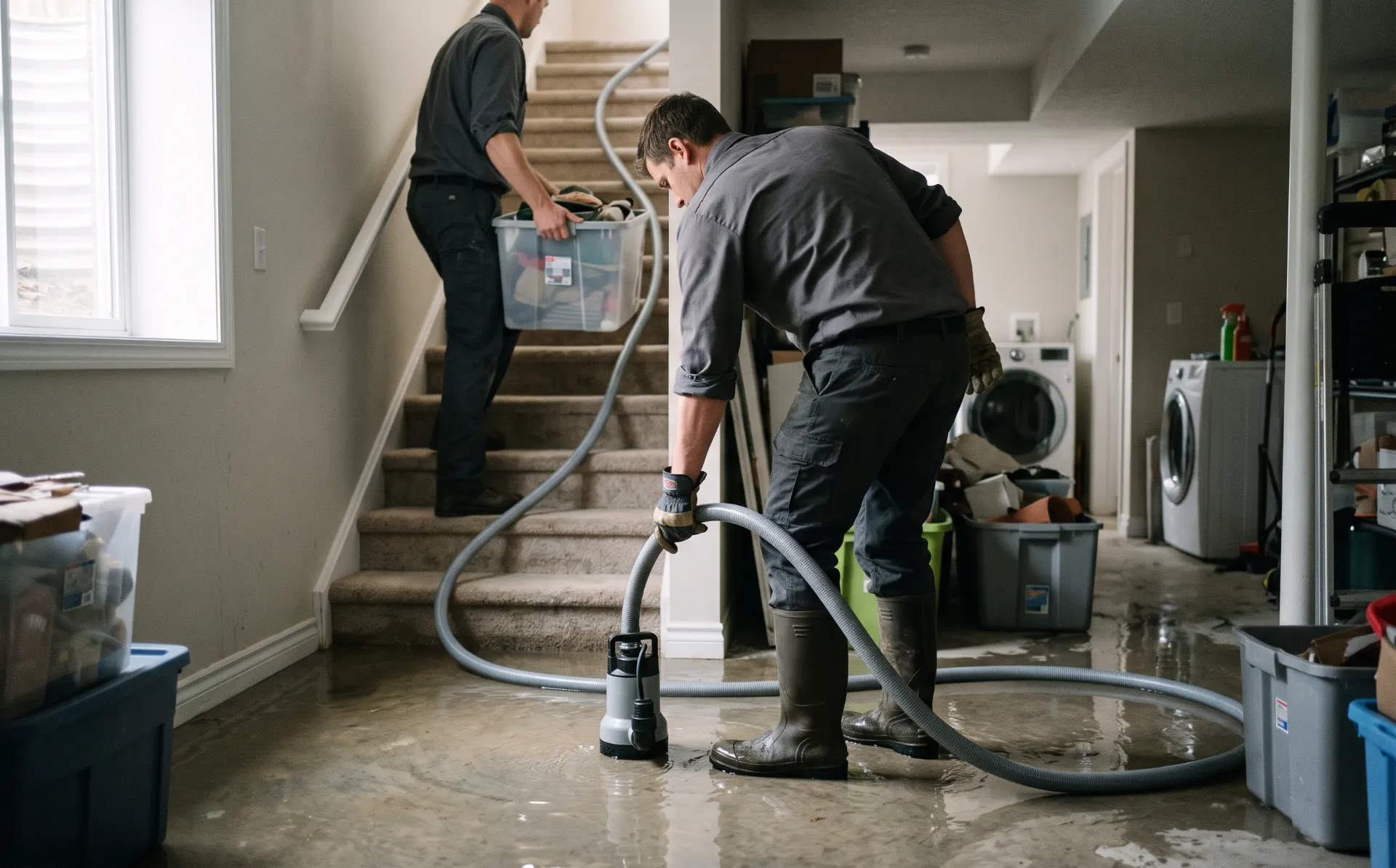
Submersible water pumping For deep standing water, we deploy submersible pumps to bring water levels down safely before detailed extraction starts.
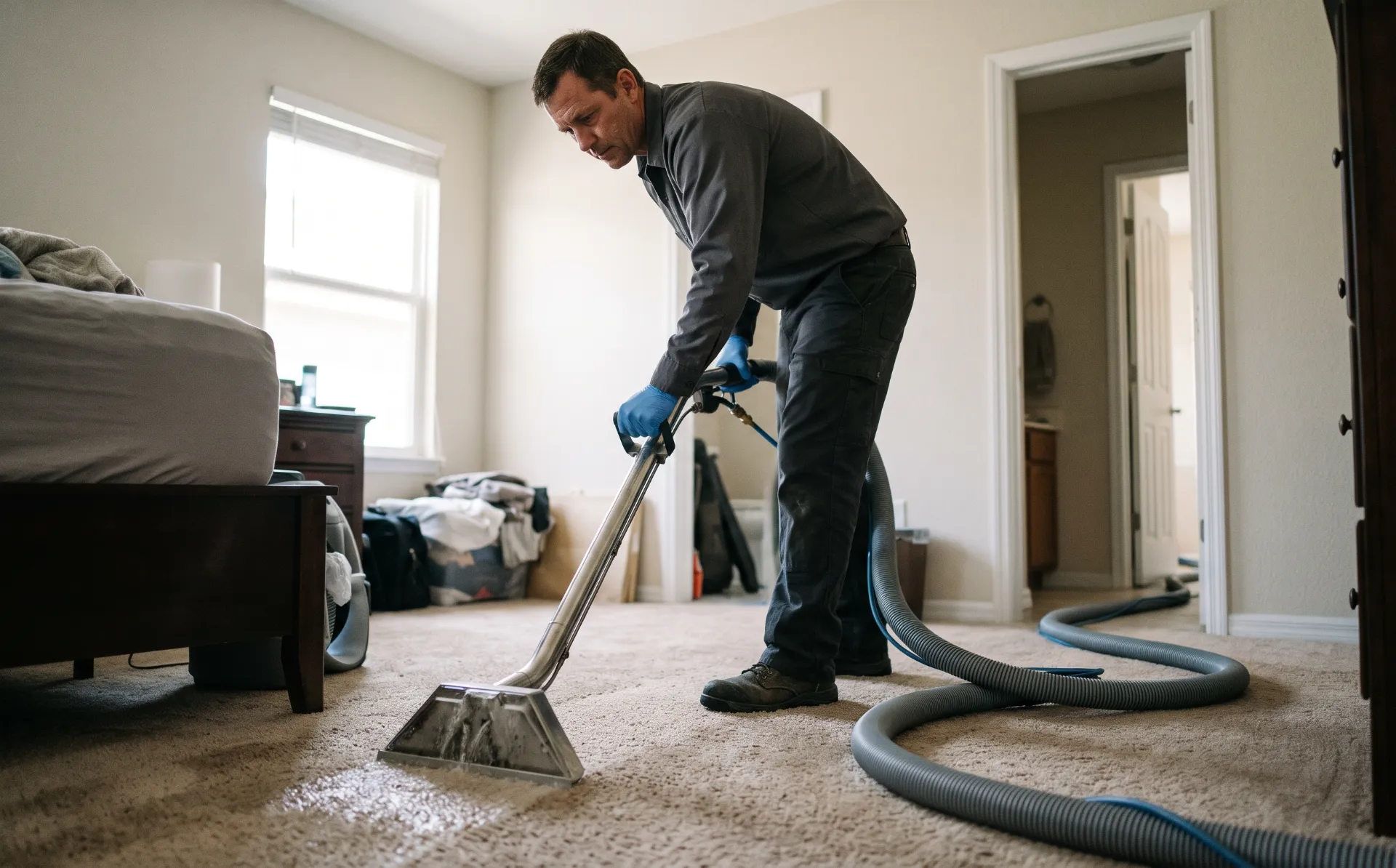
Floor and carpet extraction Truck mounted and portable extractors pull remaining water from concrete slabs, tile, and wet flooring across the lower level.
Wet material removal When carpet pad, drywall, or insulation cannot be dried in place, we remove them after giving you a written reason.
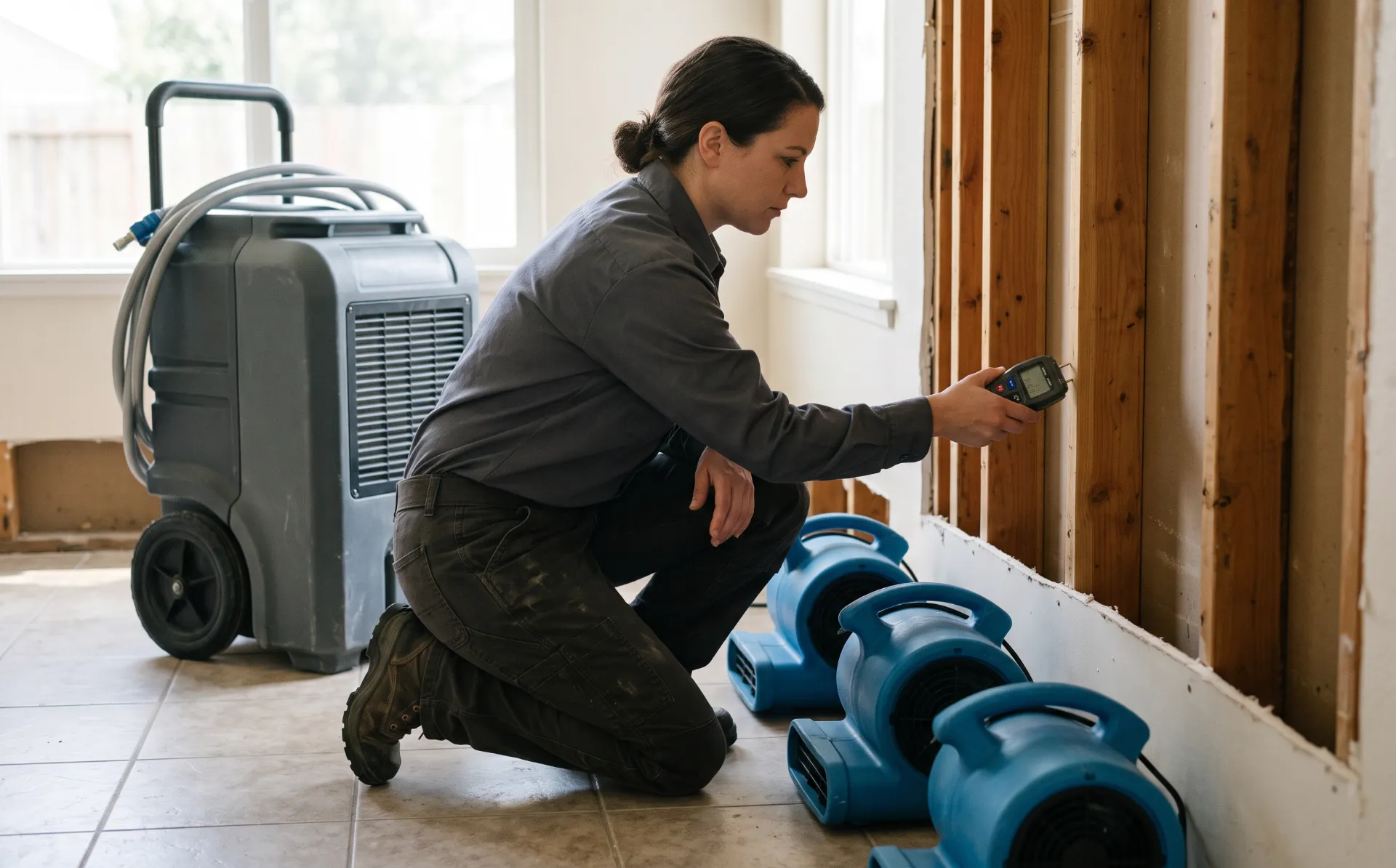
Drying and dehumidification We set air movers and low-grain refrigerant or desiccant dehumidifiers suited for dense concrete and enclosed lower levels.
Cleaning and antimicrobials When storm runoff or a floor drain backup brings contamination, we clean and treat remaining surfaces according to the source.
Contents pack-out and storage Affected belongings are moved, itemized with photos, cleaned, and stored at our Las Vegas facility until rooms are ready.
 Green Valley · Demo photo
Finished versus unfinished basement drying
Finished basements hide water behind drywall, inside wall insulation, and beneath flooring, so they require detailed moisture mapping with meters and thermal cameras. Wet carpet pad and saturated or contaminated drywall often must come out so framing behind them can dry properly. We always provide a written reason before removing any building material.
Unfinished concrete basements are simpler to pump and clean because walls and slabs are exposed, though dense concrete and masonry still absorb moisture. Both finished and unfinished below grade spaces tend to dry more slowly than upper floors because airflow is limited and surrounding earth keeps temperatures cooler.
- Dense concrete floors and walls hold absorbed moisture longer.
- Limited windows and natural airflow slow down evaporation.
- Cooler below grade temperatures reduce how much water air holds.
- Finished walls and subfloors trap moisture inside hidden cavities.
How we dry and restore flooded basements
Your project manager coordinates every step from initial pumping through drying logs and interior reconstruction.
- 1
Pump and extract water
After confirming safe access, we pump standing water with submersible units and extract remaining moisture from floors and low spots.
- 2
Inspect and remove wet debris
We map moisture behind walls and under flooring, inventory affected contents, and remove unsalvageable materials with written notes.
- 3
Dry, dehumidify, and monitor
Air movers and commercial dehumidifiers run while technicians log moisture readings on the schedule written into your drying plan.
- 4
Document and rebuild interiors
We supply full claim records and, under our Nevada contractor license, can handle interior drywall, insulation, trim, and flooring repairs.
Boundaries for below grade flood work
Dryline handles water pumping, drying, contents pack-out, and interior repairs like drywall, flooring, and trim. We do not perform waterproofing, drainage correction, foundation repair, sump pump replacement, or plumbing and electrical repairs. Those jobs require specialized licensed contractors.
Questions about basement flood cleanup
Is it safe to walk into a flooded basement?
Dryline cannot tell anyone by phone that a flooded basement is safe to enter. Standing water below grade can hide electrical hazards from outlets, appliances, or panels, as well as contaminated runoff. Stay out of the water and contact a licensed electrician or wait for an on-site evaluation.
How long does it take to dry out a basement?
Drying time depends on the amount of water, whether the space is finished or bare concrete, and how long materials stayed wet. Because below grade rooms have dense surfaces and limited airflow, drying often takes several days. We track progress with moisture meter logs rather than guessing a fixed number of days.
Will all the finished walls in my basement have to come out?
Not always. Whether drywall and insulation need removal depends on how high the water rose, how saturated the walls became, and whether the water was clean or contaminated. We inspect with meters and thermal imaging first and explain in writing before cutting any drywall.
What happens to furniture and stored items in the basement?
Salvage depends on the material and the water source, and porous items soaked by contaminated floodwater are generally not salvageable. For items that can be cleaned and dried, Dryline can move, photo inventory, clean, and store them at our Las Vegas facility, sending specialty items like electronics or documents to specialist partners.
Does insurance cover outside floodwater entering a basement?
Standard homeowners policies generally do not cover flood from rising surface water, which usually requires a separate flood policy. Check your policy or ask your agent because the insurer decides coverage. With your permission, Dryline works with any adjuster, and you owe the deductible and uncovered costs.
How can I keep my basement from flooding in the next storm?
Preventing repeat water entry requires fixing the outside source, such as grading, window well drainage, waterproofing, foundation sealing, or sump pump upgrades. Dryline does not perform waterproofing, foundation, or drainage work, so hire a licensed drainage or waterproofing contractor after cleanup.
Related services

Getting the water out after a flood
Dryline extracts standing water, dries affected building materials, and cleans residential and commercial properties across the Las Vegas valley.
Read more
Clearing water from under your home
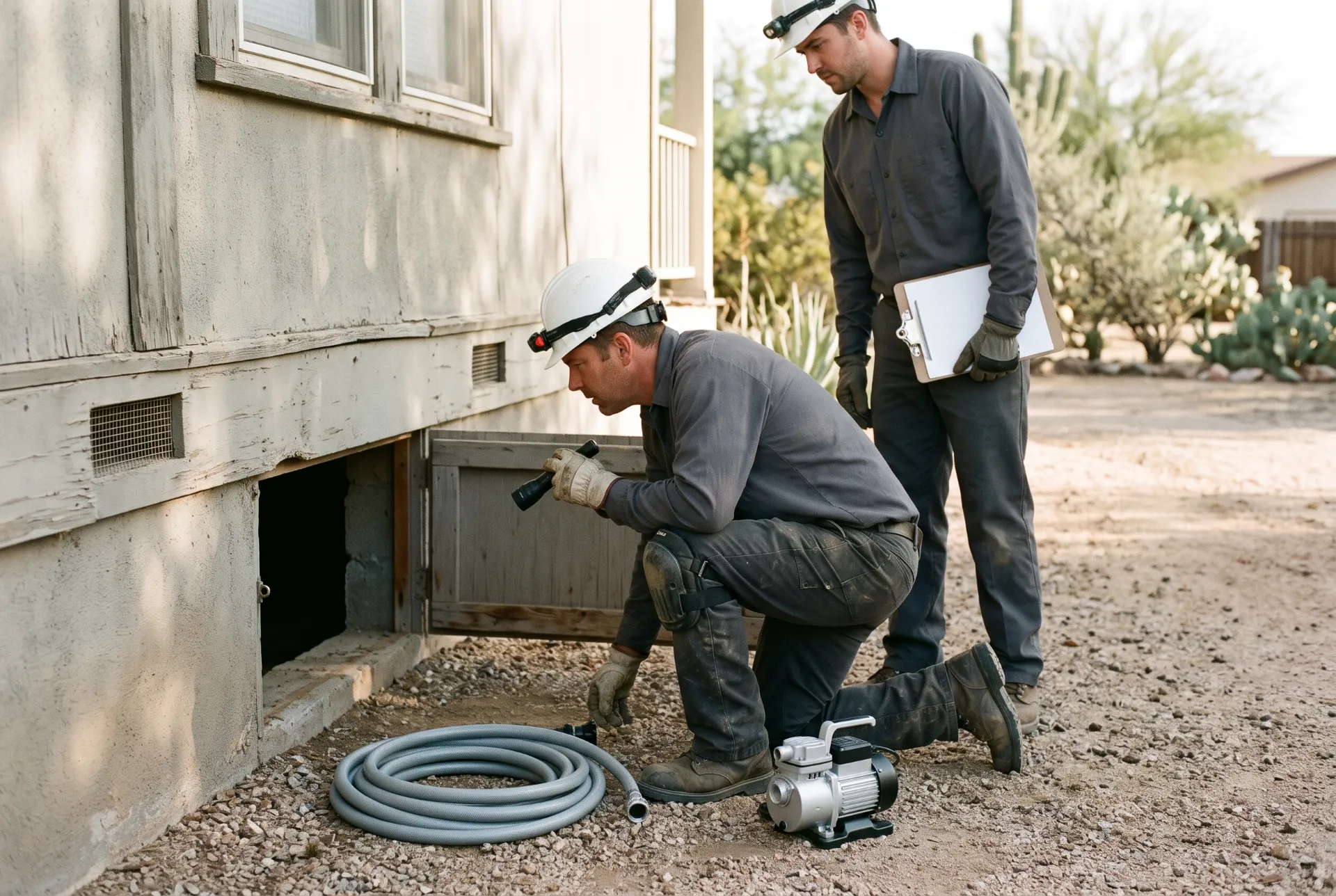
While most Las Vegas homes sit on concrete slabs, older raised foundation and manufactured homes have crawlspaces that Dryline pumps, cleans, and dries.
Read moreGetting water out of a flooded garage
Dryline clears standing water, checks the wall shared with your home, and dries garage structures for homeowners across the Las Vegas valley.
Read more
Get help drying your basement or lower level
Serving Las Vegas, Henderson, North Las Vegas, Summerlin, and nearby Clark County areas. Website forms are read during office hours only and never confirm a crew.