- Home
- Property Managers
- HOA Restoration Services
Cleaning up water in HOA common areas
Dryline extracts water, dries structures, and completes repairs for Las Vegas valley HOAs. We work with community managers and boards across shared buildings.
- IICRC Certified Firm
- Serving the valley since 2012
- 24-hour live phone line
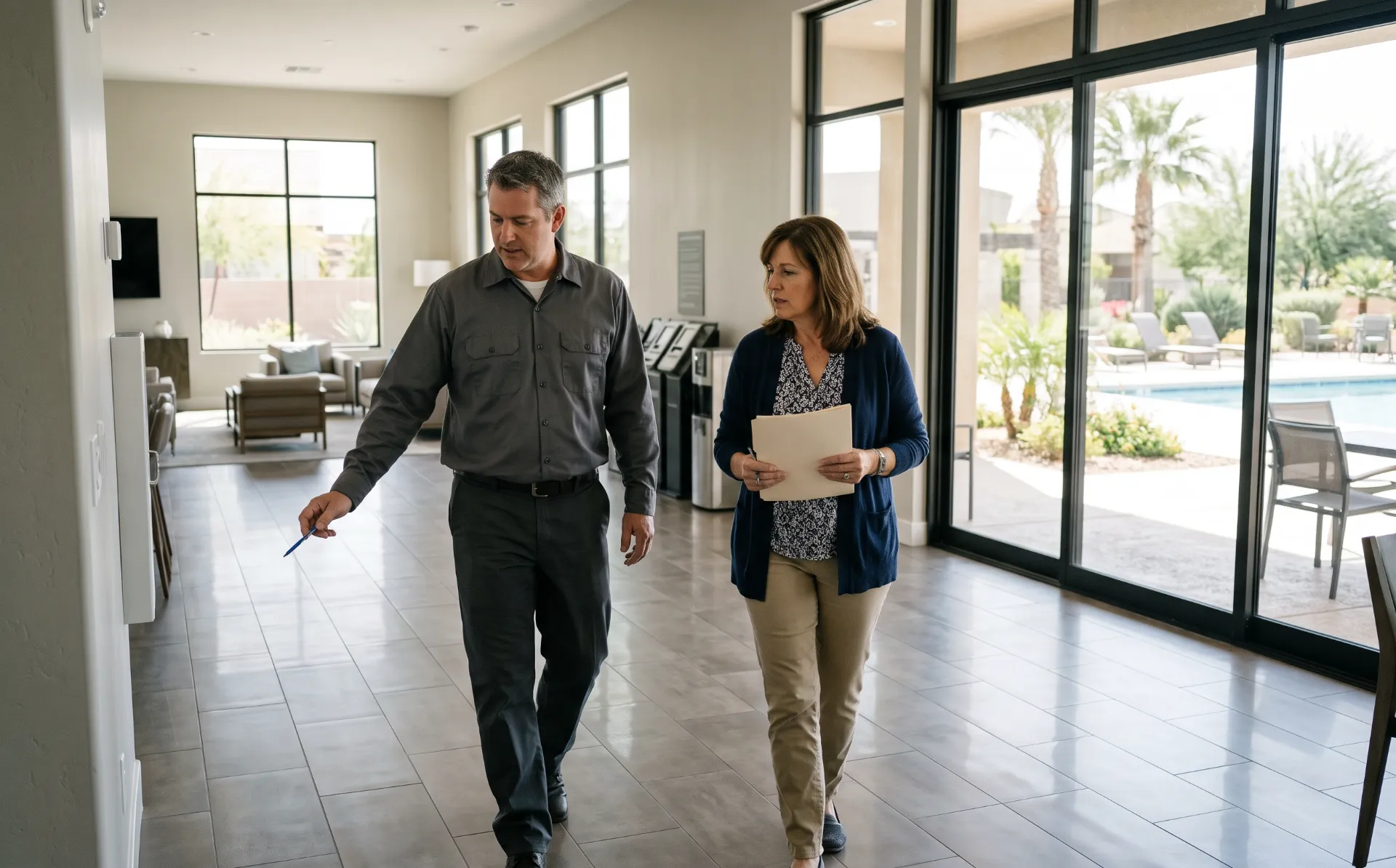 Southern Highlands · Demo photo
Shared buildings and common areas we dry
Association buildings across the Las Vegas valley see different types of water damage. Dryline handles extraction, drying, and interior repairs for these community spaces.
Clubhouses and gathering rooms
We extract standing water from lounges, meeting halls, and kitchens, then dry drywall, baseboards, and flooring with logged moisture readings.
Fitness rooms and locker areas
Rubber floors and wet subfloors trap moisture beneath exercise spaces. Crews pull water out and run dehumidifiers until readings stabilize.
Pool buildings and restrooms
Pump rooms, changing stalls, and shared bathrooms see pipe leaks and storm runoff. We clean affected surfaces and dry structural cavities.
Gatehouses and entry offices
Small guard stations and management offices sit near drainage paths. We clear indoor storm debris, dry wet walls, and protect work stations.
Condo hallways and lobbies
Shared corridors serve many residents. Crews set containment around wet drywall and carpet while keeping walking paths clear where possible.
Shared parking garages
Storm runoff and overhead pipe breaks can flood ground garages. Submersible pumps clear standing water from adjacent storage and utility rooms.
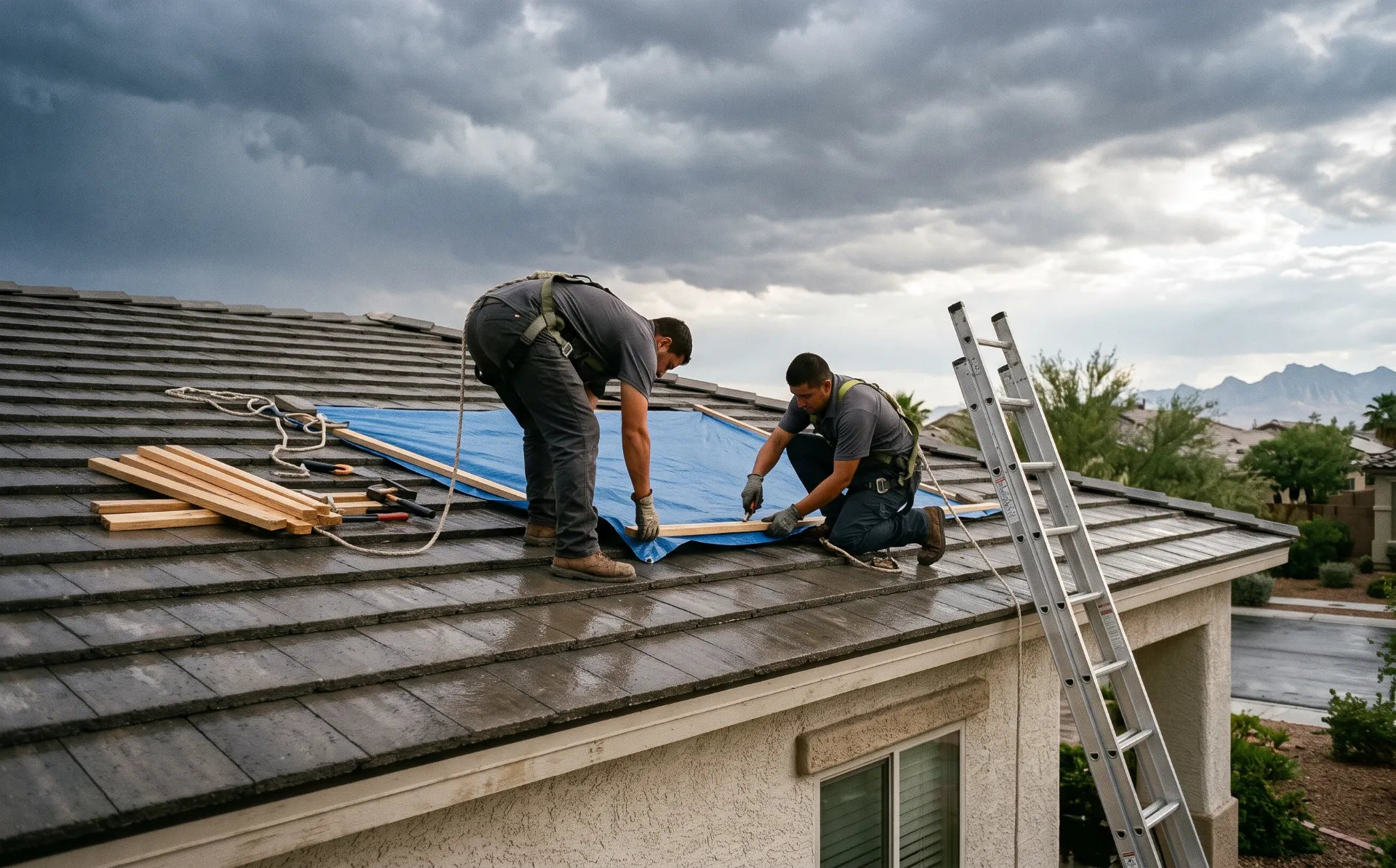 North Las Vegas · Demo photo
Water and storm incidents we handle for HOAs
When water enters an association building, our crews stabilize the interior while licensed trade partners handle plumbing or permanent roof work.
Clubhouse roof leaks Wind can lift concrete tiles or wear down flat roofs. We place temporary tarps and dry wet ceilings while a roofer makes repairs.
Pool equipment room flooding Failed valves or pump seals can push water into adjacent restrooms. We pump standing water and dry surrounding walls and trim.
Runoff entering gatehouses Sudden desert rain moves across pavement into low thresholds. We extract muddy water, remove wet trim, and clean hard surfaces.
Shared supply line breaks A main line serving multiple condos can wet ceilings and walls across floors. We map moisture and separate common area damage.
Shared drain and sewage lines Backups from common drains carry contaminants. Crews wear protective gear, remove soaked porous materials, and clean surfaces.
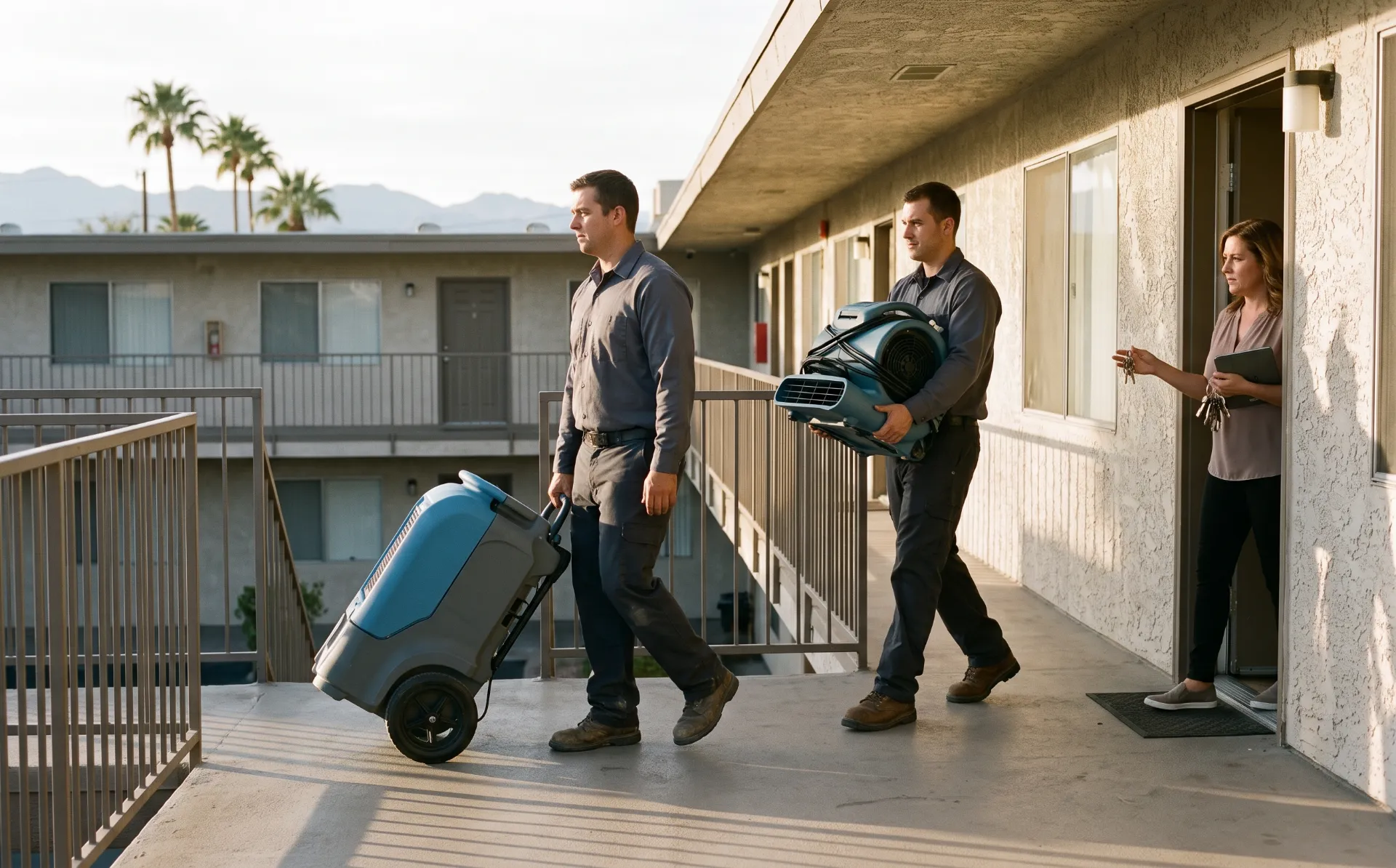
 Las Vegas · Demo photo
Clear records for boards and reserve budgets
Association boards need concrete numbers before voting on non-emergency work. Dryline provides a written scope and an itemized estimate before drying or repair work starts, while active water extraction can begin on a signed work authorization. We also schedule equipment setup and monitoring visits around clubhouse bookings and community hours whenever the drying plan allows.
Multi-unit water losses often cross the line between common walls and private residences. Our project managers log photos and moisture readings room by room so your board and insurer can separate common elements from unit interiors. Responsibility for any area follows your governing documents and policies, as Dryline cannot give legal or coverage advice.
- Written scope and line-item estimate for board review
- Dated photos separating common areas from unit interiors
- Moisture maps and logged readings from each monitoring visit
- Final invoice and completion record for association files
How we manage an HOA water loss
One project manager serves as the community manager's point of contact from the first walkthrough through final repairs.
- 1
Call and site coordination
A team member answers our phone 24 hours a day. We confirm access, note shutoff locations, and share an arrival estimate before you hang up.
- 2
Inspect, contain, and extract
Technicians map moisture with meters and thermal cameras, set containment if needed, and extract liquid water once work authorization is signed.
- 3
Dry and log every visit
Air movers and dehumidifiers run according to a written drying plan. We log moisture readings at each scheduled monitoring visit and share updates.
- 4
Document, repair, and close
After drying finishes, Dryline can handle drywall, paint, trim, and flooring repairs, then deliver final photos, logs, and invoices to the board.
Documentation and property access details
Keeping vendor paperwork and property details on file helps crews begin extraction without administrative delays when a leak occurs.
Records Dryline delivers
- Dated photographs of affected areas before and after
- Initial moisture maps and logged readings per visit
- Equipment placement records for every drying unit
- Itemized estimate formatted for insurance adjusters
- Final invoice and written completion record
Details needed from the HOA
- Primary site contact and after-hours phone number
- Gate codes, keys, and permitted work hours
- Main water shutoff and electrical panel locations
- Names of board or staff members who can authorize work
- Association vendor forms and certificate requirements
The insurer decides coverage. With the association's permission, Dryline works with every insurance company's adjuster, while the HOA owes its deductible and anything not covered.
Common questions from HOA managers
How do you separate common area damage from unit interiors?
Dryline photographs and maps moisture by room and structural wall so the association and unit owners have clear records. Who pays for or repairs each section depends on your governing documents and insurance policies. Because Dryline does not give legal or coverage advice, your board and adjusters make that determination.
Can extraction start before the full board meets to vote?
Yes, when an authorized community manager or board officer signs our emergency work authorization, crews can begin extracting standing water while we prepare the full written scope. Non-emergency repairs wait for written approval of the itemized estimate. You can list who has signing authority ahead of time through Priority Response enrollment.
Will our community manager have one person to coordinate with?
One Dryline project manager handles communication with your community manager from the initial inspection through the final walkthrough. Updates and moisture logs are shared after each scheduled monitoring visit. We also coordinate with licensed plumbing, roofing, or electrical partners when those trades are needed.
How does Dryline handle association insurance claims?
We write itemized estimates in the line-item format adjusters expect and supply dated photos, moisture maps, and drying logs. With your permission, we share those records with every insurance company’s adjuster, and direct billing may be available when the carrier and policy allow it. The insurer decides coverage, and the association remains responsible for its deductible and any uncovered items.
What does free Priority Response enrollment include for HOAs?
Enrollment is free with no contract or retainer and includes a pre-loss walkthrough, a one-page emergency sheet per building, pre-agreed rates, and our insurance certificates on file. During valley-wide storms, enrolled properties are scheduled ahead of non-enrolled non-emergency calls. Life-safety calls always come first, and no response time is guaranteed.
Related services

Water cleanup across your portfolio
Dryline handles water extraction, drying, and repairs for property managers, HOAs, and rental portfolios across the Las Vegas valley, with free Priority Response setup.
Read morePlanning before water hits your site
Dryline's free Priority Response Program prepares Las Vegas valley businesses, property managers, HOAs, and senior living teams before a leak or storm happens.
Read moreDrying apartments and condo buildings
When water moves between units, Dryline inspects, extracts, dries, and documents every affected apartment or condo across the Las Vegas valley.
Read more
Enroll your HOA or report active water
We serve HOAs in the Las Vegas valley only. Call (702) 000-0000 for active water or ask about free Priority Response. Website forms are read in office hours and do not confirm a crew.