
- Home
- Insurance Process & Documentation
Clear records for water damage claims
Dryline prepares the photos, moisture logs, and itemized estimates adjusters ask for, while you and your insurer make every coverage decision.
- Line-item adjuster estimates
- Works with every insurer
- Free on-site estimates
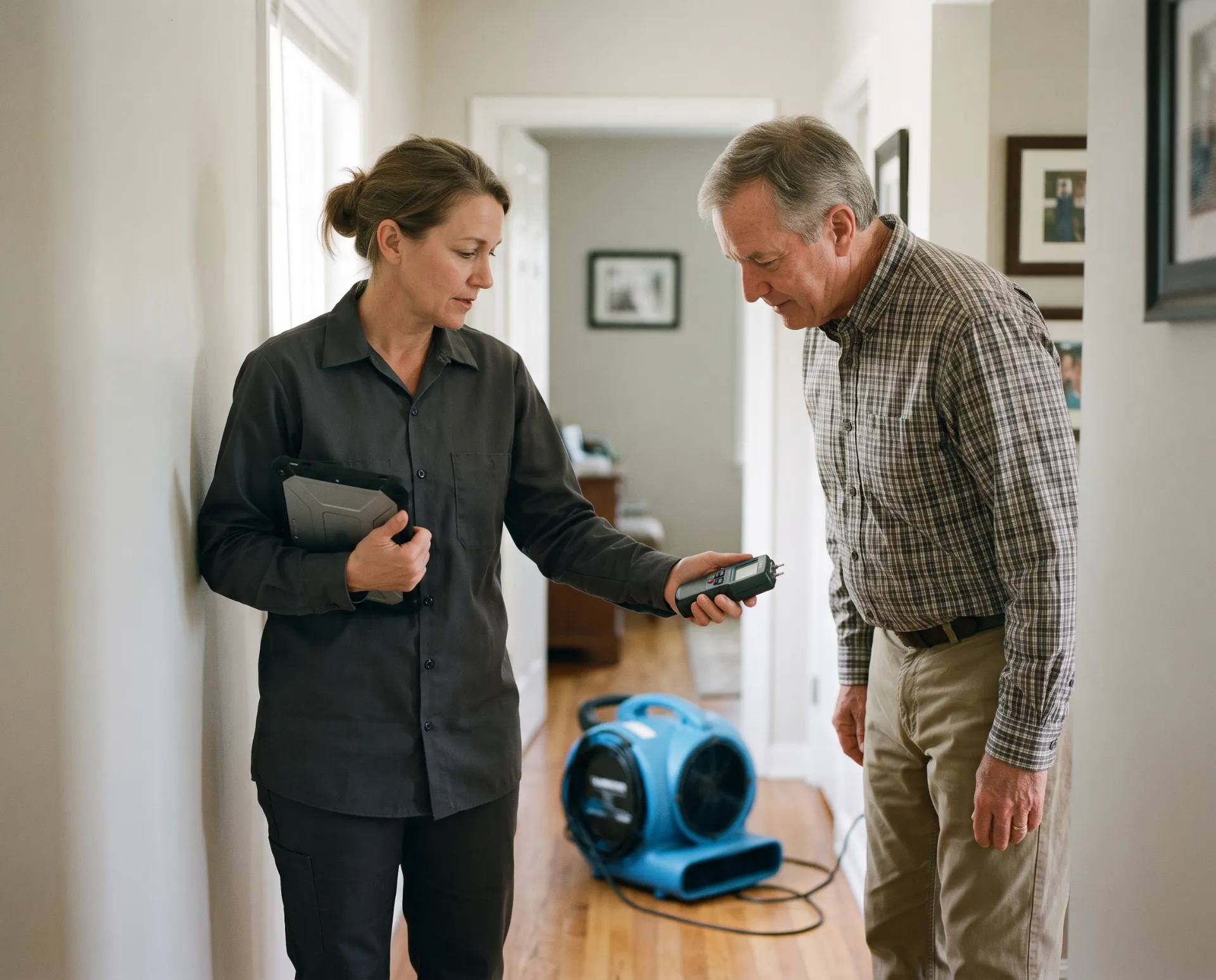
 Las Vegas · Demo photo
Documentation Dryline provides for your claim
Insurance adjusters review objective evidence showing what got wet, what had to be removed, and how long equipment ran. We compile six core records on every job.
Dated photographs
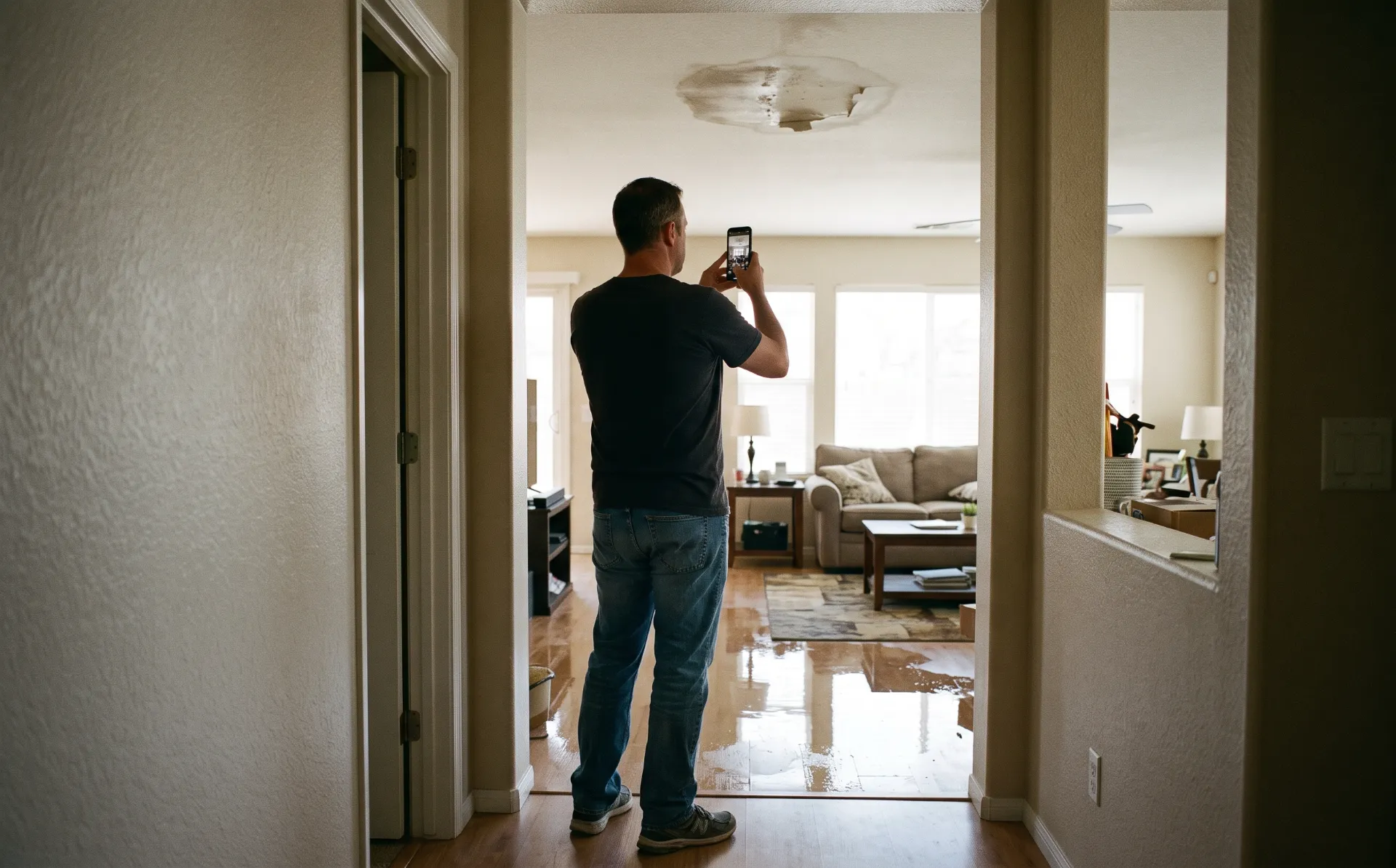
We photograph wet rooms, damaged materials, and work progress from the first inspection through completion so the full timeline is visible.
Moisture readings and map
Technicians use moisture meters and thermal imaging cameras to mark affected walls and floors on a simple room map before drying begins.
Written drying log
At every scheduled monitoring visit, we record moisture readings for affected materials so you and your adjuster can verify drying progress.
Equipment placement records
We log the exact number and type of extractors, air movers, dehumidifiers, and air scrubbers placed on-site and when each unit is removed.
Itemized line-item estimate
Our estimator writes scopes in the standard line-item format insurance adjusters use, listing extraction, removal, drying, and repair work.
Final invoice and completion
When the job closes, you receive a matching final invoice and a written completion record showing finished mitigation and repair work.
How a water damage claim usually moves
Every policy has its own reporting rules, so timing can vary. Most Las Vegas water and storm claims follow four practical stages.
- 1
Report and inspect the loss
Report the loss to your insurer as soon as practical. Dryline inspects, maps moisture, and can start extraction on a signed authorization.
- 2
Share scope with the adjuster
With your written permission, we send dated photos, moisture maps, and our itemized estimate directly to your insurance company's adjuster.
- 3
Complete drying and repairs
Work proceeds under your signed authorization. We log readings at each visit and note a written reason before removing any wet materials.
- 4
Deliver final claim records
At closeout, we send the final drying log, equipment records, invoice, and completion record to both you and your adjuster.
Who handles each part of the claim
Dryline is a restoration contractor, not a public adjuster or attorney. Knowing each party's role keeps your project moving smoothly.
Your role as the policyholder
- Report the water or storm loss to your insurance company
- Check a contractor's license and references first
- Give written permission for Dryline to talk with your adjuster
- Read your policy or ask your agent about coverage limits
- Pay your policy deductible and any charges not covered
Dryline's role as your contractor
- Provide a written scope and price before non-emergency work
- Document photos, moisture maps, logs, and equipment usage
- Work with every insurance company's adjuster with permission
- Bill the insurer directly when the carrier and policy allow it
- Deliver final invoices and completion records at closeout
Dryline never promises claim approval, does not negotiate settlements on your behalf, and cannot give legal or coverage advice. Your insurance carrier makes every coverage decision.
Coverage, flood policies, and deductibles
Your insurer decides coverage, so check your policy or ask your agent. Standard homeowners policies generally do not cover flood from rising surface water. Flood insurance is separate, and NFIP policies usually have a 30-day waiting period. Dryline never waives or absorbs a deductible and never negotiates claims.
Common insurance claim questions
Should I call Dryline or my insurance company first?
If water is actively entering your home or business, call Dryline first so we can schedule extraction and help limit further spread. Report the loss to your insurance company as soon as practical, because policies have their own notice rules. When you call us, we tell you when to expect us before you hang up.
Will my insurance policy cover water or storm damage?
Only your insurance carrier can decide whether a specific loss is covered, so check your policy or ask your agent. Coverage often depends on the source of the water, such as a sudden indoor pipe break versus rising outdoor floodwater. Dryline cannot predict coverage or promise that any claim will be approved.
Does Dryline bill my insurance company directly?
Direct billing is available when your carrier and policy allow it, and with your permission we work with every insurance company’s adjuster. You remain responsible for your deductible and any portion of the work your policy does not cover. For uninsured or uncovered work, we accept card, check, bank transfer, or third-party financing subject to credit approval.
Can Dryline waive or absorb my insurance deductible?
No, Dryline never waives or absorbs a deductible under any circumstances. Your deductible is part of your contract with your insurance company, and promotional discounts cannot be applied to it or to insurance-paid work. We provide a written scope and price upfront so you know what to expect.
What happens if my adjuster's estimate differs from Dryline's?
Differences between estimates are common before hidden wet materials are opened up. With your permission, you, your adjuster, and Dryline review our line-item scope, photos, and moisture logs together line by line. Dryline does not negotiate claims or promise any insurer will accept every line-item, as the carrier makes the final payment decision.
More on insurance and payment

Working clearly with your adjuster
With your permission, Dryline sends photos, moisture logs, and itemized estimates to any insurer's adjuster for Las Vegas valley homes and businesses.
Read more
Paying directly for water cleanup
When water or storm damage is uninsured, excluded, or below your deductible, Dryline gives Las Vegas valley owners a clear written price before work begins.
Read moreFinancing your water damage cleanup
When insurance does not cover every dollar of storm or water cleanup, third-party financing may help Las Vegas valley homeowners and businesses manage direct costs.
Read more
Schedule a free on-site damage inspection
Dryline serves homes and businesses in the Las Vegas valley only. Call (702) 000-0000 for active water. Website forms are read in office hours and never confirm a crew.