
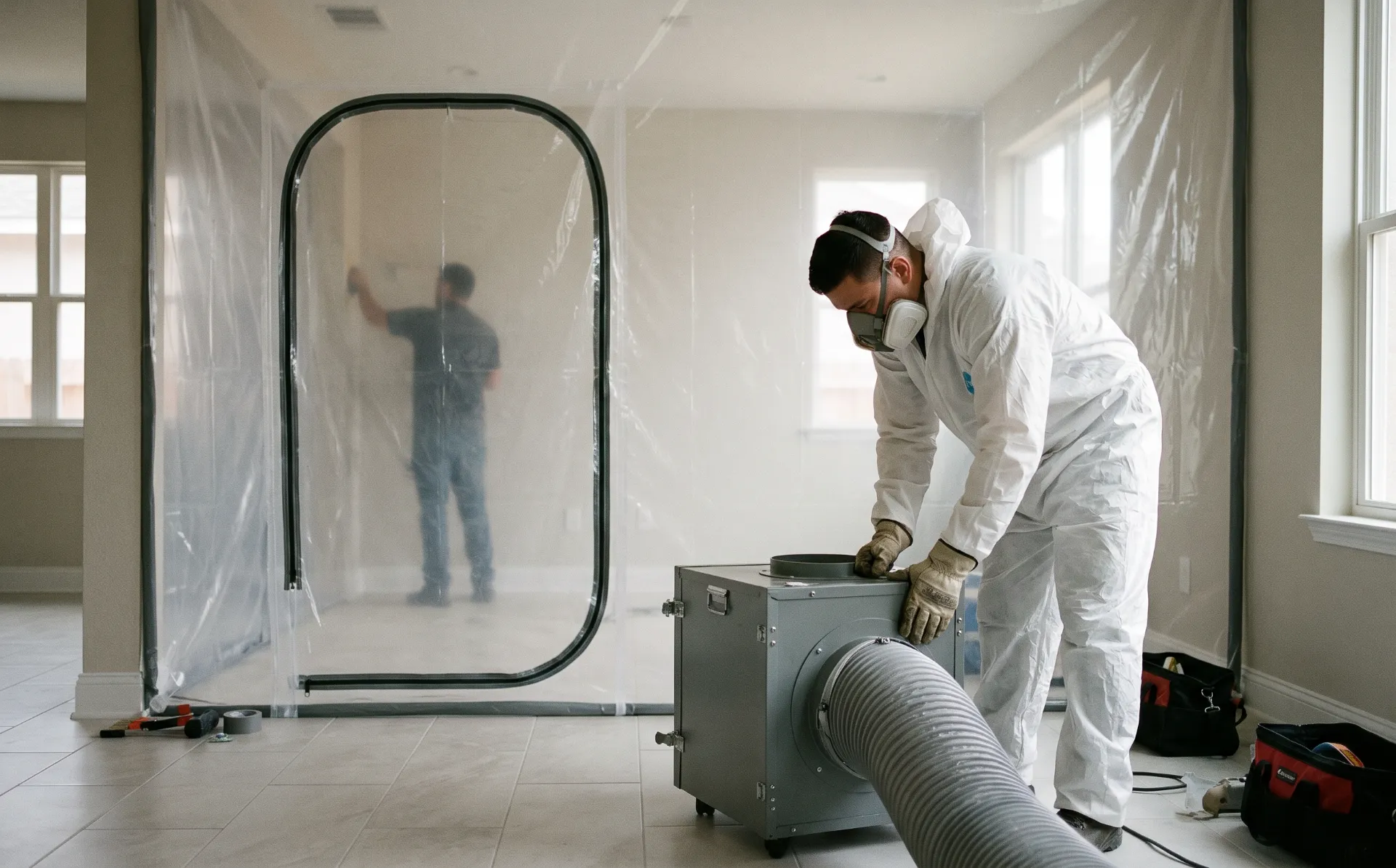
Removing mold under containment
Dryline provides IICRC trained mold remediation after water damage for Las Vegas valley homes and businesses, supervised by an AMRT certified technician.
- AMRT supervised mold crews
- ANSI/IICRC S520 work methods
- Independent clearance testing
 Summerlin · Demo photo
Signs that point to indoor mold growth
Mold follows trapped moisture in building materials. These are the common situations that lead Las Vegas valley property owners to call Dryline.
Visible growth after water loss
Spotting dark or fuzzy patches on drywall, wood framing, or ceilings after a leak or storm flood calls for contained removal.
Persistent musty odors
A damp, earthy smell that lingers in a room or hallway often points to hidden moisture inside a wall or floor assembly.
Growth behind trim or flooring
Remodeling or water repairs sometimes uncover mold behind baseboards, under laminate flooring, or along cabinet backs.
Materials left wet too long
Drywall, carpet pad, or insulation that stayed damp after an earlier leak can support growth even if the surface looks dry.
Mold after a slow plumbing leak
A dripping supply line under a sink or behind a tub can soak hidden framing for weeks before stains appear on the wall.
Damp closets and vanity cavities
Closed spaces with low airflow around water heaters, laundry lines, or bathrooms can trap humidity and show surface growth.
 Spring Valley · Demo photo
What our mold remediation includes
Every remediation project follows a written scope before work starts and pairs physical removal with moisture control.
Work area containment Crews isolate the affected zone from clean rooms to help keep disturbed spores and dust from spreading during work.
HEPA air filtration Air scrubbers with HEPA filters run inside the work zone to capture airborne particles while materials are handled.
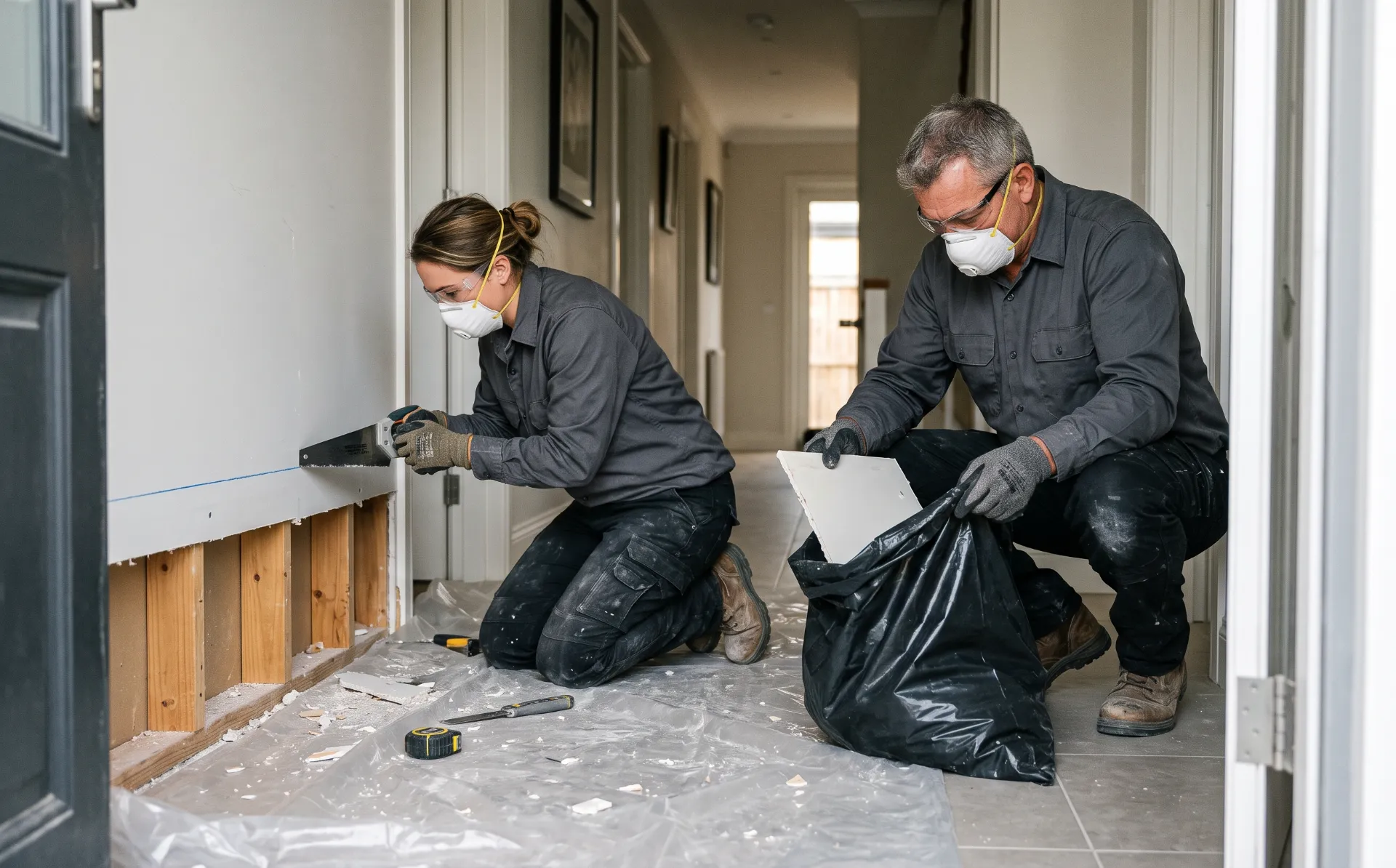
Porous material removal Affected porous materials such as drywall, insulation, or carpet pad are removed with a written explanation beforehand.
Surface cleaning Remaining structural surfaces inside containment are cleaned to remove settled residues and surface growth.
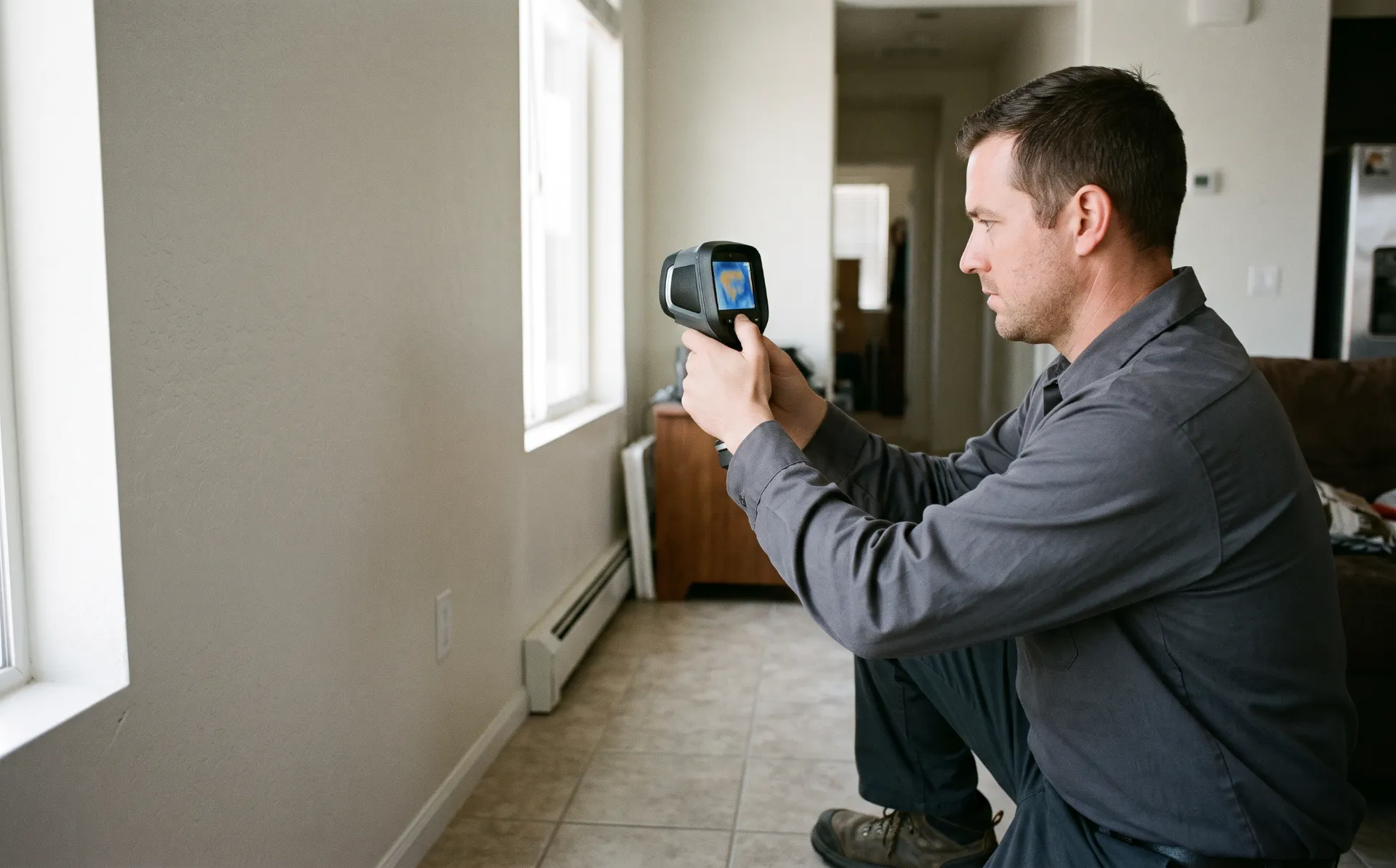
Drying the wet area We map remaining moisture and dry affected framing so the damp conditions behind the growth are addressed.
AMRT certified supervision All Dryline mold remediation work is supervised by a technician holding the IICRC Applied Microbial Remediation certification.
 Henderson · Demo photo
Why independent testing and clearance matter
Dryline follows the ANSI/IICRC S520 standard for professional mold remediation. Testing before work begins and clearance testing after work finishes are performed by an independent third-party assessor that you hire directly. Keeping assessment separate ensures the company performing the remediation never grades its own work.
Mold requires moisture to grow, so controlling the water source is essential alongside physical removal. Dryline never promises that mold will not return in the future, because future growth depends on keeping building materials dry and fixing any plumbing or roof leaks.
- Isolates the work zone from unaffected living or office rooms
- Captures airborne dust and spores through HEPA air scrubbers
- Helps limit cross contamination during drywall and trim removal
- Prepares the contained area for cleaning and clearance review
How a mold remediation job progresses
Your Dryline project manager coordinates each step alongside the independent assessor you select.
- 1
Assessment and written scope
We inspect moisture levels, review any report from your independent assessor, and provide a written scope and price before starting.
- 2
Containment and air filtration
Technicians seal off the affected area and set HEPA air scrubbers to filter airborne particles before disturbing any materials.
- 3
Removal and surface cleaning
Affected porous materials are removed under containment and remaining framing and hard surfaces are cleaned thoroughly.
- 4
Drying, clearance, and repairs
Once the area is dry and your independent assessor completes clearance testing, Dryline can repair drywall, trim, and paint.
Clear boundaries on testing and repairs
Dryline does not perform environmental or mold testing, does not issue clearance reports, and does not provide medical or health advice. We dry water damaged materials, while licensed plumbers, roofers, or waterproofing contractors repair the underlying leak source. Our team is IICRC trained for mold remediation and never claims state mold licensing.
Common mold remediation questions
Do I need mold testing before remediation starts?
Whether testing is needed first depends on the extent of the growth, your property, and any insurer requirements. When testing or a written protocol is needed, you hire an independent third-party assessor so there is no conflict of interest. Dryline can inspect moisture on-site and explain what your assessor may look for.
Is it safe for my family to stay during remediation?
Dryline cannot give health advice or tell you whether a building is safe to occupy. Occupancy decisions depend on the size of the work area, the layout of the home, and individual health needs. Please ask your doctor and your independent assessor before deciding whether to stay on-site.
How long does mold remediation usually take?
Project length depends on how many materials are affected, whether wet framing still needs drying, and the schedule of your independent clearance assessor. Drying alone often takes several days depending on materials and conditions. Your project manager outlines the expected sequence in your written scope.
Will the mold stay gone after you finish?
No company can promise that mold will never return, because mold spores exist in normal air and grow whenever moisture returns. Stopping the leak, drying the structure, and keeping humidity controlled are what limit regrowth. Dryline provides a one-year workmanship warranty on our interior repairs, not on mold prevention.
Does property insurance cover mold remediation?
Mold coverage is often limited or excluded depending on the policy and the cause of the water loss, and only your insurer decides coverage. With your permission, Dryline works with every insurance company’s adjuster and provides photos, moisture logs, and an itemized estimate. You owe your deductible and any uncovered costs.
Can you just spray the mold instead of removing drywall?
Spraying porous materials like saturated drywall or insulation does not remove growth embedded inside the material. Under ANSI/IICRC S520 principles, affected porous materials are typically removed under containment rather than painted or sprayed over. What can be cleaned versus removed depends on the material and inspection findings.
Related services

When water damage leads to mold
Dryline inspects lingering moisture, dries wet structures, and performs IICRC trained mold remediation for Las Vegas valley homes and businesses.
Read moreClearing odors after water damage
We address musty and water related odors in Las Vegas valley homes and businesses by removing the wet source first, then cleaning, drying, and filtering the air.
Read moreRemoving wet drywall and flooring
When drywall, insulation, or flooring cannot be dried in place, we explain why in writing, protect clean rooms, and remove only what is needed.
Read more
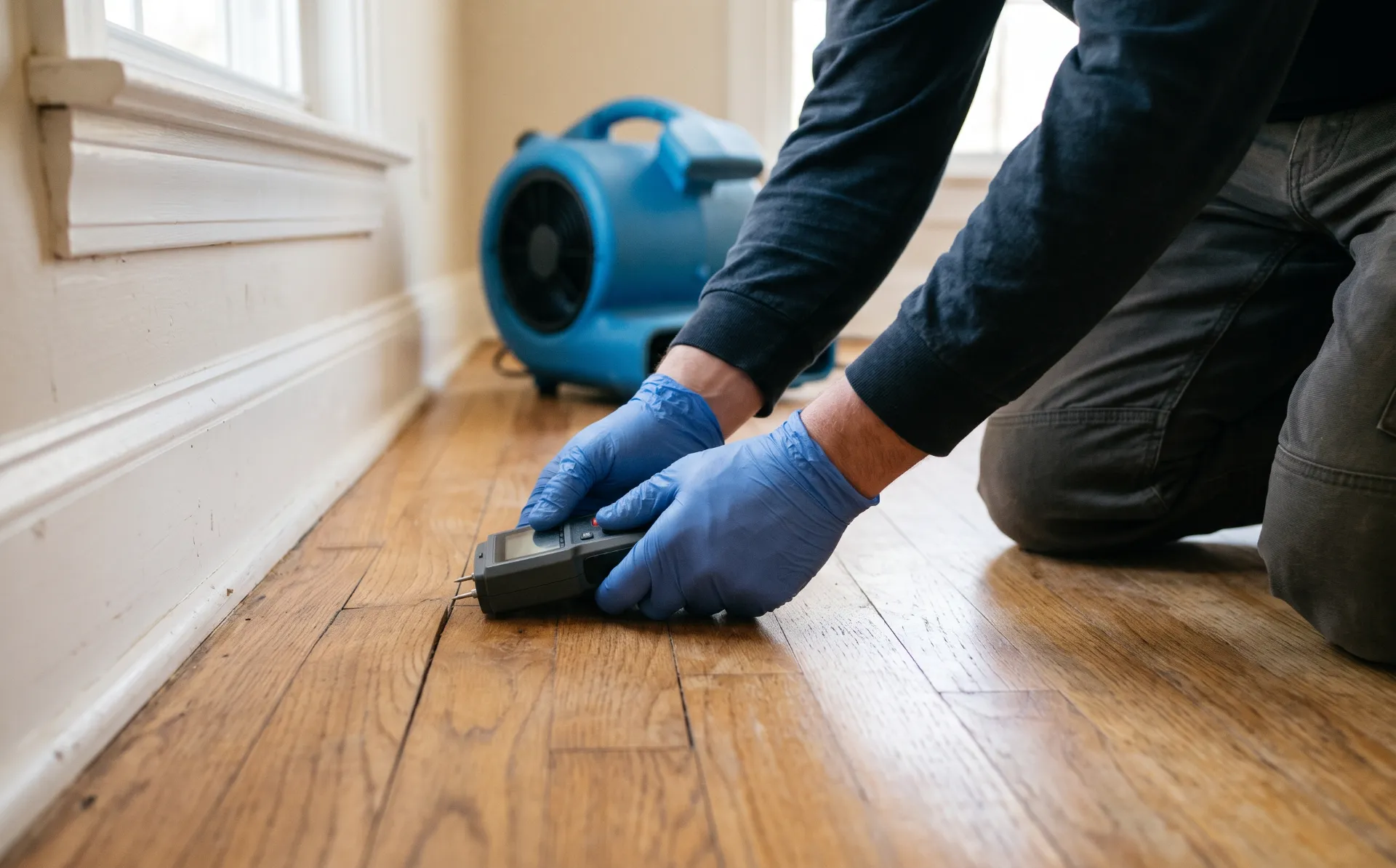
Arrange a mold and moisture inspection
Available across the Las Vegas valley and Clark County for homes and businesses. Website forms are checked during office hours only and never schedule a crew, so call for active water.