Removing wet drywall and flooring
When drywall, insulation, or flooring cannot be dried in place, we explain why in writing, protect clean rooms, and remove only what is needed.
- Written reason before any cut
- Locally owned in Las Vegas
- Six stocked response trucks
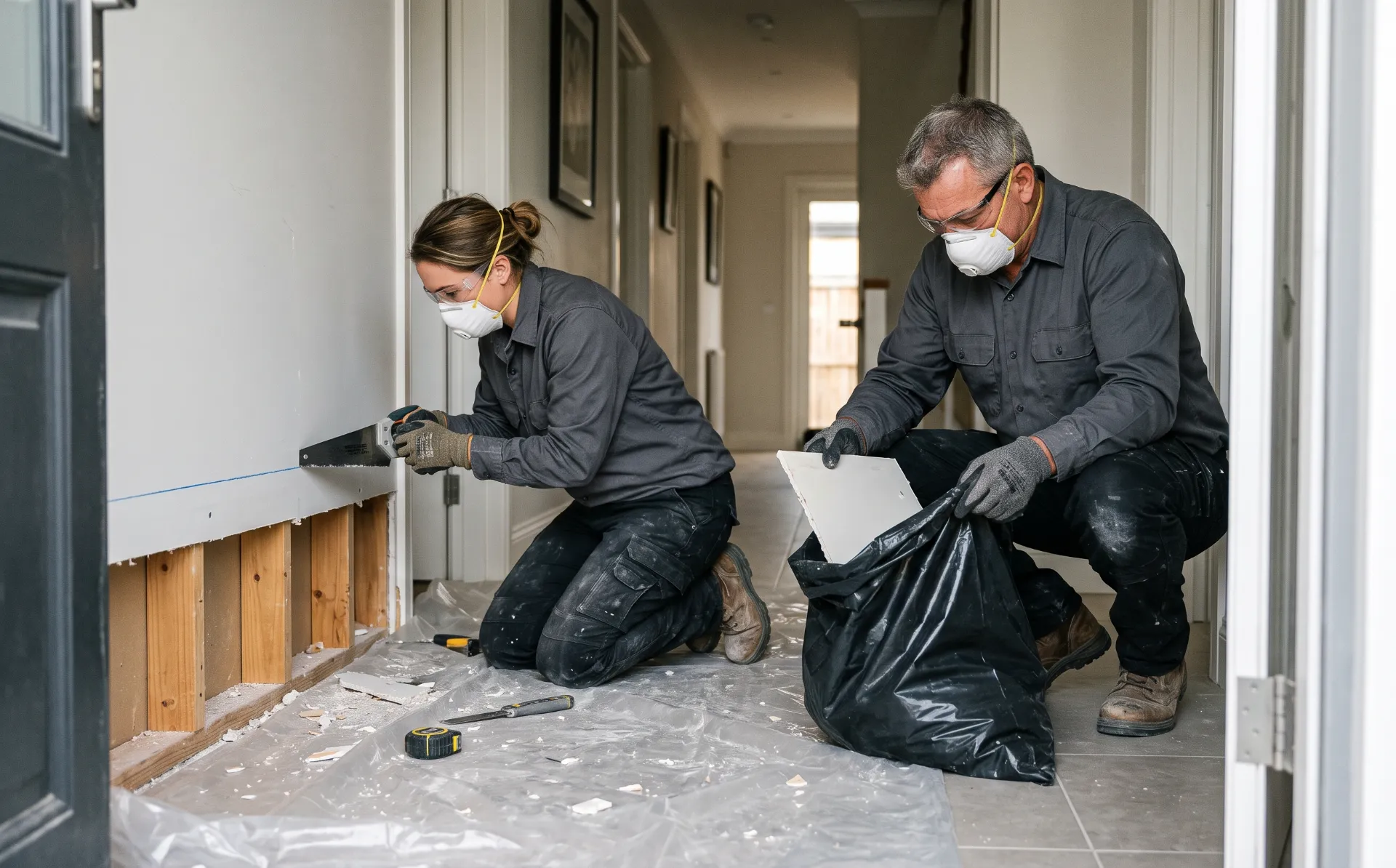 Spring Valley · Demo photo
Materials that often require removal
Not every wet surface needs to be torn out, though porous or swollen materials sometimes have to come out so the framing behind them can dry.
Drywall and ceiling panels
Saturated gypsum loses strength, traps water in wall cavities, and may sag on ceilings after roof or plumbing leaks.
Wet wall and attic insulation
Soaked fiberglass or blown insulation holds moisture tightly against wood studs and often must be pulled out to dry the cavity.
Carpet and soaked pad
Carpet pad acts like a sponge and is usually replaced once soaked. Carpet exposed to contaminated water is generally not salvageable.
Wood and laminate flooring
Laminate swells along the seams when wet, and solid or engineered wood may cup or buckle beyond salvage depending on exposure time.
Baseboards and trim
Removing swollen baseboards allows airflow into the lower wall plate and helps technicians inspect moisture behind the drywall.
Water damaged cabinets
Particleboard cabinet boxes swell and break down when saturated, and water trapped under toe kicks can stay damp for days.
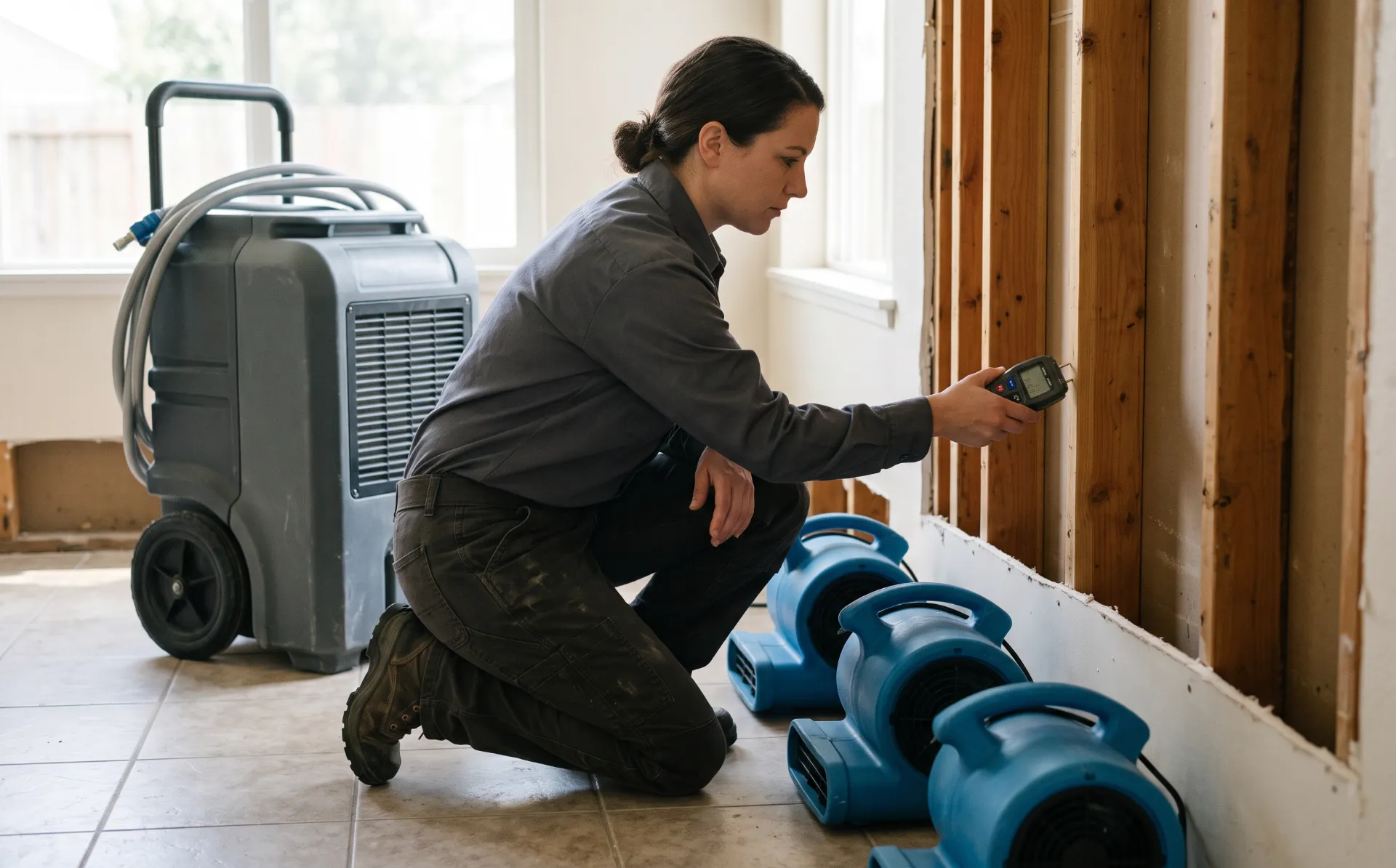 Summerlin · Demo photo
What controlled removal includes
We treat demolition as a precise preparation step for drying and rebuilding, never a rough tearout.
Written reason first Before anything is cut or pulled up, you receive a written explanation of why the material cannot stay in place.
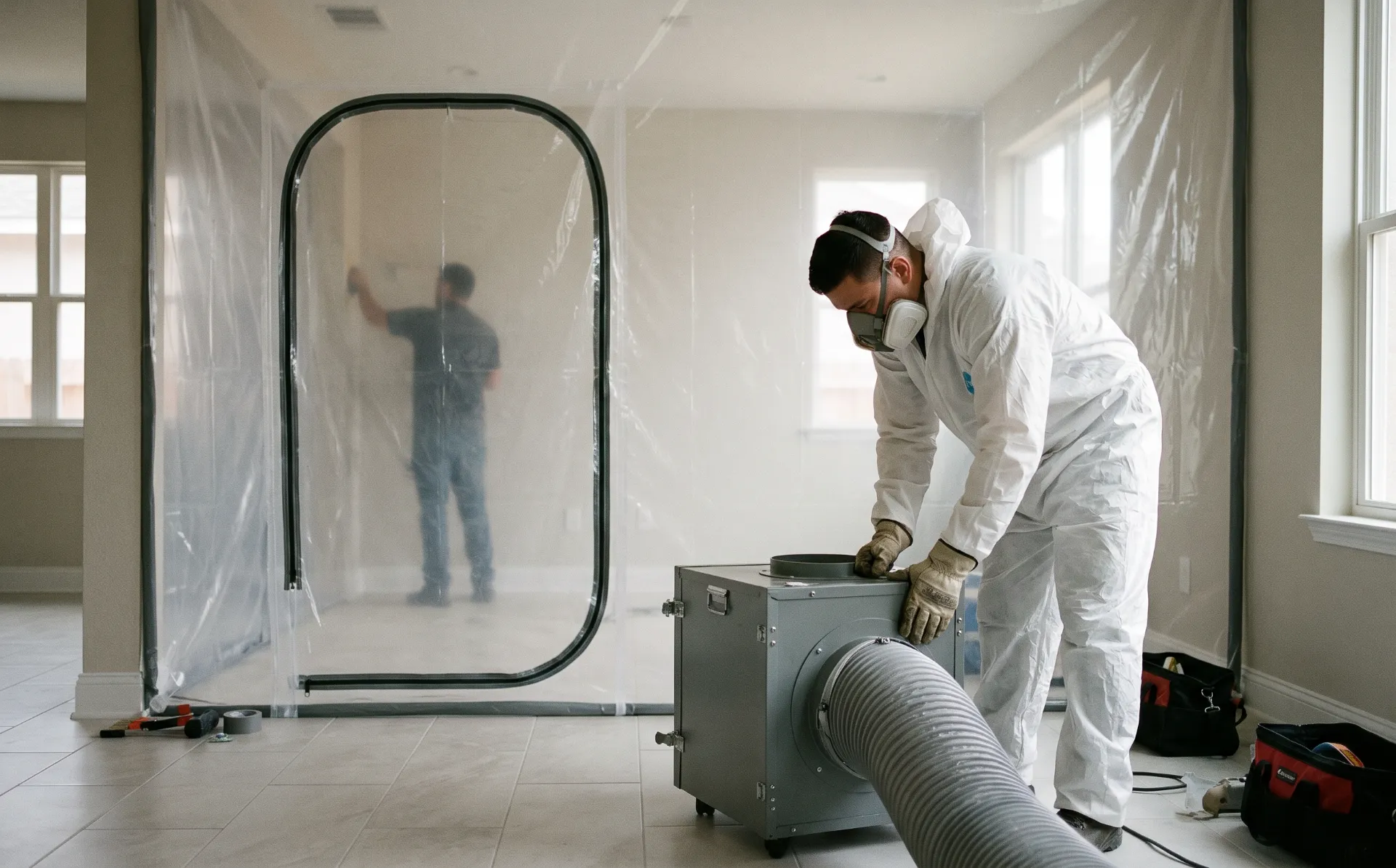
Clean room protection Crews cover walkways and isolate unaffected rooms to help keep dust and debris out of the rest of the building.
Neat, measured cuts Drywall is cut straight at a set height so reconstruction crews have clean lines when hanging and finishing new board.
Debris bagging and hauling Removed drywall, pad, insulation, and flooring are bagged and hauled away from your property cleanly.
Cleaning and treatment Exposed framing and subfloors are cleaned and treated with antimicrobial products when the water source calls for it.
Claim documentation photos We photograph damaged materials before, during, and after removal so your adjuster has a clear visual record.
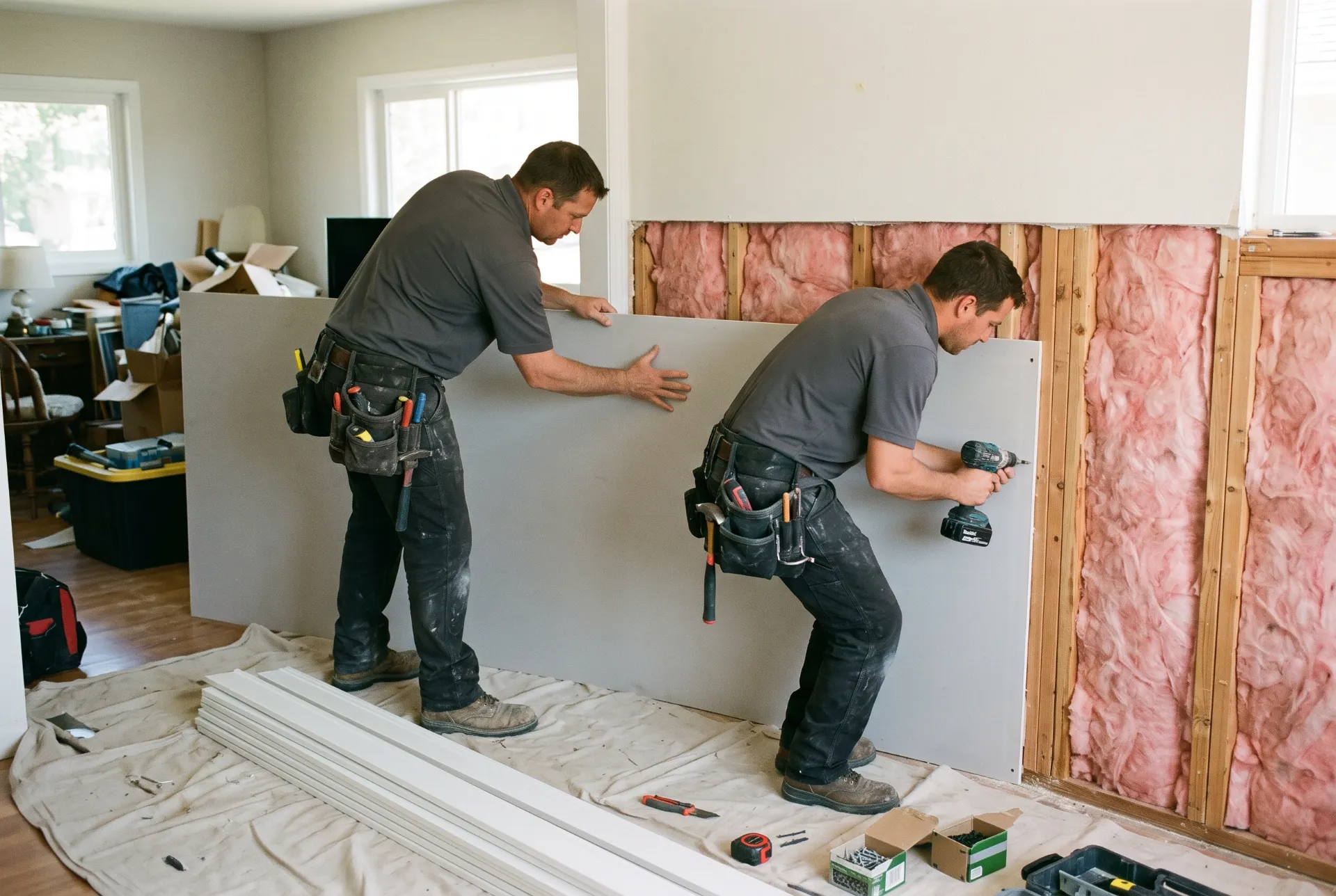 Henderson · Demo photo
How we decide what stays and what goes
Many wet materials can be dried in place when water is clean and caught early. Under ANSI/IICRC S500, water is sorted into Category 1 from a clean source, Category 2 with significant contamination, and Category 3 for grossly contaminated water like sewage or outside floodwater. Storm and wind-driven rain is assessed on-site rather than assumed to be Category 3.
Porous materials soaked by contaminated water are generally not salvageable, and soaked carpet pad is usually replaced even after a clean leak. Wet drywall and insulation often have to come out when saturated or contaminated so framing can dry. Dryline never promises that every material can be saved, and we review every removal call with you first.
- Water source and ANSI/IICRC S500 contamination category
- How long the building material stayed wet or submerged
- Material type, porosity, and whether it swelled or broke down
- Access needed to dry hidden framing and wall cavities behind it
How wet material removal works
One project manager coordinates removal, drying, and the transition into repairs so nothing gets lost between steps.
- 1
Assess and explain
We check moisture levels, assess the water category, and give you a written reason before any material is removed.
- 2
Protect and contain
Technicians shield floors and seal off unaffected areas when helpful to limit dust movement through the building.
- 3
Remove and haul away
Unsalvageable drywall, insulation, pad, or flooring is cut cleanly, bagged, and hauled off site for disposal.
- 4
Clean, dry, and hand off
Exposed structure is cleaned and dried to target readings before moving into reconstruction with our repair crew.
Boundaries and what happens next
Dryline does not perform asbestos abatement, and older building materials may require testing by an independent provider before removal can begin. We never promise that every material can be saved or that no removal will be needed. Once the structure is dry, Dryline's own licensed repair crew handles drywall, trim, flooring, paint, and cabinet rebuilding.
Questions about wet material removal
Why remove wet drywall instead of trying to dry it?
Drywall often has to be removed when it is saturated, sagging, or exposed to contaminated water, or when wet insulation sits behind it. Leaving compromised drywall in place can trap moisture against wood framing and delay drying. We always explain the reason in writing before cutting.
How much of the wall or floor do you cut out?
We remove only the affected section plus enough clean margin to reach dry framing and make rebuilding straightforward. Cuts are made straight at a set height based on moisture readings and water category. Your project manager walks through the planned cuts with you first.
Will removing wet drywall create dust throughout my home?
Any demolition creates some dust, though careful containment helps keep it out of unaffected rooms. Crews cover walkways, bag debris as they work, and clean exposed framing afterward. When needed, air scrubbers with HEPA filters can also help capture airborne particles.
Can wet carpet or wood flooring ever be saved?
Salvage depends on the water category, how long the floor was wet, and the material itself. Soaked carpet pad is usually replaced, while clean water carpet can sometimes be dried in place. Wood and laminate outcomes vary, and we never promise that a floor will be saved.
Who rebuilds the drywall and floors after drying is done?
Dryline’s own licensed Nevada contractor crew handles reconstruction for drywall, insulation, texture, paint, baseboards, flooring, and cabinets, backed by a one-year workmanship warranty. If plumbing, electrical, HVAC, or permanent roof repairs are needed, your project manager coordinates licensed trade partners.
Does insurance pay for wet material removal?
Coverage is always decided by your insurer based on the policy terms and cause of damage. If you give permission, Dryline works with every insurance company’s adjuster and supplies photos, moisture readings, and itemized estimates. Customers pay the deductible and anything the policy excludes.
Related services

Structural drying after water gets in
We dry walls, subfloors, and framing in Las Vegas valley homes and businesses using air movers, dehumidifiers, and logged moisture readings.
Read more
Rebuilding after water or storm loss
Dryline rebuilds homes and commercial spaces across the Las Vegas valley under our own Nevada contractor license once the structure is dry.
Read moreRemoving mold under containment
Dryline provides IICRC trained mold remediation after water damage for Las Vegas valley homes and businesses, supervised by an AMRT certified technician.
Read more
Get a free damage and removal estimate
Available for homes and businesses across the Las Vegas valley, including Spring Valley, Enterprise, and Boulder City. Form submissions are read in office hours and never schedule a crew.