When water damage leads to mold
Dryline inspects lingering moisture, dries wet structures, and performs IICRC trained mold remediation for Las Vegas valley homes and businesses.
- WRT certified lead technicians
- Written scope before work
- Locally owned in Las Vegas
 Summerlin · Demo photo
How past water issues turn into mold
Dry desert air outside does not dry trapped moisture inside walls or under floors. These are common ways mold develops after water intrusion.
Water dried late or incompletely
Surface towels or household fans can leave framing, subfloors, and wall cavities damp long after standing water disappears.
Leaks discovered weeks later
Slow drips inside walls, attics, or under sinks often stay hidden until stains, warped trim, or odors show up weeks afterward.
Vacant or rental properties
When a home, condo, or apartment sits empty between tenants, a storm leak or broken line can keep materials wet unnoticed.
Growth behind cabinets or trim
Removing baseboards, vanities, or lower cabinets after a water event often reveals damp drywall and growth along the slab.
Musty odor after a past flood
A lingering musty smell weeks after monsoon runoff or a pipe leak suggests moisture is still trapped inside a cavity.
Damp slab and flooring layers
Most Las Vegas valley homes are built slab-on-grade, where trapped water under laminate or carpet pad dries very slowly.
 Summerlin · Demo photo
How Dryline addresses post water mold
We combine structural drying and IICRC trained remediation so both the moisture and the affected materials are handled in order.
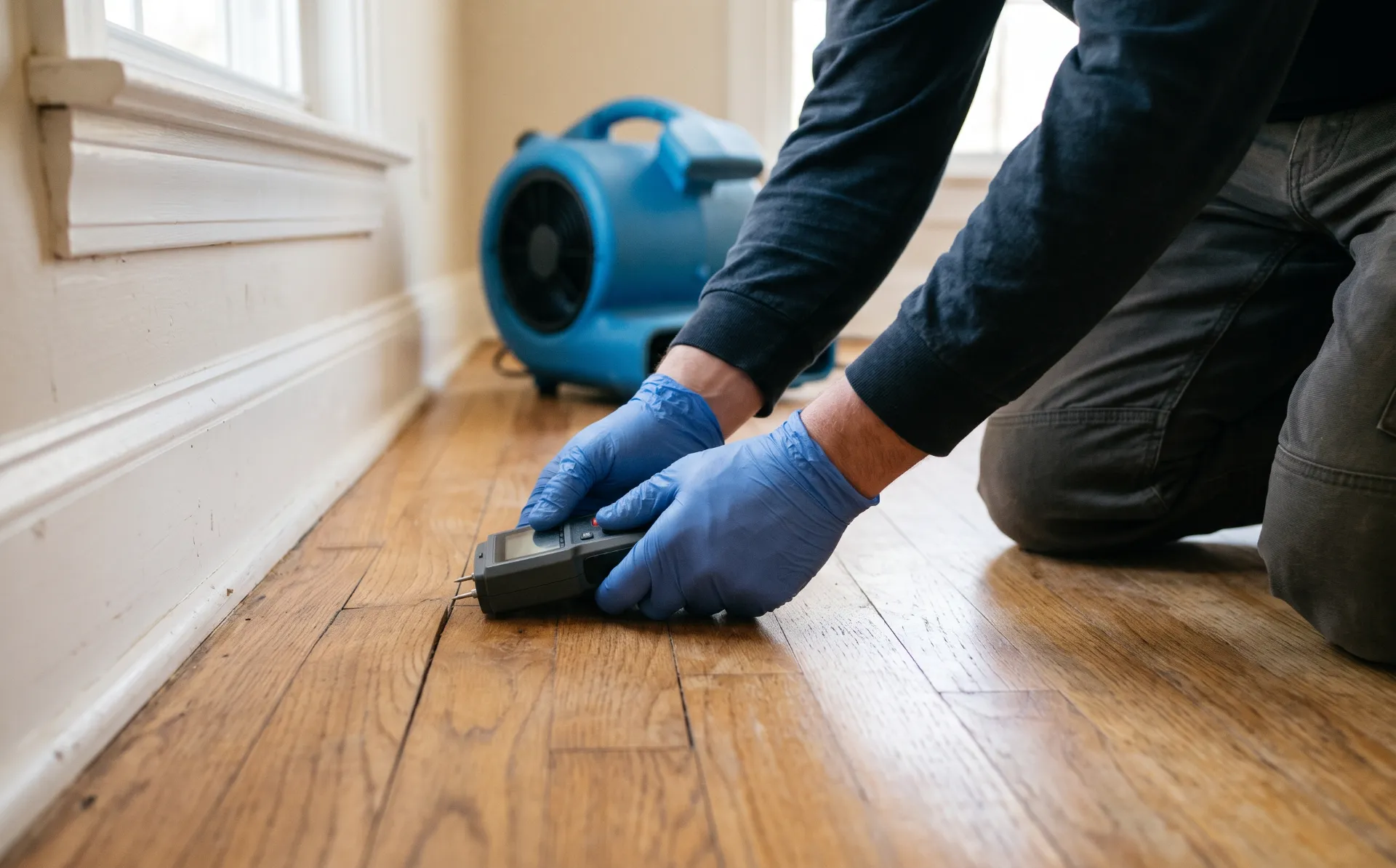
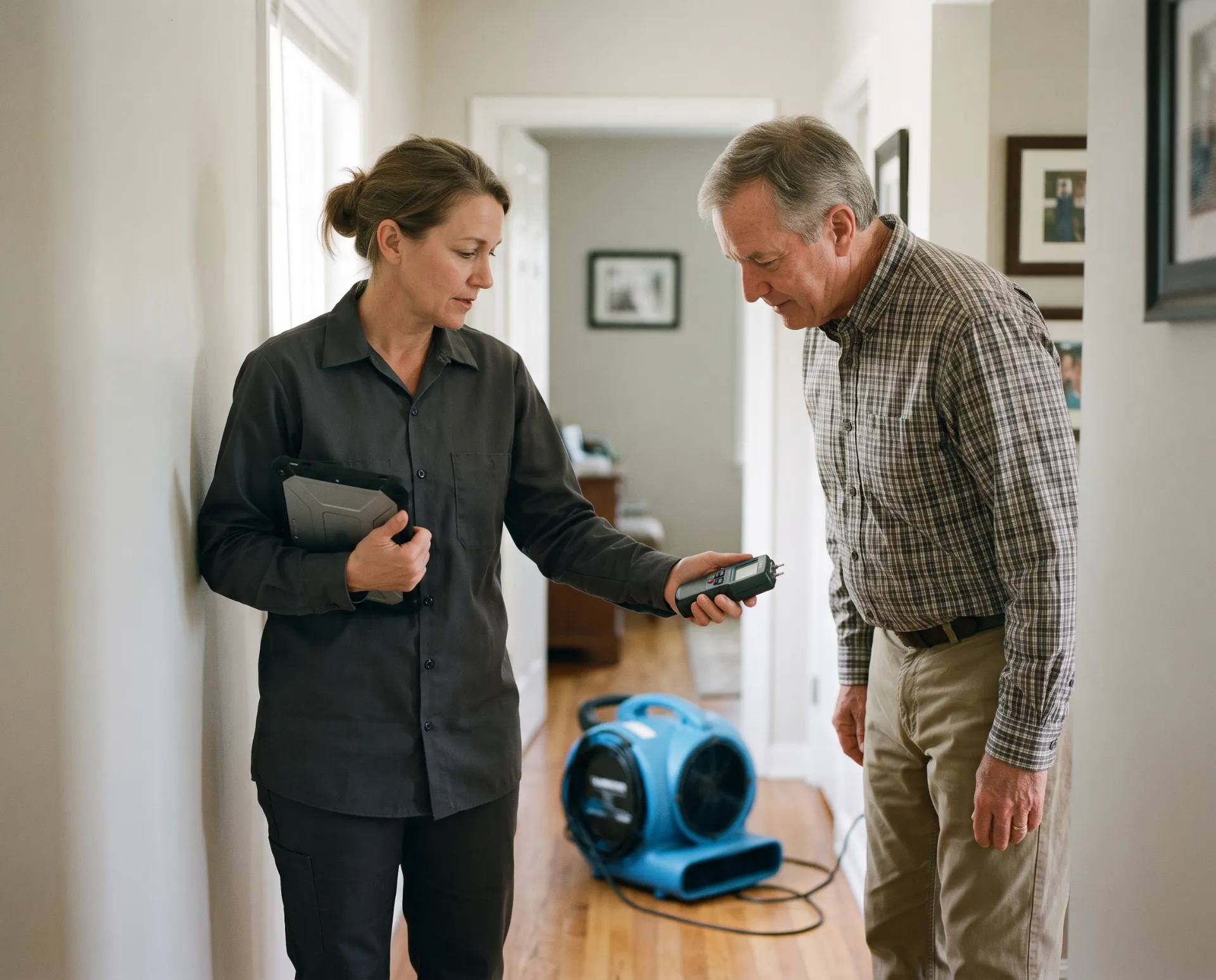
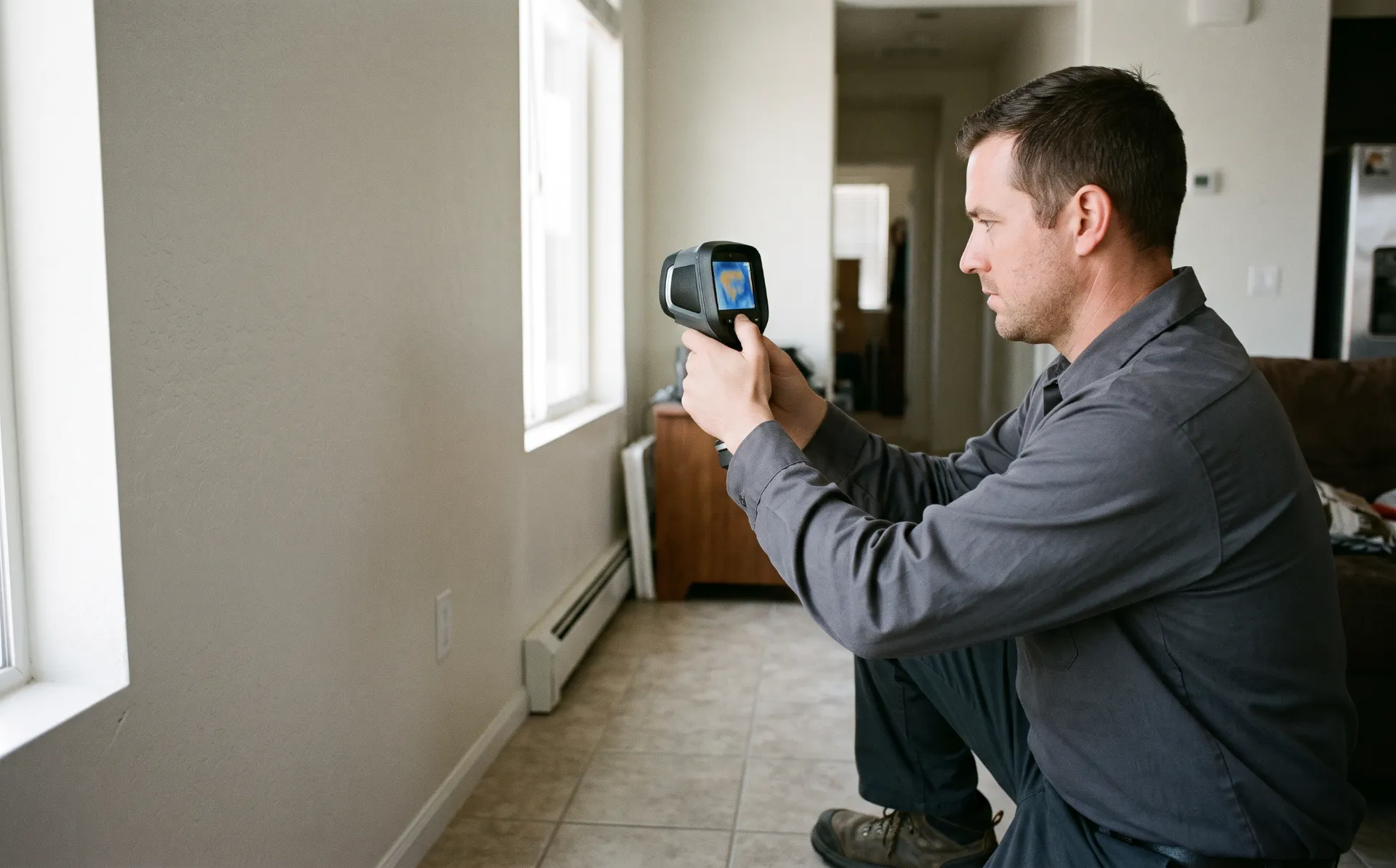
Moisture mapping Thermal imaging cameras and moisture meters locate what is still wet behind drywall, trim, and flooring.
Written scope and price You review a clear written scope and itemized estimate before any cutting, drying, or remediation begins.
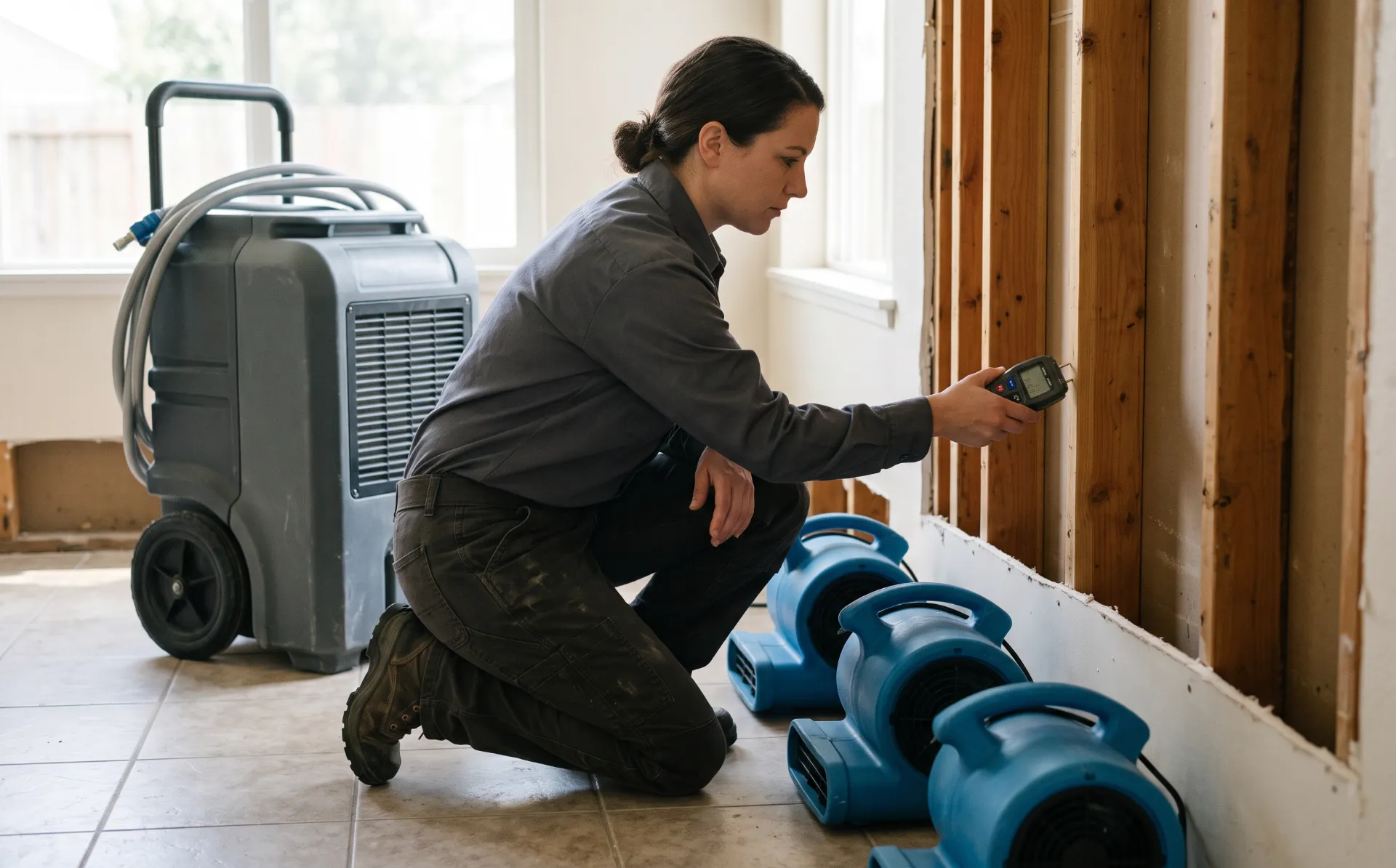
Drying the wet structure Air movers and dehumidifiers dry remaining wet framing and cavities, with progress logged at scheduled visits.
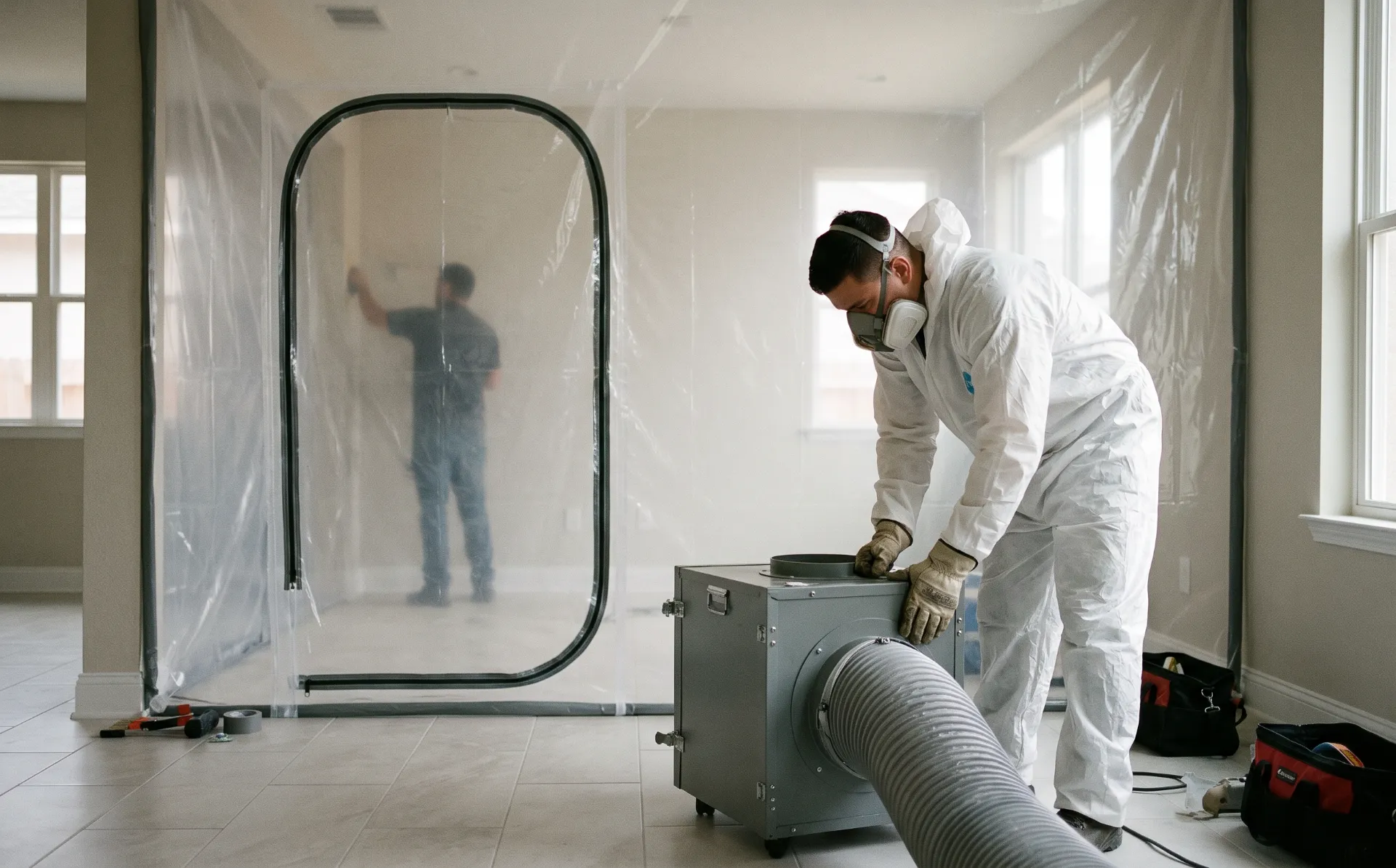
Contained remediation Under AMRT supervision, crews isolate the area, run HEPA air scrubbers, remove affected porous materials, and clean.
Assessor coordination Your project manager schedules work around the independent third-party assessor you hire for testing and clearance.
Project documentation We supply dated photos, moisture maps, drying logs, and completion records for your files or insurance adjuster.
 Summerlin · Demo photo
Why moisture and timing matter
According to the EPA, mold can begin growing on wet building materials within 24 to 48 hours. Even in a dry desert climate like Las Vegas, water trapped inside wall cavities, under flooring, or in attic insulation stays damp because air cannot circulate through closed spaces. Removing liquid water and drying wet materials is the primary way to control moisture.
Because every leak, material, and indoor environment is different, Dryline does not promise that structural drying will prevent mold growth. When moisture sits unaddressed or returns from an unfixed pipe or roof leak, remediation may be needed alongside drying.
- Porous materials like drywall, insulation, and pad staying damp
- Closed wall, cabinet, or attic cavities with little airflow
- Water intrusion that goes unnoticed for more than a day or two
- An ongoing roof or plumbing leak that keeps rewetting framing
From moisture check to finished repairs
We address wet conditions first and keep testing independent so every step is clear and documented.
- 1
Inspect and map moisture
Lead technicians use moisture meters and thermal cameras to find hidden dampness and write a clear scope before work begins.
- 2
Dry the wet source area
After any active leak is stopped by the proper trade, we extract water and dry affected framing using metered monitoring visits.
- 3
Remediate under containment
An AMRT certified technician supervises containment, HEPA air filtration, removal of affected porous materials, and surface cleaning.
- 4
Clearance and interior repair
Your independent assessor performs clearance testing, and then Dryline's own crew can repair drywall, trim, flooring, and paint.
Limits of our role on mold jobs
Dryline does not perform mold testing, issue clearance certificates, give health advice, or promise that mold will not return. Stopping an active plumbing leak, roof leak, or drainage problem requires a licensed plumber, roofer, or waterproofing contractor. Our project manager can coordinate those licensed trades while we handle drying and remediation.
Questions on mold after water damage
How soon can mold start growing after a leak?
According to the EPA, mold can begin growing on wet materials within 24 to 48 hours. Actual timing depends on the material, temperature, airflow, and how wet the surface stays. Having moisture checked early helps you see what is still damp behind walls or under floors.
If wet drywall has already dried, does it still need removal?
It depends on whether mold already grew on the material, what kind of water soaked it, and whether the drywall is damaged. Drying stops active growth, though dead spores and staining can remain on porous surfaces. An inspection and, when appropriate, an independent assessor help determine what needs removal.
What if I smell a musty odor with no visible mold?
A musty smell without visible spots often means moisture or growth is hidden behind drywall, under flooring, or inside a vanity or wall cavity. Our technicians can check those surfaces with moisture meters and thermal imaging cameras to locate damp areas. If sampling is needed, an independent assessor handles testing.
Who pays for mold cleanup in a rental property?
Dryline cannot give legal advice on landlord or tenant responsibility, which depends on the lease and local rules. We inspect homes, condos, and apartments across the Las Vegas valley and provide a written scope and estimate to the party authorizing the work. Please consult an attorney or property manager for lease questions.
Will insurance cover mold that followed a water leak?
Your insurance company decides whether mold or water damage is covered, and many policies place limits on mold claims. With your permission, Dryline works with every insurance company’s adjuster and provides dated photos, moisture maps, and an itemized estimate. You are responsible for your deductible and anything not covered.
How can I keep mold from returning after cleanup?
Mold needs moisture, so keeping the building dry is the primary control. Have licensed trades repair any roof, plumbing, or drainage leaks, and address future spills or storm intrusion before materials stay damp. Dryline never promises mold prevention, because future growth depends on ongoing moisture conditions.
Related services

Removing mold under containment
Dryline provides IICRC trained mold remediation after water damage for Las Vegas valley homes and businesses, supervised by an AMRT certified technician.
Read moreMoisture checks to find hidden water
We inspect Las Vegas valley homes and businesses with moisture meters and thermal cameras to trace hidden dampness before you decide on repairs.
Read moreStructural drying after water gets in
We dry walls, subfloors, and framing in Las Vegas valley homes and businesses using air movers, dehumidifiers, and logged moisture readings.
Read more
Book a free moisture check in Las Vegas
Serving Las Vegas, Summerlin, Henderson, and nearby Clark County areas. Call for active water. Forms sent online are read only in office hours and do not confirm a crew.