
Getting water out of a flooded garage
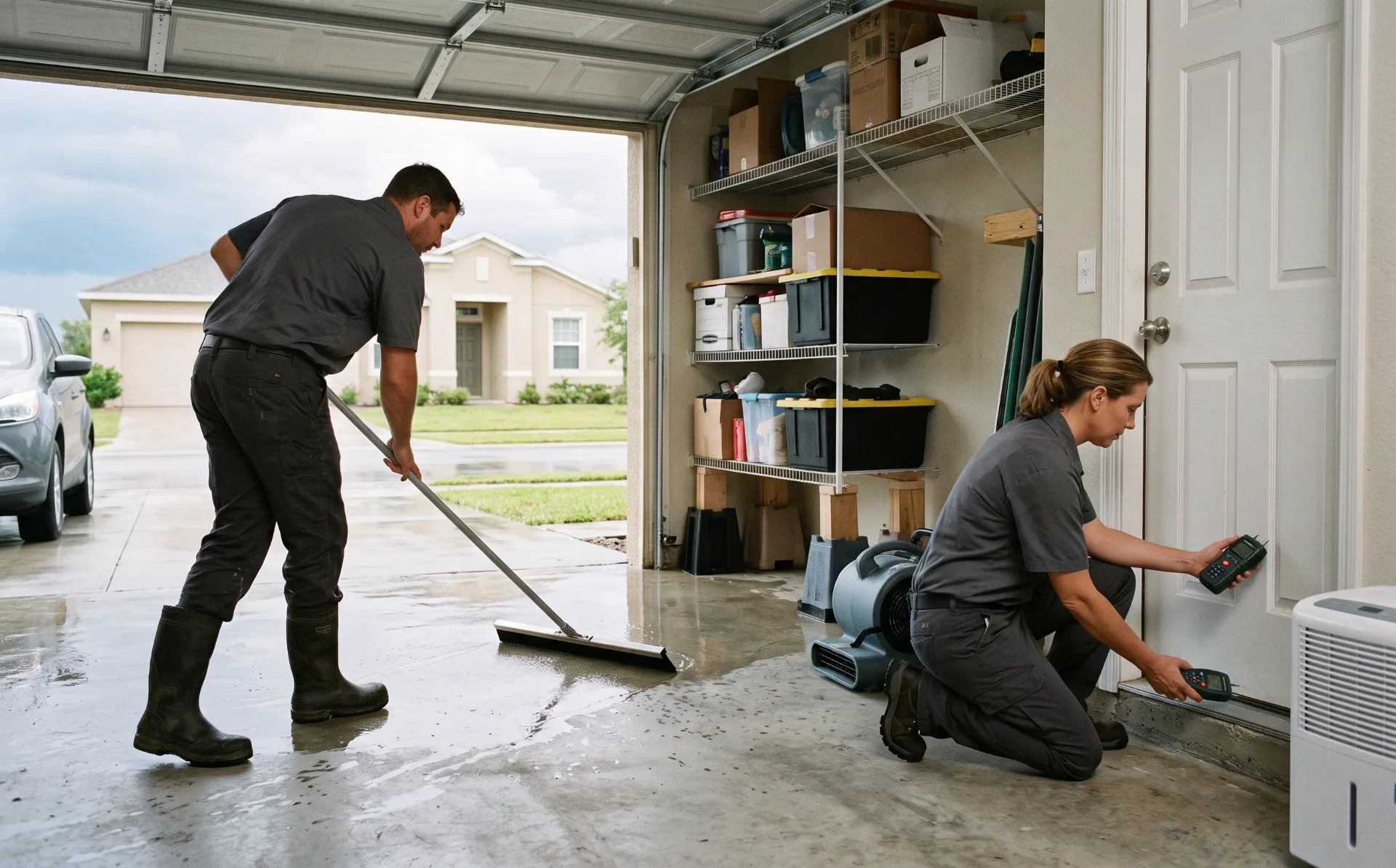
Dryline clears standing water, checks the wall shared with your home, and dries garage structures for homeowners across the Las Vegas valley.
- IICRC Certified Firm
- Serving the valley since 2012
- Free on-site inspection
 Enterprise · Demo photo
How water gets into Las Vegas garages
Most valley homes sit on concrete slabs with street level garages. Heavy rain or a failed appliance inside can send water across the floor and toward living spaces.
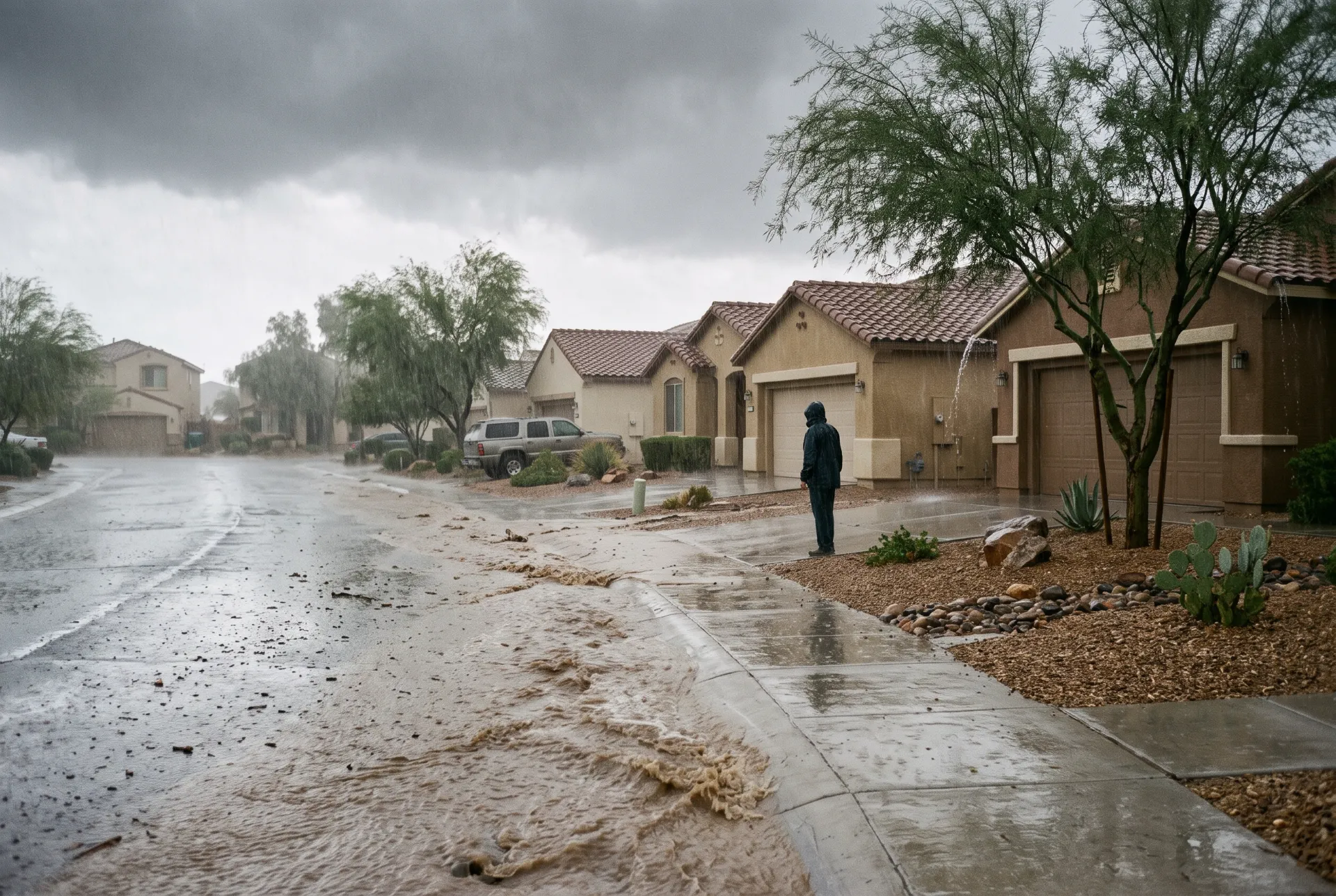
Monsoon runoff under the door
Sudden desert storms push street runoff up driveways and under garage doors, often carrying dirt, oil, and yard debris onto the slab.
Failed garage water heaters
A leaking tank or burst supply line inside the garage can release gallons of water across the concrete before anyone notices.
Washing machine supply lines
Many valley garages house laundry hookups where a cracked hose or loose drain pipe can soak drywall and stored items.
Water crossing the shared wall
Liquid on the garage slab can travel under the bottom wall plate and reach carpet, baseboards, or cabinets inside the house.
Leaks through garage doors
Water pooling near the interior door threshold can seep under the frame and dampen hallways, kitchens, or laundry rooms.
Garage roof and ceiling leaks
Wind driven rain can enter past damaged concrete roof tiles or flat roof edges and drip through garage ceilings onto the floor.
 Las Vegas valley · Demo photo
What our garage cleanup includes
Every garage loss is different depending on the water source and what is stored inside. Our crews handle extraction, moisture checks, drying, and claim paperwork.
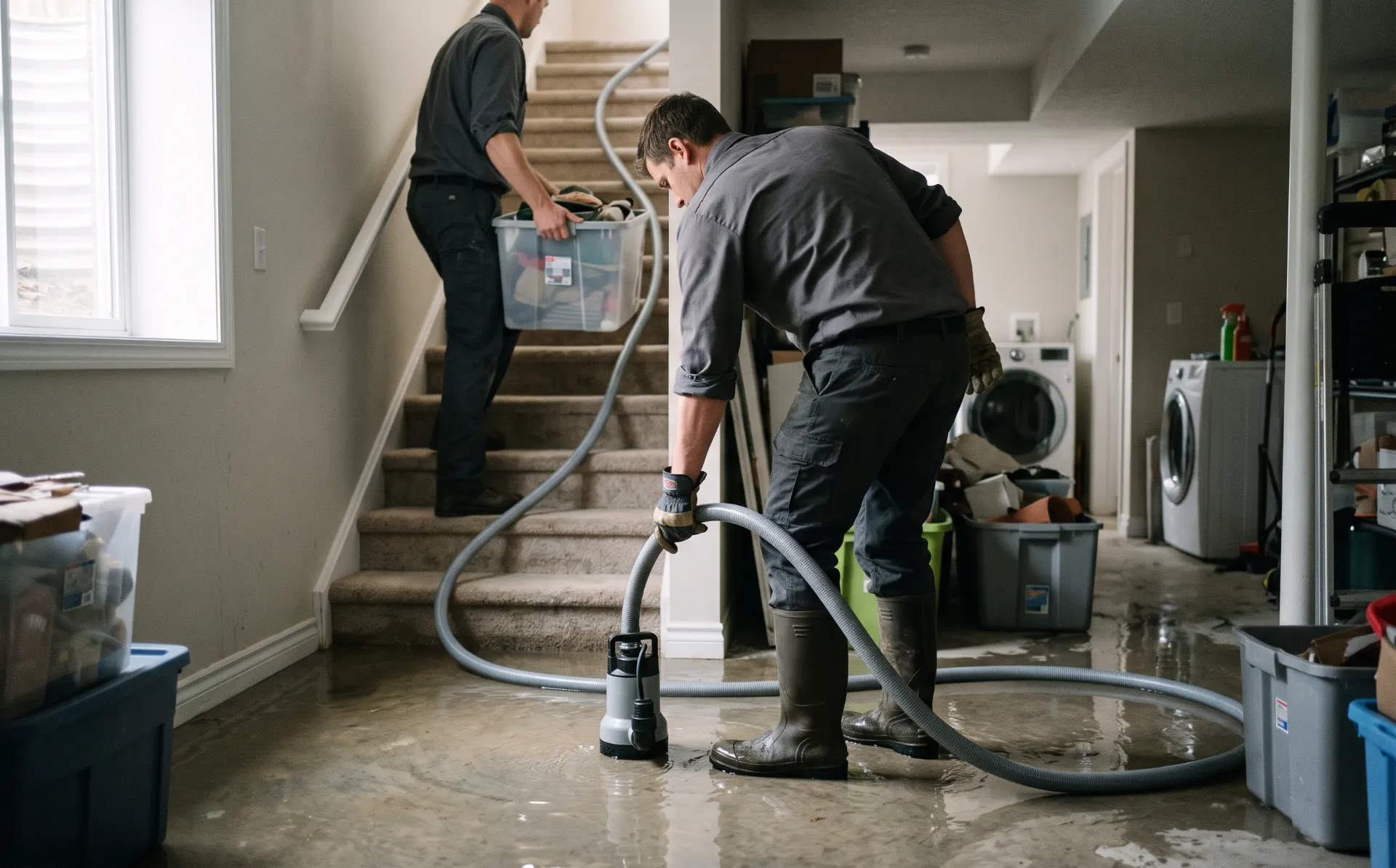
Slab water extraction Crews use truck-mounted and portable extractors to remove standing water from the concrete floor and low spots.
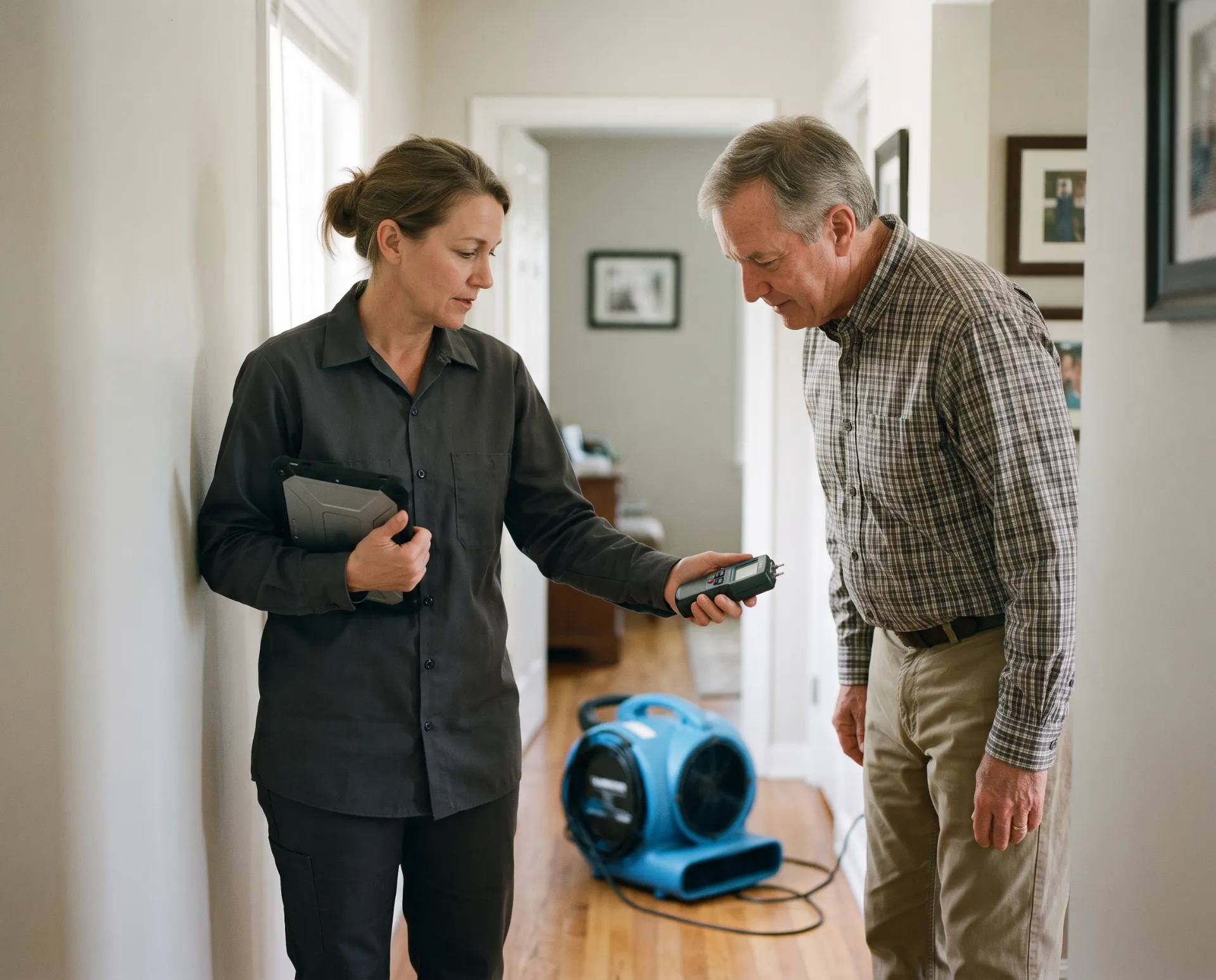
Shared wall moisture checks Technicians test the interior wall, door threshold, and adjacent room baseboards with moisture meters and thermal cameras.
Wet drywall removal When the bottom edge of garage drywall is saturated or contaminated, we provide a written reason before cutting it out.
Targeted structural drying Air movers and low-grain refrigerant dehumidifiers dry framing and wall cavities, with logged monitoring visits.
Stored contents handling We move, inventory, clean, and dry stored belongings, or pack them to our Las Vegas storage facility when space is needed.
Claim ready documentation You receive dated photos, moisture maps, drying logs, equipment records, and an itemized estimate for your records or adjuster.
 Summerlin · Demo photo
Why the wall shared with your house matters
Water on a concrete garage slab rarely stays in one puddle. It follows the slope of the floor and wicks under the bottom framing plate of the shared wall, reaching drywall, insulation, and flooring inside the house. Rooms next to the garage can hold hidden moisture even when the indoor floor looks and feels dry on the surface.
Cardboard boxes, shelving, and built in cabinets along that wall trap water against the drywall and slow evaporation. According to the EPA, mold can begin growing on wet materials within 24 to 48 hours. Checking behind stored items and inside adjacent rooms helps catch damp framing before odor or microbial growth develops.
- Bottom framing plates along the shared garage wall
- Interior door thresholds and jambs leading into the house
- Baseboards and flooring in rooms touching the garage
- Drywall behind water heaters, cabinets, and stacked boxes
How garage flood cleanup works
One project manager stays your contact from the first visit through the final walkthrough, keeping the scope clear before work starts.
- 1
Extract and clear the floor
With a signed work authorization, we pump out standing water, move wet belongings out of the way, and assess the water source on-site.
- 2
Meter walls and next rooms
Our crew maps moisture across garage drywall, the shared wall, and adjacent indoor rooms using moisture meters and thermal imaging.
- 3
Remove wet materials and dry
Unsalvageable drywall or insulation is removed after written approval, and air movers and dehumidifiers run until readings reach dry goals.
- 4
Document and coordinate repair
We compile photos, drying logs, and invoices, and can handle drywall, paint, trim, and cabinet repairs under our Nevada contractor license.
Work handled by other contractors
Dryline focuses on water cleanup, drying, and interior repairs like drywall, trim, and cabinets. Garage door repair, driveway regrading, drainage correction, and water heater replacement are done by separate licensed contractors. When plumbing or electrical repairs are needed alongside our work, our project manager can coordinate licensed trade partners.
Common garage flood questions
Does a wet garage really need professional drying?
It depends on what got wet and how long water sat on the slab. Concrete itself dries over time, though water often wicks into drywall, wood framing, and insulation along the base of the walls. Moisture meters show whether water stayed on the surface or moved behind the wall where fans alone may not dry it.
What if street runoff came under the garage door?
Water that rose from outside is treated as Category 3 contaminated water because street runoff carries oil, chemicals, pet waste, and debris. Porous materials it soaked, such as cardboard, carpet pad, and lower drywall, are generally removed rather than dried in place. Hard surfaces are cleaned and disinfected where the water source calls for it.
Could water from the garage reach rooms inside my house?
Yes, water can travel along the slab beneath the shared wall or under the interior door threshold. Rooms bordering the garage may have damp baseboards, drywall, or subflooring even when no puddles appear inside. Our technicians check adjacent indoor rooms with meters during the inspection.
Can you save items stored in my flooded garage?
What can be saved depends on the water source, the material, and how long it stayed wet. Hard nonporous items can often be cleaned, while porous items soaked by outdoor floodwater are usually not salvageable. Dryline can pack-out, inventory, clean, and store salvageable contents at our Las Vegas facility, with no guarantee on any specific item.
What should I know about a garage water heater leak?
A clean supply line or tank leak is often Category 1 at the start, depending on what it touches on the floor. Dryline handles water extraction, wall drying, and drywall repair, while a licensed plumber replaces the water heater itself. Your project manager can coordinate a licensed plumbing partner if you need one.
Will homeowners insurance cover a flooded garage?
Your insurer decides coverage based on your policy and the source of the water. Storm runoff rising from outside is often treated as flood, which standard homeowners policies generally exclude without separate flood coverage. With your permission, Dryline works with every insurance company’s adjuster, and you owe your deductible plus any uncovered costs.
Related services

Cleaning up after a flash flood
When rising surface water or wash runoff pushes mud and debris inside, Dryline extracts water, removes contaminated materials, and dries valley properties.
Read moreGetting the water out after a flood
Dryline extracts standing water, dries affected building materials, and cleans residential and commercial properties across the Las Vegas valley.
Read morePumping and drying flooded basements
While basements are uncommon in the valley, custom homes, newer builds, and below grade commercial spaces need dedicated pumping and drying when water enters.
Read more
Request a garage flood inspection
Serving homes across the Las Vegas valley, including Henderson and North Las Vegas. Call for active water; website forms are read in office hours and never confirm a crew.