Cleaning up after a toilet overflows
From clean tank overflows to waste backups that reach hallways or ceilings below, Dryline inspects, cleans, and dries valley homes and commercial restrooms.
- Free on-site estimates
- One project manager contact
- On call nights and weekends
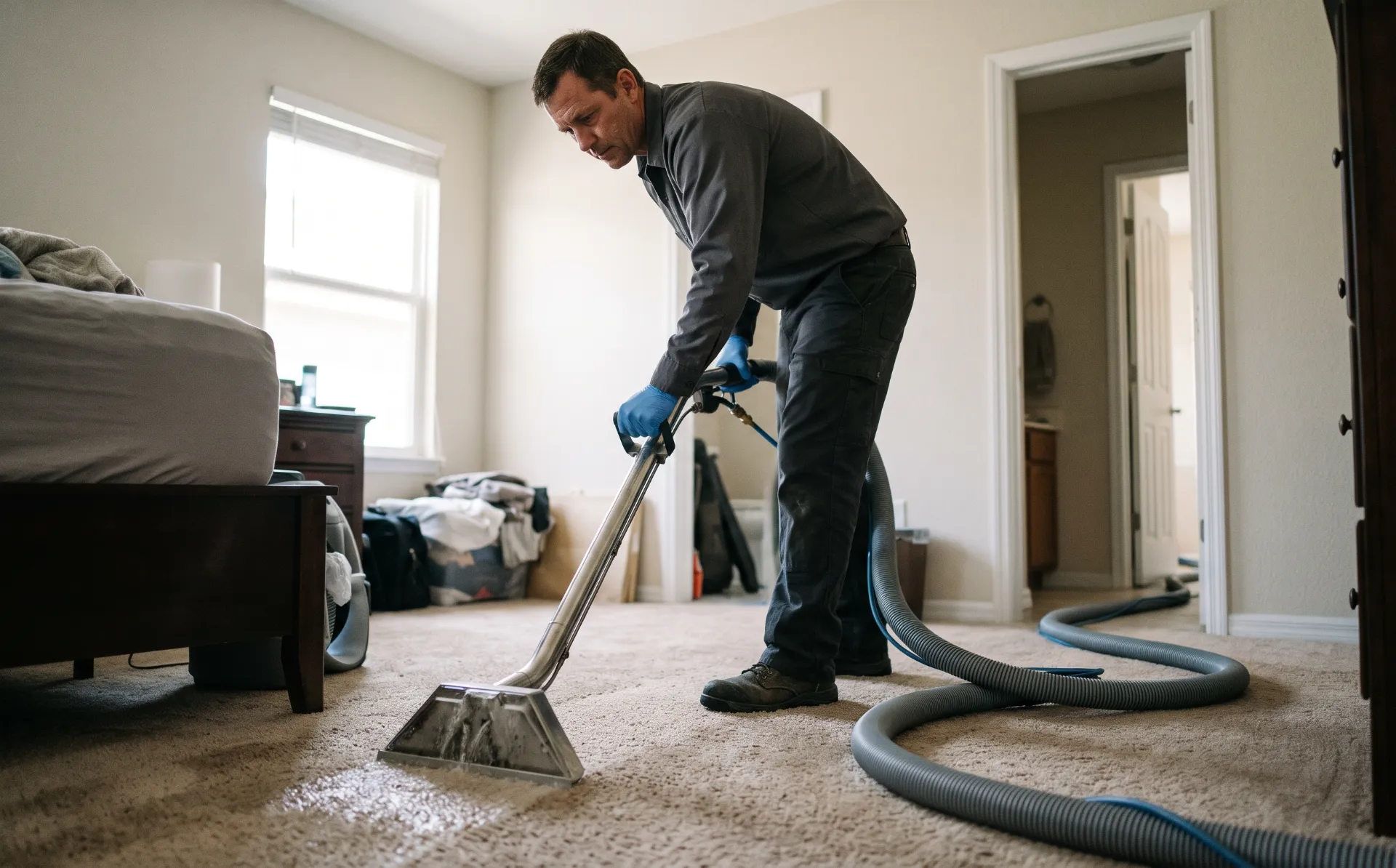 Las Vegas · Demo photo
Toilet overflow scenarios we dry and clean
Bathrooms sit next to bedrooms, hallways, and lower ceilings where water hides easily under flooring and behind baseboards.
Clean supply line overflows
A stuck float valve or broken supply line releases clean water that can still soak baseboards, drywall, and nearby carpet if left standing.
Overflows containing waste
When toilet water carries waste out of the bowl, cleanup requires protective procedures, targeted material removal, and thorough disinfection.
Water reaching nearby rooms
Bathroom tile rarely holds a full overflow. Water often runs under doorways into hallway laminate, closet drywall, or bedroom carpet pad.
Upstairs leaks into ceilings
Water from a second floor bathroom can travel along subfloor seams and drip through drywall ceilings, light fixtures, or wall cavities below.
Overflows found hours later
A leak that runs while you are asleep or away has time to wick up walls and degrade in cleanliness, requiring closer moisture inspection.
Commercial restroom overflows
In offices, retail shops, apartments, and hospitality spaces, overflowing toilets can affect shared corridors, cabinets, and adjacent suites.
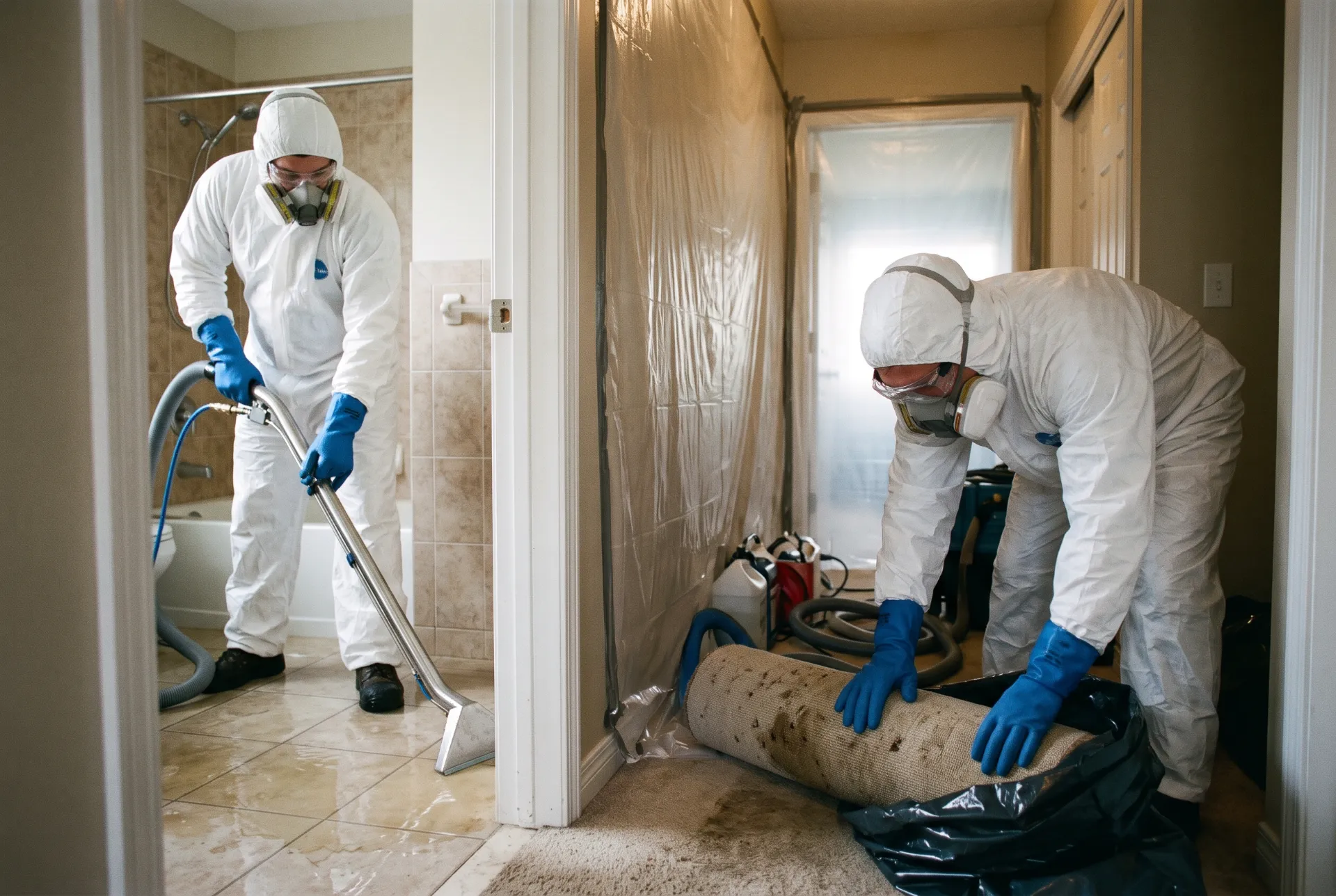 North Las Vegas · Demo photo
What toilet overflow cleanup includes
We trace where the water actually traveled instead of only mopping what is visible on the bathroom floor.
Standing water extraction We remove pooled water from bathroom tile, adjacent flooring, and subfloors using portable or truck-mounted extractors.
Moisture meter inspection Technicians check baseboards, wall cavities, and under flooring with meters and thermal cameras to locate hidden moisture.
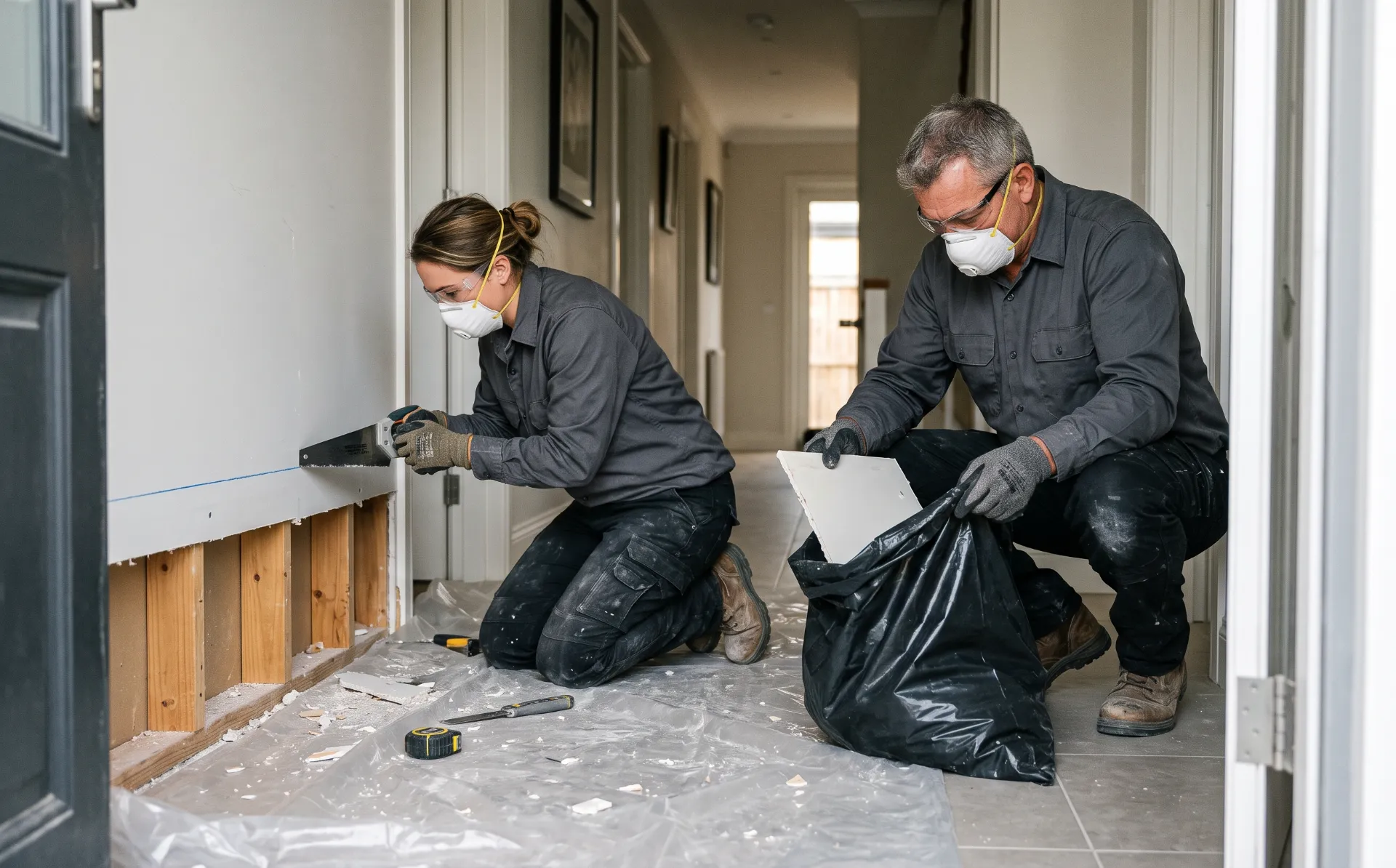
Unsalvageable material removal Soaked carpet pad and affected drywall or laminate that cannot be cleaned are removed after we provide a written reason.
Cleaning and disinfection When waste is present or water sat too long, remaining hard surfaces and framing are cleaned and treated with antimicrobials.
Structural drying setup We place air movers and dehumidifiers matched to the space and record moisture readings on scheduled monitoring visits.
Lower level ceiling checks For upstairs overflows, we inspect the ceiling and room directly below for wet insulation, drywall saturation, and hidden drips.
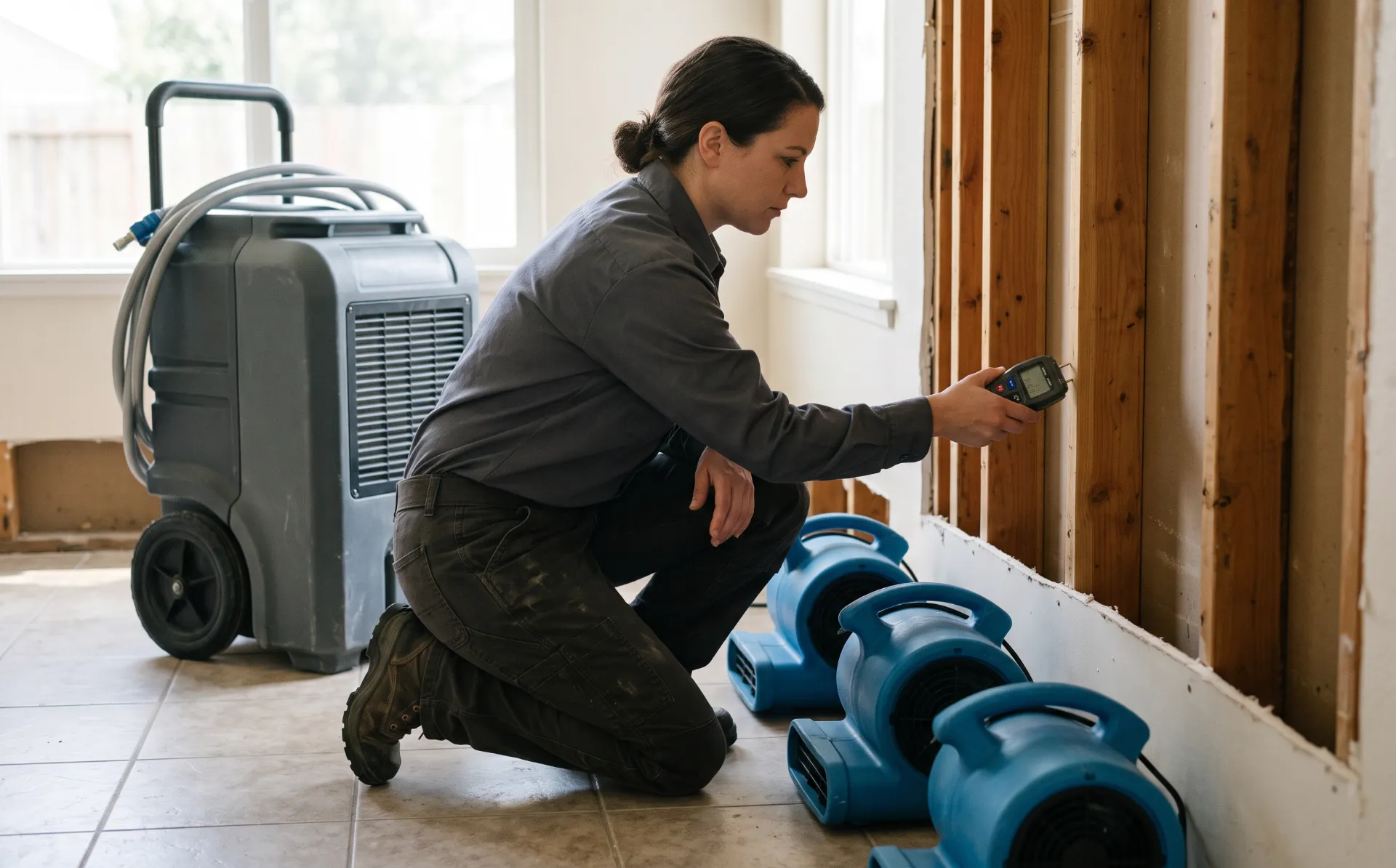 Summerlin · Demo photo
Why the water source and timing matter
Under the ANSI/IICRC S500 standard, water from a toilet tank or clean supply line is assessed very differently from bowl water that contains waste. Supply water starts as Category 1, while water carrying waste is treated as Category 3 contaminated water. That difference guides whether materials can be dried in place or must be removed and disinfected.
Elapsed time changes the assessment too. Clean water that sits against dirty floors, grout lines, or inside wall cavities does not stay clean, and according to the EPA, mold can begin growing on wet materials within 24 to 48 hours. An on-site inspection checks both the source and how far moisture has spread before a drying plan is written.
- Whether the water came from the supply line, tank, or bowl.
- How long the water has been sitting on floors and walls.
- Moisture readings along baseboards, cabinets, and nearby rooms.
- Whether moisture reached the subfloor or the ceiling below.
Four steps to dry a toilet overflow
Once the water supply is shut off, our crew handles extraction, moisture tracing, disinfection when required, and structural drying.
- 1
Shut off the water and call
Turn off the toilet shutoff valve if it is safe to reach, then call us. Our coordinator gives an arrival estimate for your address on the call.
- 2
Extract and map moisture
We extract visible water and use moisture meters and thermal imaging to see how far it traveled under floors, into walls, or downward.
- 3
Remove and disinfect as needed
Materials that cannot be cleaned or dried in place are removed with written approval, and affected surfaces are disinfected when required.
- 4
Dry, monitor, and document
We run drying equipment, log moisture readings during scheduled visits, and provide photos and records for your files or insurance adjuster.
Plumbing repairs versus water cleanup
Dryline handles the water extraction, cleaning, drying, and interior repairs such as drywall, baseboards, and flooring. We do not repair the toilet itself, clear drain clogs, or replace fill valves and wax rings. A licensed plumber must fix the plumbing problem, and our project manager can coordinate one if needed.
Questions about toilet overflow cleanup
Does every toilet overflow need professional cleanup?
A small splash of clean water wiped off intact tile may not require a crew, while larger spills, waste overflows, or water reaching baseboards and carpet often do. Hidden moisture under flooring or behind vanities is hard to spot without meters. We offer a free on-site inspection in the Las Vegas valley so you know what is actually wet.
Can water get trapped under vinyl plank or bathroom tile?
Yes. Water frequently slips through perimeter gaps along walls, cabinets, and thresholds, settling under floating vinyl plank or into subfloors beneath tile. Surface drying alone often misses trapped moisture. We use moisture meters and thermal cameras to check beneath flooring before deciding whether boards need lifting.
What happens if an upstairs toilet leaks into the ceiling below?
Water can pool on top of ceiling drywall and soak insulation before stains appear. Our crew checks the room below with thermal imaging and meters to locate wet framing and insulation. Depending on the water source and saturation, wet drywall or insulation may need removal so the cavity can dry.
Why does the bathroom still smell after the floor looks dry?
Lingering odor often means moisture or contaminated residue remains trapped under baseboards, inside vanity toe kicks, or in soaked carpet pad nearby. Odor control works by removing the wet source first, disinfecting remaining surfaces, and running HEPA air scrubbers when needed.
Will homeowners insurance cover a toilet overflow?
Your insurer decides coverage based on your policy wording and the cause of the overflow, so review your policy or ask your agent. With your permission, Dryline works with any insurance company’s adjuster and supplies itemized estimates and moisture logs. You remain responsible for your deductible and anything not covered.
How soon should I call after a toilet overflows?
Call as soon as water has spread past the tile, involves waste, or reaches a lower ceiling. According to the EPA, mold can begin growing on wet materials within 24 to 48 hours, and clean water degrades the longer it sits. Our phone line is answered 24 hours a day, and we give an honest arrival estimate on that call.
Related services

Cleanup for sewage and waste backups
Dryline extracts, cleans, and dries valley homes and commercial spaces after sewer backups, waste overflows, and outside floodwater.
Read more
Getting the water out after a flood
Dryline extracts standing water, dries affected building materials, and cleans residential and commercial properties across the Las Vegas valley.
Read moreRemoving wet drywall and flooring
When drywall, insulation, or flooring cannot be dried in place, we explain why in writing, protect clean rooms, and remove only what is needed.
Read more
Schedule a toilet overflow inspection
Dryline serves Las Vegas, Henderson, North Las Vegas, Summerlin, and Clark County. Forms submitted online are read during office hours only and do not confirm a crew.