
Cleanup when rain gets past the roof
Dryline handles interior water cleanup, drying, and temporary tarping for Las Vegas valley homes and businesses when storms push rain inside.
- IICRC Certified Firm
- Phone answered 24 hours a day
- Free on-site written estimate
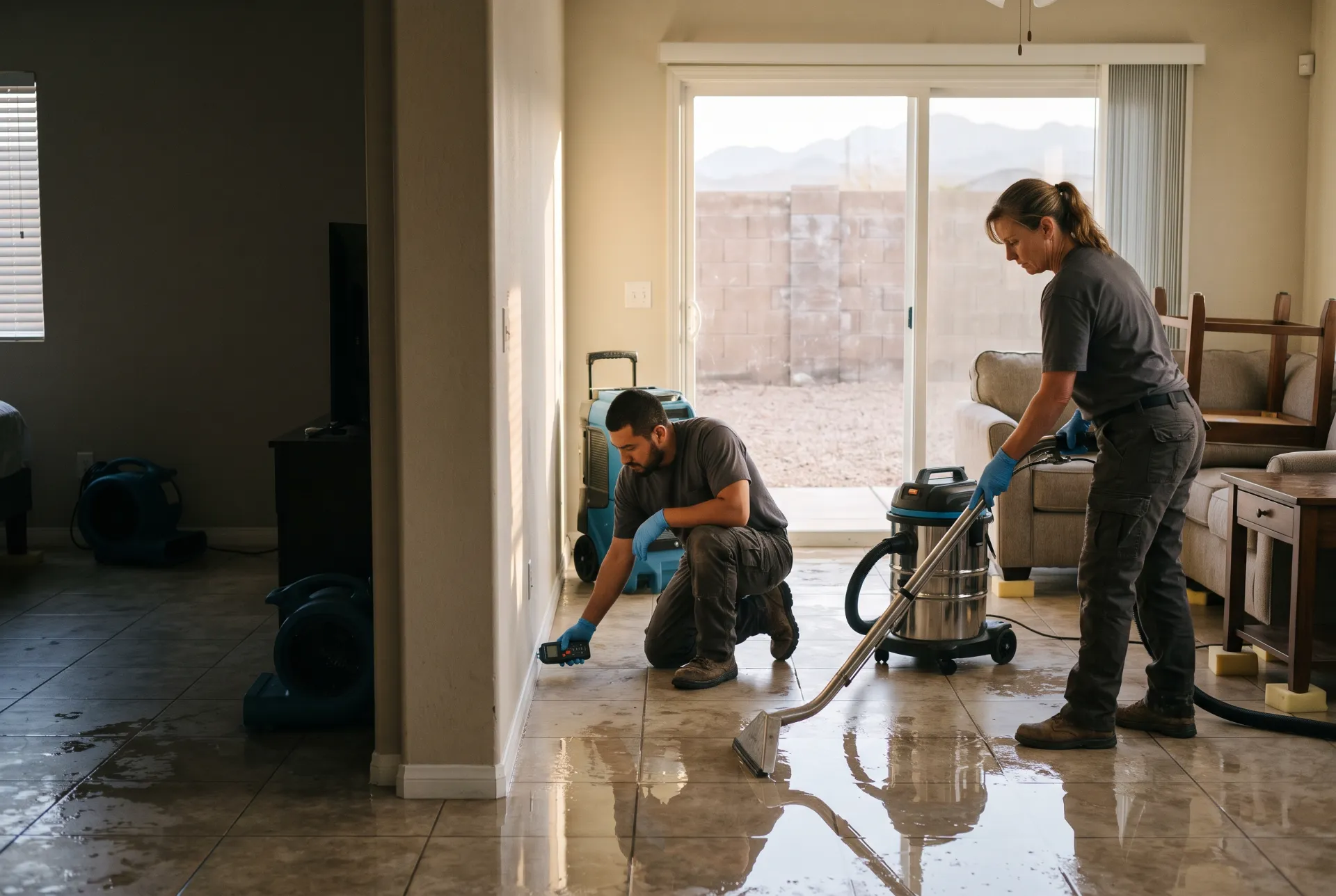 Henderson · Demo photo
Where storm rain enters a building
Sudden desert storms push rain sideways into openings that stay dry in calm weather. These are the interior water problems our crews inspect and dry.
Rain under roof tiles or flashing
High winds can drive rain beneath concrete roof tiles or around vent flashing, letting water drip onto the attic deck.
Ceiling stains or active drips
A brown ring or steady drip during a storm often means water has pooled above the drywall and found a seam or light fixture.
Water at windows and doors
Blowing rain can push past window frames and sliding door tracks, soaking nearby baseboards, drywall, and flooring.
Wet attic insulation
Soaked insulation holds moisture against ceiling framing and drywall long after the rain stops outside.
Sagging or fallen ceilings
Waterlogged drywall grows heavy and can give way without warning. Stay out from under any bulging ceiling until a crew inspects it.
Water inside exterior walls
Rain entering at roof edges or stucco cracks can travel down wall cavities and show up along baseboards on lower floors.
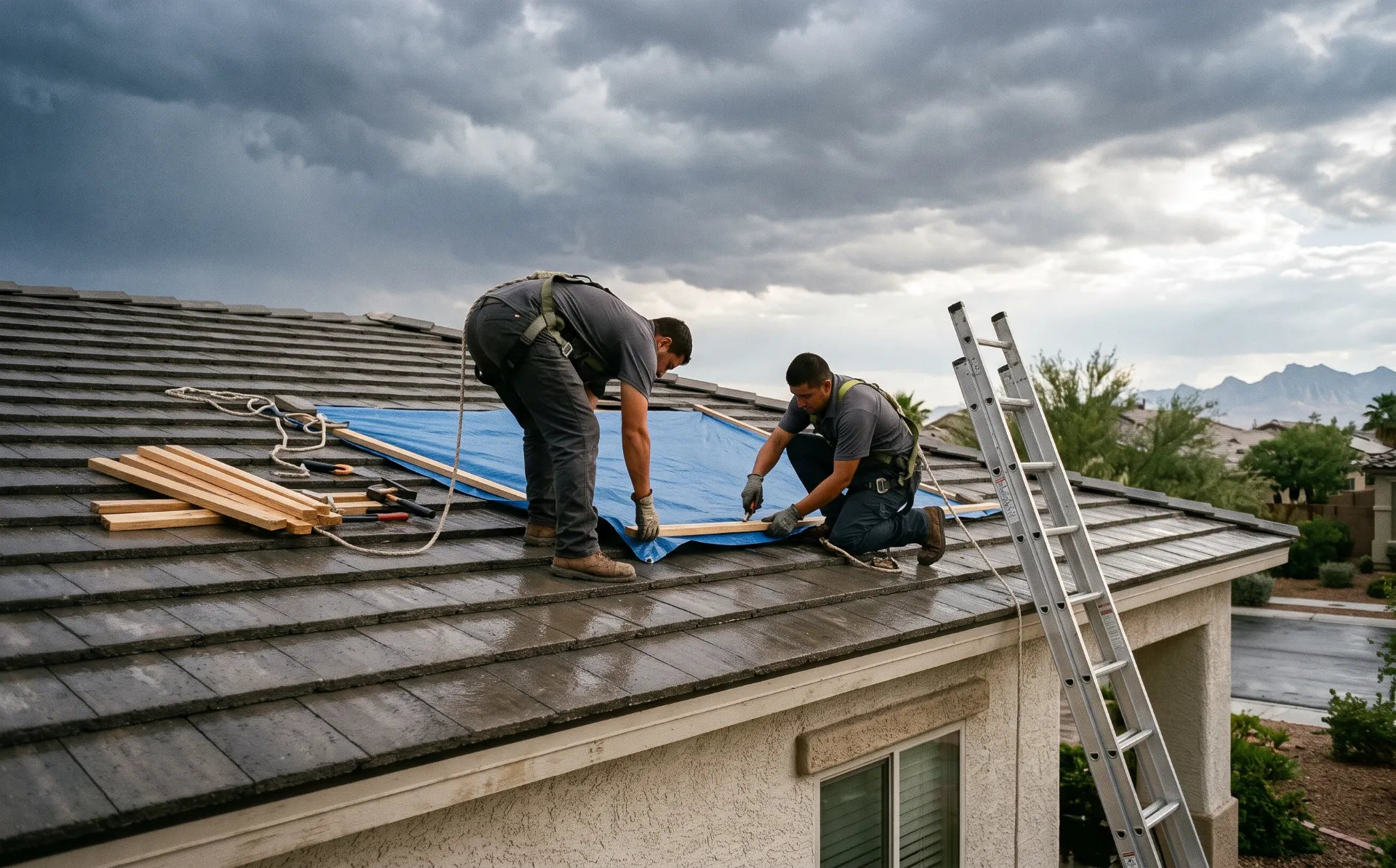 North Las Vegas · Demo photo
What our roof leak cleanup covers
Before any work starts, you receive a written scope and price. Emergency water extraction can begin with your signed authorization while the full scope is prepared.
Water extraction Truck mounted and portable extractors pull standing water from floors, carpets, and catch areas before it spreads.
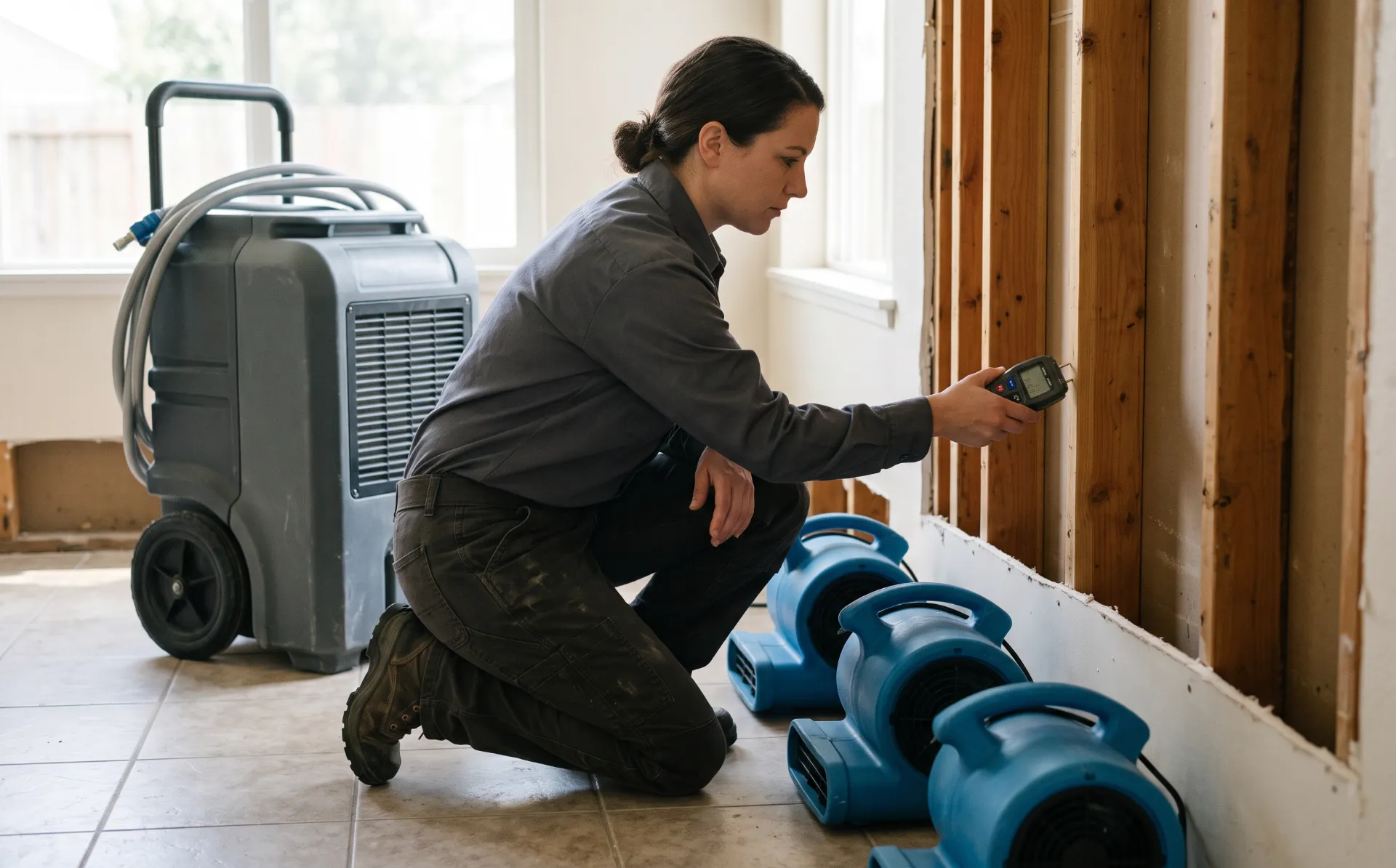
Moisture and thermal checks Technicians scan ceilings, attics, and walls with thermal imaging cameras and confirm every wet spot with moisture meters.
Wet material removal Saturated insulation, drywall, and soaked carpet pad are removed when needed, with a written reason before anything is cut.
Structural drying Air movers and dehumidifiers dry framing and cavities. Monitoring visits are scheduled in your drying plan and logged.
Temporary roof tarping When roof access is safe, crews install temporary tarps to help limit further rain entry until a licensed roofer repairs it.
Claim documentation We provide dated photos, moisture maps, drying logs, equipment records, and an itemized estimate in the format adjusters use.
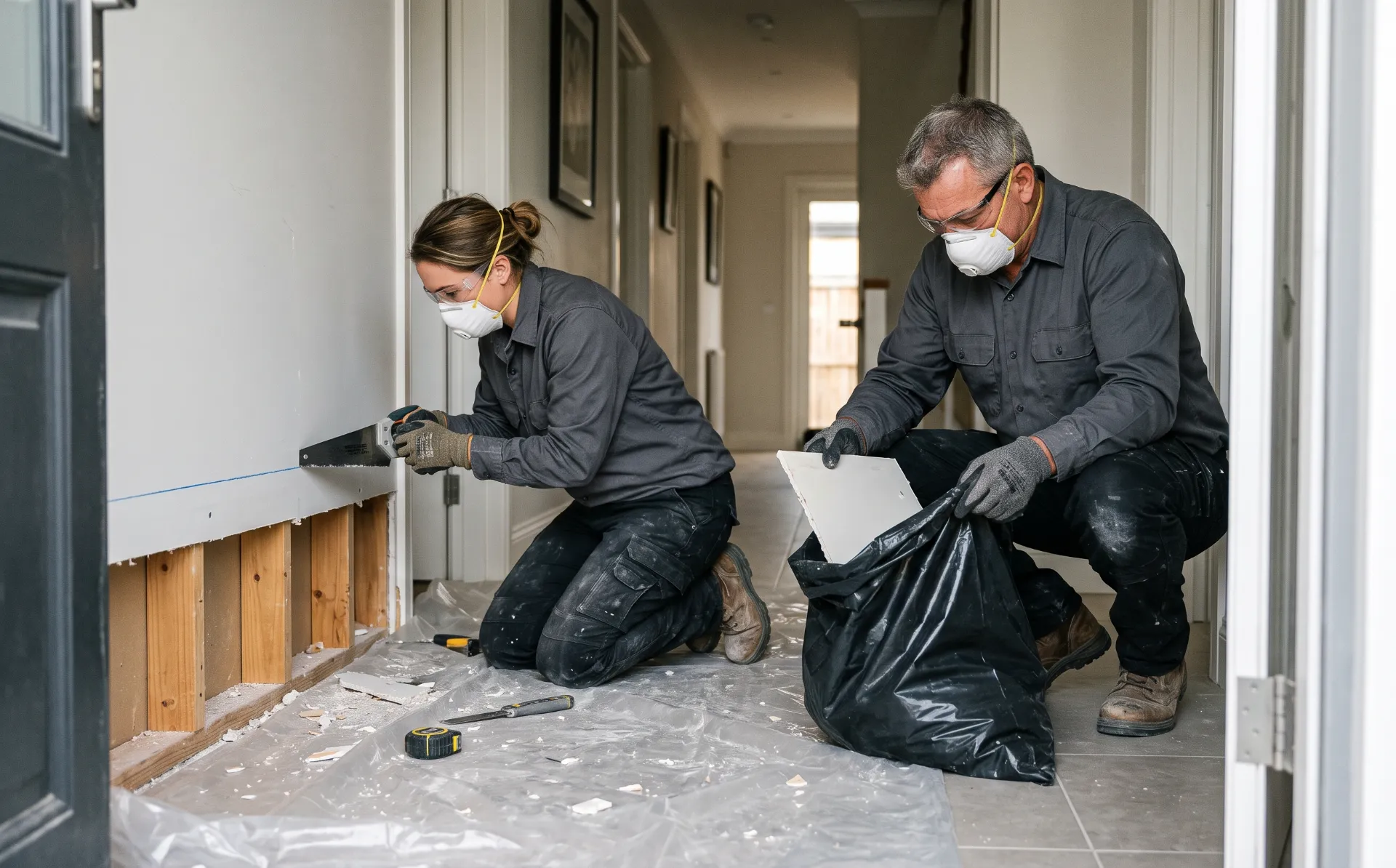 Spring Valley · Demo photo
How roof leak water is assessed on-site
Under the ANSI/IICRC S500 standard, wind-driven rain is not automatically treated as Category 3 contaminated water. Our lead technician assesses the water on-site based on what it passed through, such as dusty attic insulation or building cavities, and how long it sat before cleanup began.
What can be dried in place depends on the water category, the material, and how long it stayed wet. If you see a ceiling bulging or sagging under trapped water, keep people and pets out of the area because wet drywall can fall. Dryline cannot tell you by phone whether a room is safe to enter.
- Across attic insulation and along ceiling joists
- Into recessed light housings, vents, and ceiling seams
- Down interior wall framing toward baseboards and trim
- Under flooring and carpet pad along exterior walls
How interior roof leak cleanup works
One project manager stays your contact from the first visit through the final walkthrough, keeping you updated at every stage.
- 1
Protect and tarp when safe
We extract active water, protect unaffected rooms, and place temporary roof tarping once weather and roof conditions allow safe access.
- 2
Inspect ceilings and cavities
Lead technicians check the attic, ceilings, and walls with thermal cameras and moisture meters to map where the rain traveled.
- 3
Remove wet materials and dry
Saturated insulation or drywall is removed with your written approval, then air movers and dehumidifiers run until readings meet drying goals.
- 4
Document and coordinate
We share your photos, moisture logs, and estimate, and your project manager coordinates with a licensed roofer for the exterior repair.
What Dryline repairs and what trades do
Dryline does not perform permanent roof repair, roof replacement, window or door replacement, or exterior stucco repair. Licensed trade partners handle those exterior repairs, and our project manager can coordinate their work with ours. Once the building is dry, Dryline's own crew can repair interior drywall, insulation, texture, and paint.
Common questions about roof leak cleanup
My ceiling is bulging after rain. What should I do?
Stay out from under the bulging section and keep children and pets away from the room, because waterlogged drywall can fall. Call our 24-hour line so a coordinator can give you an arrival estimate for your address. We cannot confirm by phone whether the ceiling or room is safe to enter.
Can wet attic insulation be dried in place?
Wet attic insulation often has to be removed rather than dried in place, especially when it is saturated or has been exposed to contaminated water. Our technician inspects the attic with moisture meters and explains what needs to come out in writing before any material is removed. Salvage depends on the water source, the material, and how long it stayed wet.
Does a small ceiling stain really need an inspection?
A small mark on painted drywall can hide a wider area of trapped water in the attic insulation or along ceiling joists. Checking the space with a moisture meter and thermal camera shows whether the framing is dry or still holding moisture. Inspections and written estimates are free anywhere in our Las Vegas valley service area.
Will Dryline fix my roof tiles or flashing?
No, Dryline does not perform permanent roof repairs or roof replacement. We can place a temporary tarp when conditions are safe, and our project manager can coordinate a licensed roofer to repair the concrete tiles, flat roof membrane, or flashing. Our own crew handles interior repairs such as drywall, insulation, texture, and paint.
Does homeowners insurance cover wind-driven rain leaks?
Your insurance company decides what your policy covers, so check your policy or ask your agent. With your permission, Dryline works with every insurance company’s adjuster and provides dated photos, moisture logs, and an itemized estimate. You are always responsible for your deductible and any costs your policy does not cover.
How long does temporary roof tarping last?
Emergency roof tarping is temporary protection only and is not a permanent roof repair. How well a tarp holds depends on wind conditions, roof pitch, and the condition of the surrounding tiles or flat roof surface. It is meant to help limit water intrusion until a licensed roofer completes the repair.
Related services

Tarping roofs and boarding openings
When a storm opens a roof, window, or door, Dryline installs temporary tarps and boards for valley homes and businesses until permanent repairs happen.
Read moreCleaning up after storm water gets in
When monsoon rain or wind pushes water through a roof, window, door, or wall, Dryline cleans up the intrusion and dries affected homes and businesses.
Read moreStructural drying after water gets in
We dry walls, subfloors, and framing in Las Vegas valley homes and businesses using air movers, dehumidifiers, and logged moisture readings.
Read more
Schedule a roof leak moisture inspection
Dryline serves homes and businesses across the Las Vegas valley and Boulder City. Call for active leaks, because website forms are read during office hours only and do not confirm a crew.