Calling experienced professionals and safety boundaries
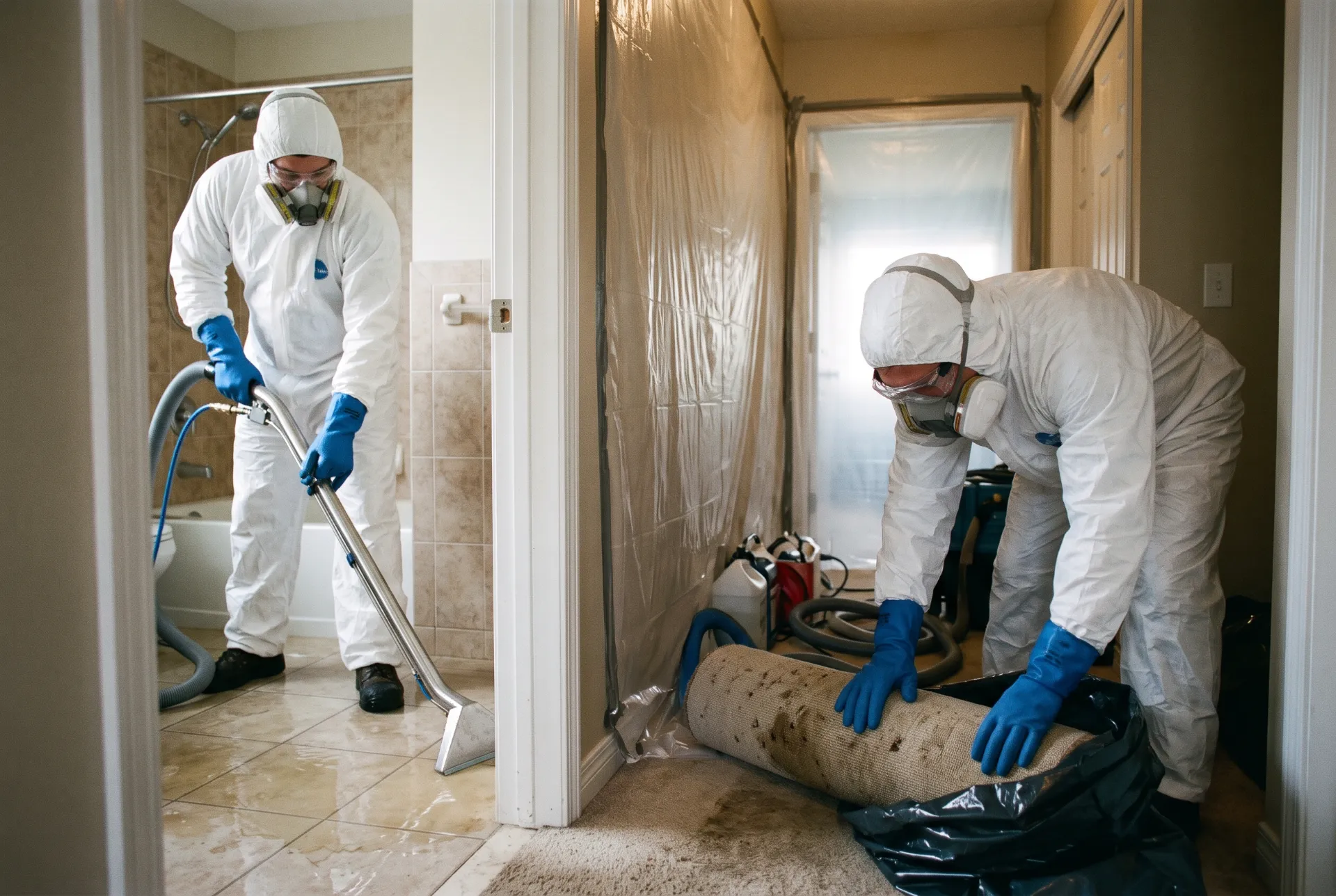
According to the EPA, a sewage backup calls for professionals experienced with contaminated water because proper personal protective equipment and physical containment barriers are required. Grossly contaminated water can spread beyond the initial backup area into clean rooms if teardown or cleaning begins without isolating the workspace. Trained crews set up containment and wear protective gear on-site, while building safety always requires an in person inspection rather than a phone check.
- Contaminated water work uses protective gear and containment
- Keep people and pets away from sewage affected rooms until cleaned
- On site inspection is required before judging whether rooms are safe
High-porosity materials FEMA groups as unsalvageable
FEMA groups carpet and carpet padding, fiberglass insulation, drywall, flooring underlayment, particle board, and MDF as high porosity materials that are not salvageable after contaminated water contact. Because those porous products soak up sewage contaminants deep inside fibers and cores while trapping dampness, standard practice is controlled removal rather than attempting to dry them in place. Before cutting out affected finishes, Dryline gives a clear written reason for each material removed.
- Carpet, padding, drywall, and fiberglass insulation are not salvageable
- Underlayment, particle board, and MDF also fall in this group
- Request a written reason before porous finishes are cut out
Materials FEMA groups toward salvageable
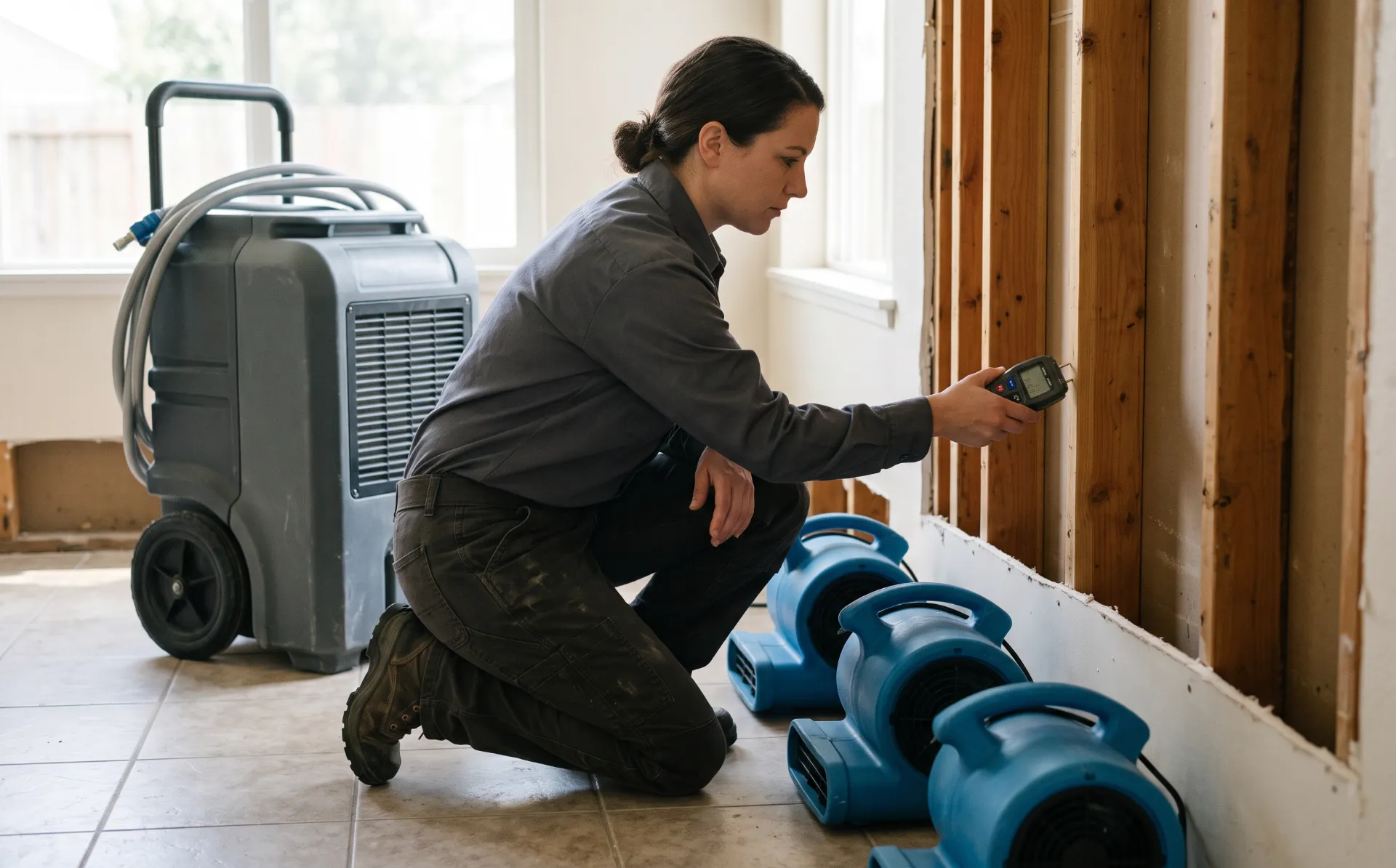
FEMA groups structural materials such as plywood subfloor, sawn framing lumber, poured concrete, and concrete block toward salvageable after contaminated water exposure. Whether a specific structural surface can be cleaned, disinfected, and dried depends on how deeply liquid penetrated and the surrounding site conditions. Once unsalvageable finishes are stripped away and framing or slabs are disinfected, Dryline logs moisture meter readings at scheduled monitoring visits to track structural drying.
- Concrete, block, plywood subfloor, and sawn lumber may be salvageable
- Surfaces are cleaned and disinfected once affected materials are removed
- Moisture meters help verify drying progress during monitoring visits
What the EPA says can be cleaned or removed
Under EPA guidance on household and commercial contents exposed to contaminated water, solid nonporous items such as metal and plastic furniture, china, and glass can be washed and disinfected. By contrast, soft items that trap sewage inside padding or fabric, including mattresses, cloth upholstered furniture, cushions, and pillows, should be removed and discarded. Cleanable belongings that need to leave the work zone during teardown can be inventoried, cleaned, and stored off site until repairs finish.
- Metal and plastic furniture, china, and glass can be cleaned
- Mattresses, cloth upholstery, cushions, and pillows should be removed
- Move cleanable belongings out of affected rooms during teardown
Plumbing blockages and reconstruction roles
Stopping a sewage backup takes coordination between a plumber and the cleanup crew because restoration technicians do not repair failed pipes or clear drain blockages. A licensed plumber clears the line and fixes damaged plumbing first so waste stops entering the building. After contaminated materials are removed and structural framing is dried, licensed reconstruction crews replace drywall, insulation, flooring, cabinets, and trim while trade partners handle plumbing, roofing, electrical, and HVAC.
- A licensed plumber clears the blockage and repairs failed plumbing
- Separate specialists handle electrical, tree, and foundation work
- Licensed reconstruction covers drywall, flooring, cabinets, and trim
Sewer backup coverage and paying for work
Insurance coverage for a sewer or drain backup depends on your specific policy language and whether a sewer backup endorsement was added, so check your policy documents or ask your insurance agent. The carrier decides what is covered, and the property owner always pays the deductible along with any uncovered cleanup or rebuild items. When work is paid directly rather than billed to an eligible insurer, payment can be made by card, check, bank transfer, or third-party financing subject to credit approval.
- Ask your agent whether your policy includes sewer backup coverage
- Uncovered work may be paid by card, check, bank transfer, or financing
- Direct billing applies only when the carrier and policy allow
What to remember
Have a licensed plumber clear the blockage, let trained crews handle contaminated removal and disinfection, and review sewer backup endorsements with your agent. If sewage or water is coming in, call for cleanup help.