Surface evaporation versus trapped moisture
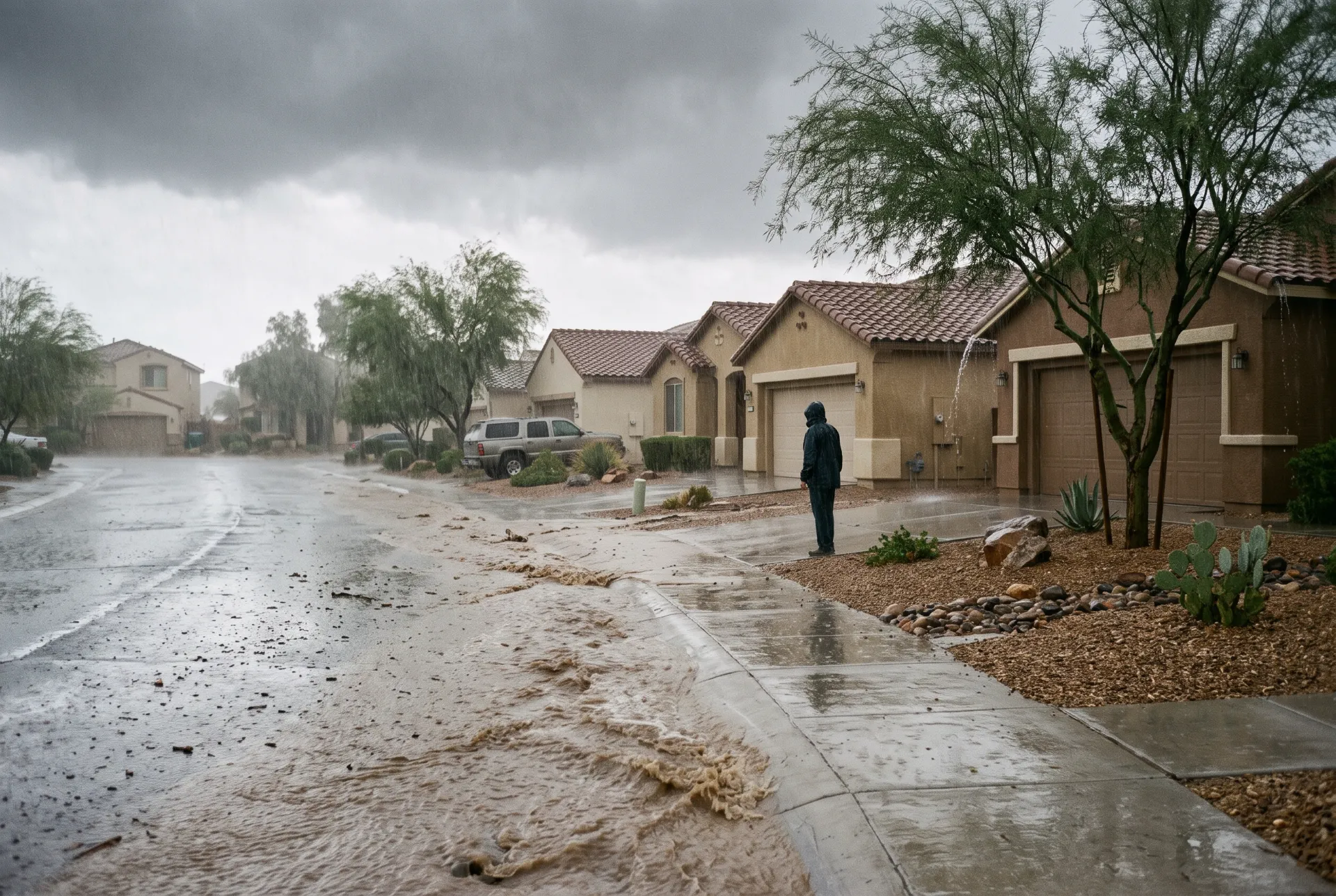
According to FEMA, porous building materials absorb water, and while surface water evaporates first, moisture held inside materials requires dehumidification, air movement and temperature control. Mopping or vacuuming visible puddles off a floor leaves bound moisture deep inside framing, drywall, baseboards and flooring layers. Without controlled drying across affected rooms, damp structural materials stay wet beneath surfaces that already look and feel dry to the touch.
- Porous materials soak up water even after surface moisture evaporates per FEMA.
- Trapped moisture inside materials needs dehumidification, airflow and temperature per FEMA.
- Drying time depends on materials, exposure time and site conditions, often taking days.
How extraction and drying equipment work together
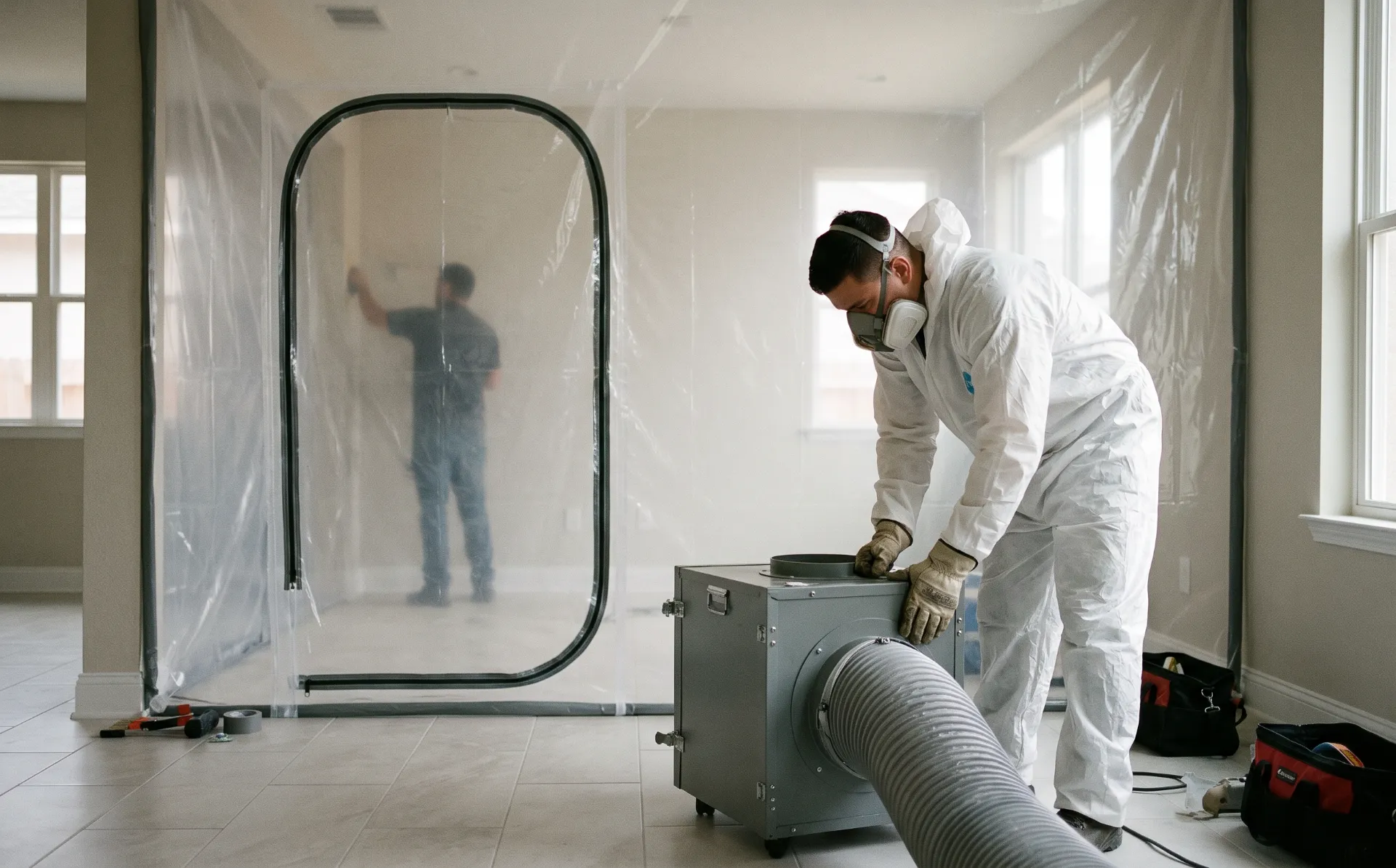
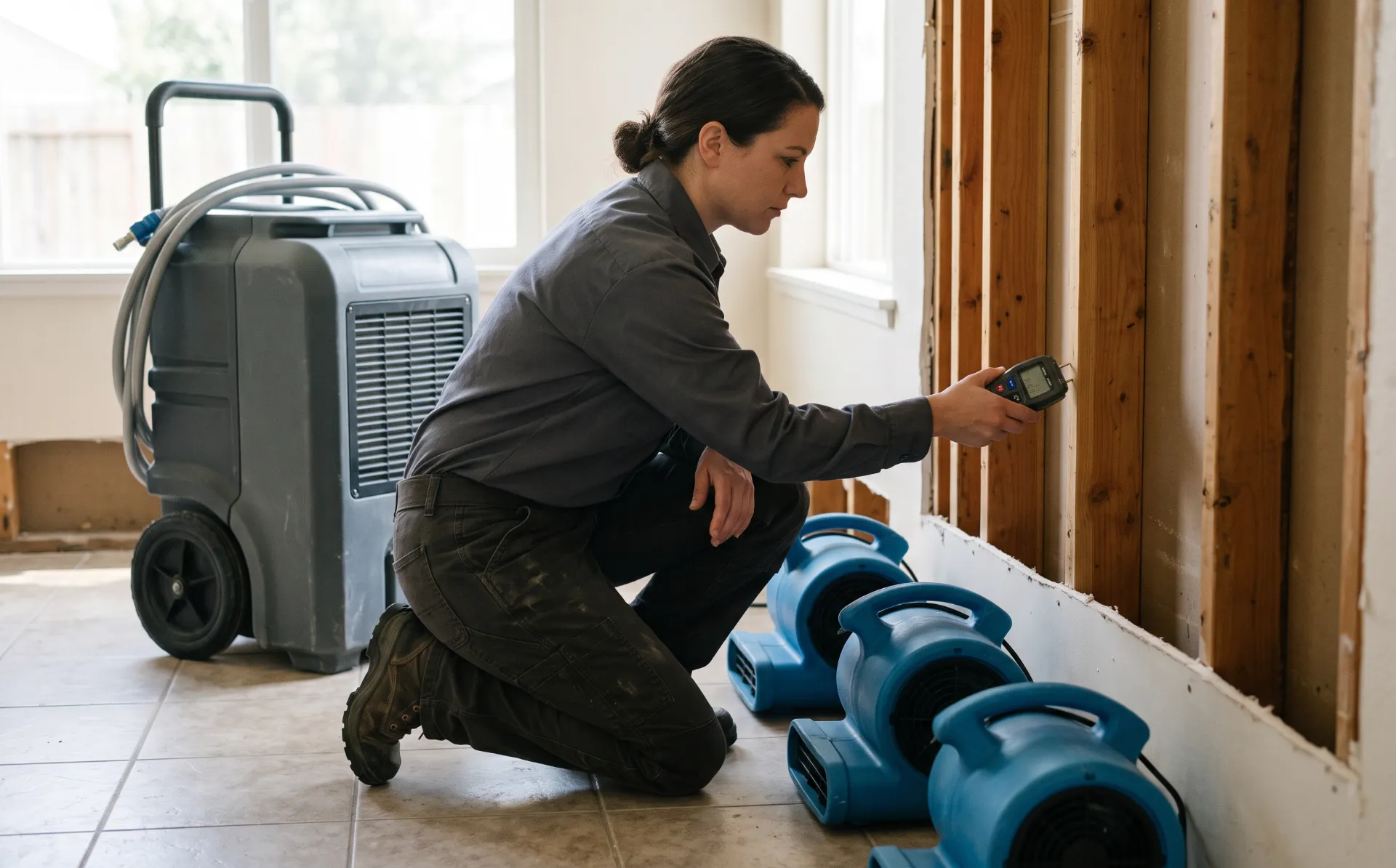
Truck-mounted or portable extractors and submersible pumps remove standing liquid water first, which is far more direct than waiting for puddles to evaporate. Next, air movers push steady airflow across wet surfaces to promote evaporation while low-grain refrigerant or desiccant dehumidifiers pull that moisture out of the air, aided by drying containment or low controlled heat when appropriate. According to the EPA, the subfloor under carpet or other flooring must also be dried.
- Extraction removes liquid water; air movers speed surface evaporation.
- Dehumidifiers remove moisture from the air; low controlled heat may assist.
- Subfloors under carpet or other flooring must be dried per the EPA.
Factors that change how long drying takes
According to FEMA, drying depends on how long water stayed, water depth, the size of the wet area, which materials were exposed and any delay before drying began. Water that stood across several rooms or soaked deep into porous walls and subfloors takes longer to draw out than shallow water caught early in a single area. The EPA notes that do-it-yourself drying of a flooded home usually takes several days to weeks, and no drying plan can promise a fixed number of days in advance.
- FEMA notes drying depends on duration, depth, affected area size, materials and delay.
- Do-it-yourself drying of a flooded home usually takes several days to weeks per the EPA.
- No one can promise a specific number of days in advance.
Monitoring visits and drying logs
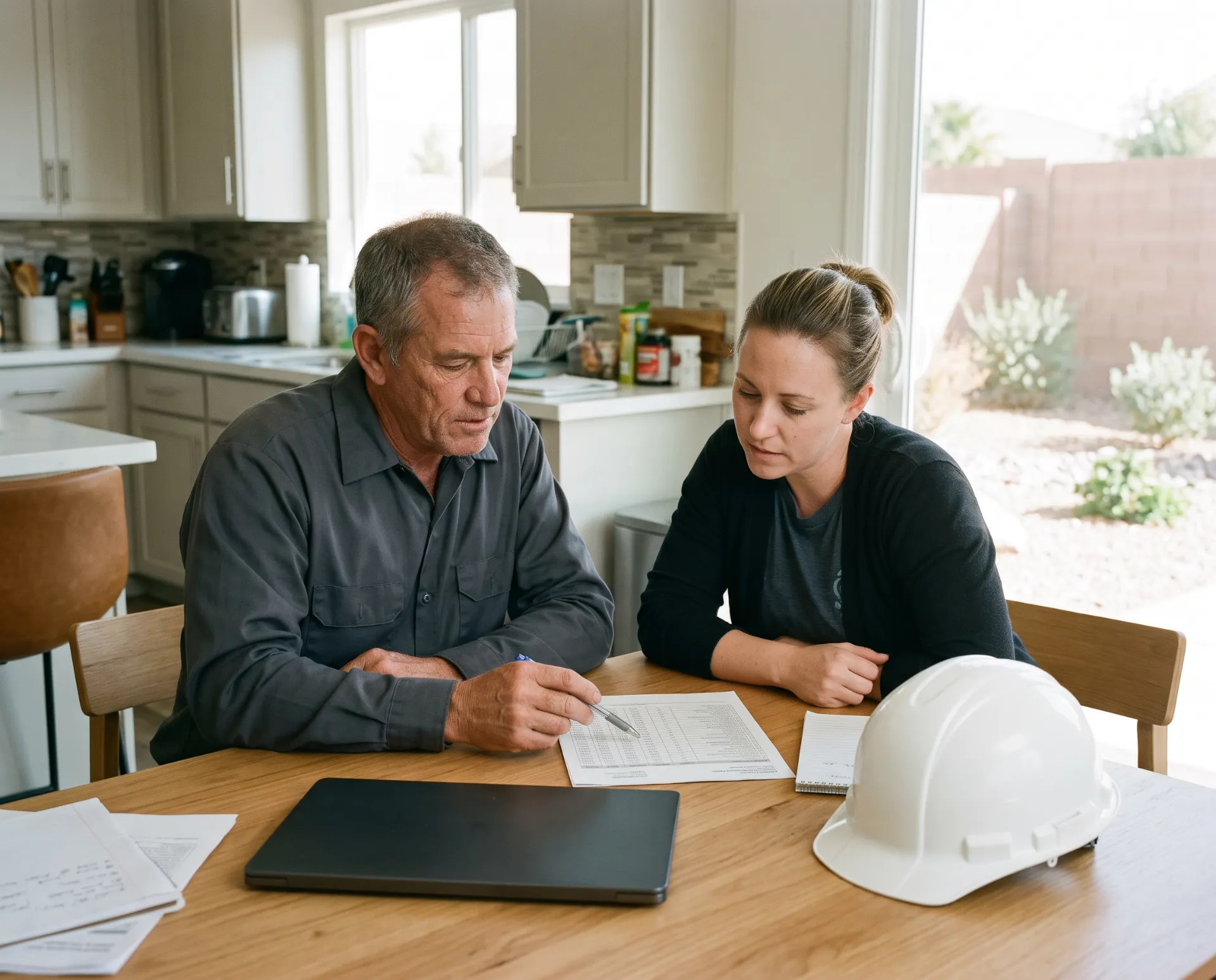
Dryline dries to measured moisture readings rather than a calendar, logging readings at each monitoring visit so the property owner can review the drying log throughout the job. Technicians use moisture meters and thermal imaging cameras to map damp areas and track progress against dry material in the same building as equipment runs. The monitoring visit schedule is written directly into the drying plan based on-site needs rather than promised as daily visits or fixed completion dates.
- Structural drying follows measured moisture readings rather than a calendar schedule.
- Readings are logged at each monitoring visit and shared with the customer.
- Visit frequency is written into the drying plan based on job needs.
When wet materials cannot stay in place
Carpet pad that has been soaked is usually replaced, and wet drywall, insulation, baseboards or laminate often need removal when saturated or contaminated so trapped moisture behind them can dry. Porous materials soaked by sewage or rising outdoor floodwater are generally not salvageable. Dryline gives a written reason before cutting out any material, and whether an item can stay in place depends on the water source, how long it stayed wet and the material itself.
- Soaked carpet pad is typically replaced rather than dried in place.
- Get a written reason before any wet drywall, baseboards or flooring are cut out.
- Whether wet materials can be saved depends on the water source, time wet and material.
Role of IICRC standards and boundaries
Professional structural drying follows the ANSI/IICRC S500 water damage standard, supported by credentials such as IICRC Water Damage Restoration Technician for lead technicians and Applied Structural Drying for project managers. Following S500 principles guides water category checks, dehumidification, airflow and moisture tracking across walls and floors. Even with documented readings, drying duration, mold prevention and material salvage depend on loss conditions and cannot be promised in advance.
- ANSI/IICRC S500 sets the industry standard for water damage assessment and drying.
- IICRC WRT and Applied Structural Drying credentials cover water mitigation and drying.
- Independent third-party assessors handle any mold testing or post-remediation clearance.
What to remember
Surface evaporation is only the first step; effective drying addresses trapped moisture and subfloors through measured readings logged over time.