When monsoon season runs in the valley
According to the National Weather Service, monsoon season in the Southwest officially runs from June 15 to September 30, with most Las Vegas valley storms arriving in July, August and early September. The National Weather Service 1991 to 2020 normal at the airport is 4.18 inches of rain a year, making the area the driest major metropolitan region in the continental United States. Because dry weather dominates most of the year, drainage issues often go unnoticed until summer rain arrives.
- Official monsoon dates are June 15 to September 30 per the National Weather Service.
- Most valley storms appear in July, August and early September.
- Annual rainfall averages 4.18 inches at the airport per the National Weather Service.
How sudden desert rain affects drainage
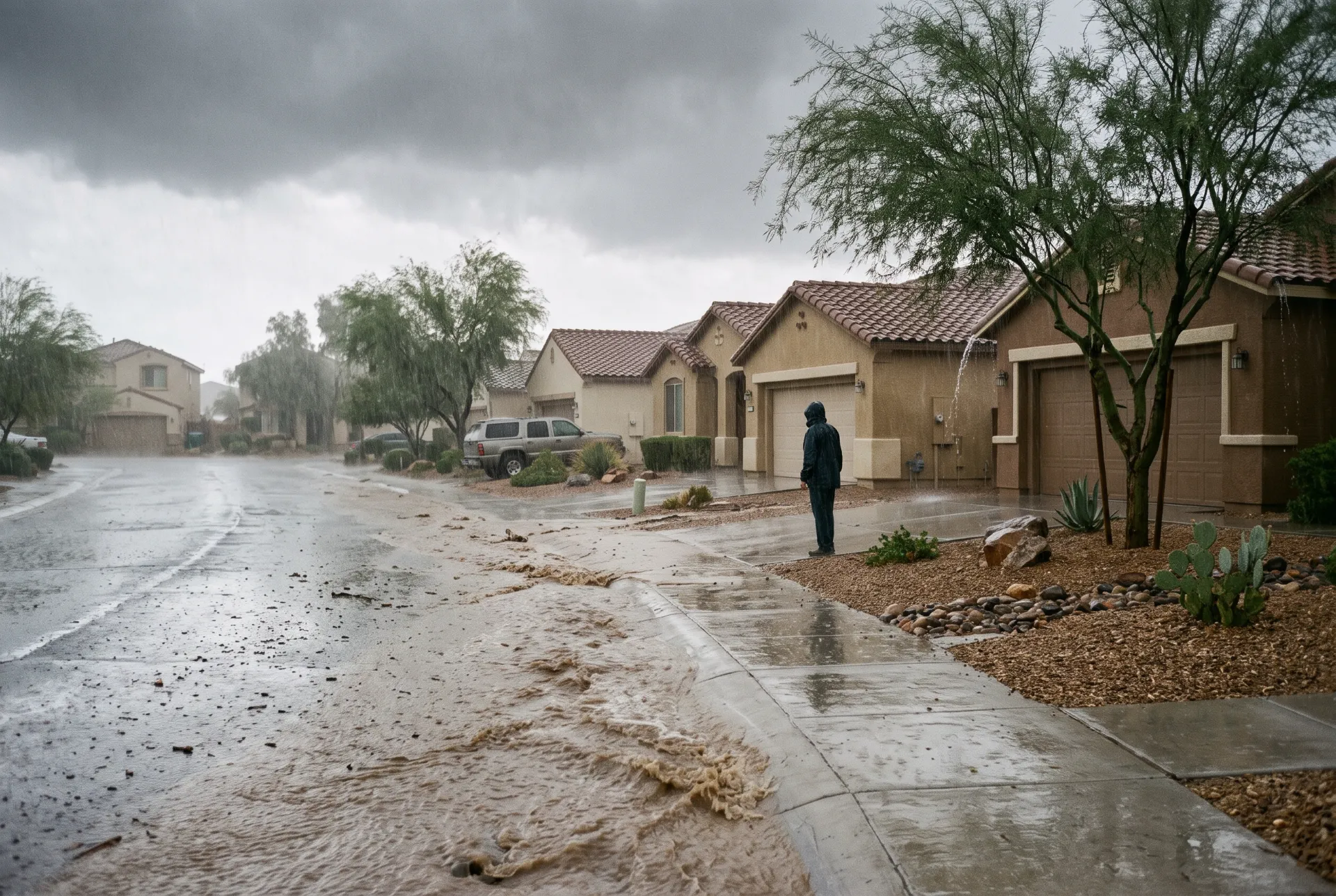
According to the City of Las Vegas, flooding usually comes from sudden storms that drop heavy rain in a short time onto hard, dry soil that absorbs water slowly, while pavement and buildings reduce natural drainage. The City of Las Vegas also notes that runoff can flow downstream to an address even when no rain is falling there, and the Regional Flood Control District notes most storms last a couple of hours.
- Hard, dry soil takes in water slowly during brief, heavy rain per the City of Las Vegas.
- Runoff may travel downstream to a dry address per the City of Las Vegas.
- Most valley storms last a couple of hours per the Regional Flood Control District.
Public flood infrastructure across Clark County
As of June 2026, the Clark County Regional Flood Control District has built 113 detention basins and about 722 miles of channels and storm drains across the valley to manage storm runoff. Even with public channels and basins carrying water across the valley, local runoff still crosses yards, driveways and streets during heavy rain. Because most valley homes sit on slab-on-grade foundations and basements are uncommon, surface water that reaches a building contacts ground-level floors, low walls and doorways directly.
- Regional Flood Control District infrastructure includes 113 detention basins as of June 2026.
- About 722 miles of channels and storm drains operated as of June 2026.
- Basements are uncommon in Las Vegas valley homes built on slab foundations.
Exterior drainage and seasonal readiness checks
According to the CDC, ground around a house should slope away from the foundation and gutters should discharge water away from the structure. Before summer storms arrive, walking the outside of the building helps identify spots where surface water could collect near entryways, low walls or windows. Checking yard drainage paths, door thresholds, window wells and roof drains ahead of storm season makes it easier to write down items that need attention before rain starts.
- CDC guidance calls for ground sloping away from the foundation and gutter discharge away from the house.
- Readiness walks cover drainage paths, door thresholds, window wells and roof drains.
- Keep a written list of exterior drainage and threshold items to fix before storm season.
Flood coverage rules and waiting periods
Standard homeowners policies generally do not cover flood water rising across the ground; flood coverage is a separate policy, and National Flood Insurance Program policies typically have a 30-day waiting period before taking effect. Waiting until summer storms are already forming in the valley can leave a homeowner inside that waiting period when heavy rain arrives. Because policy terms vary and the insurance carrier decides coverage, property owners should check their policy or ask their agent well ahead of storm season.
- Standard homeowners policies generally exclude flood from rising surface water.
- National Flood Insurance Program policies usually carry a 30-day waiting period.
- Check your policy or ask your agent to confirm specific coverage terms.
What Dryline does and does not handle
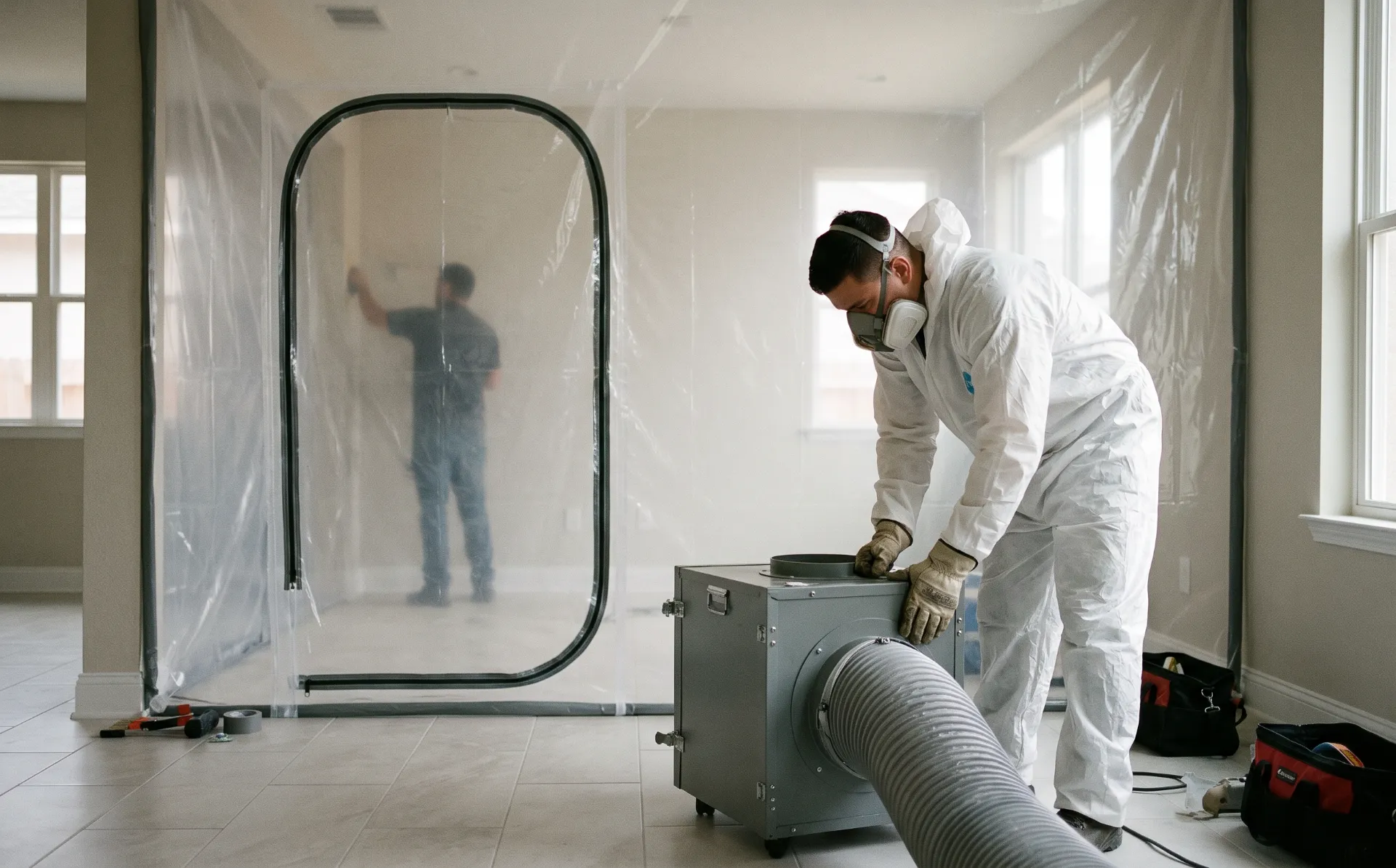
When storm water enters through a roof, window, door or wall, Dryline provides a written scope before work begins covering water extraction, storm debris clearing at entry points, temporary roof tarping or board-up and structural drying. Temporary tarping and board-up protect exposed openings until permanent work can be scheduled, since they are not permanent roof repairs. Waterproofing, yard drainage correction, permanent roof repair or replacement, tree removal and legal or public adjusting work fall outside mitigation scope and require separate specialists.
- A written scope outlines extraction, debris clearing, temporary tarping and structural drying.
- Emergency roof tarping and window or door board-up provide temporary protection only.
- Waterproofing, drainage correction, permanent roof repair and tree removal require separate trades.
What to remember
Check exterior drainage paths and flood policy waiting periods ahead of summer storms. Call if water is actively entering your property.