The 24 to 48 hour drying guideline
According to the EPA, mold can begin growing on wet building materials and furnishings within 24 to 48 hours after a leak or spill. The EPA notes that this window serves as a general clean water guideline rather than an exact clock, because mold does not always appear right at 48 hours and can still develop even when surfaces dry within 48 hours. Drying wet materials thoroughly lowers the chance of growth, though actual drying time depends on the materials and indoor conditions over several days.
- Moisture timing is a guideline rather than a fixed rule
- Drying lowers the chance of mold but cannot rule it out
- Drying time depends on materials and conditions, often several days
Controlling moisture and indoor humidity
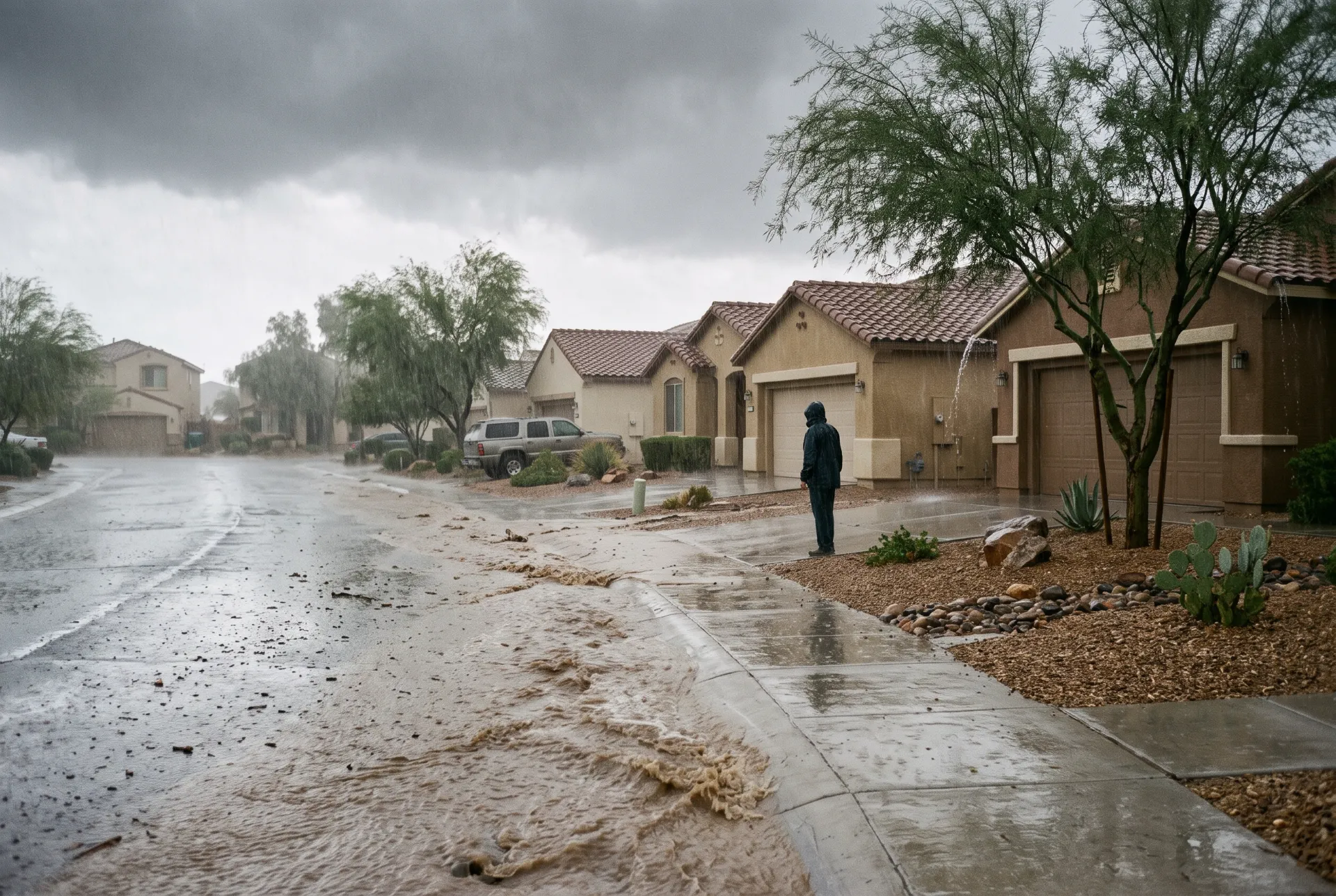
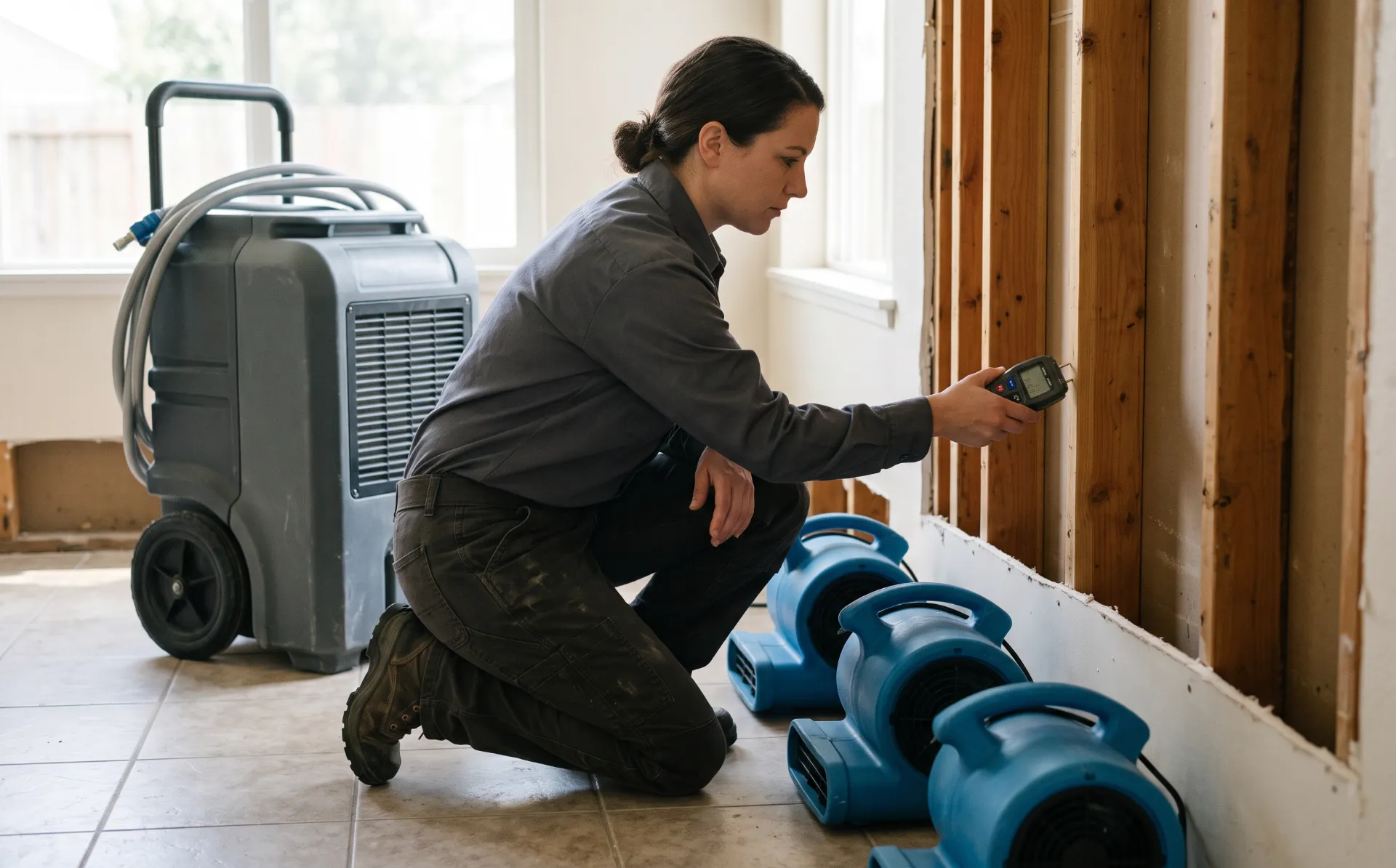
According to the EPA, the key to mold control is moisture control, which includes keeping indoor relative humidity below 60 percent and ideally between 30 and 50 percent. Even in the Las Vegas valley, where the National Weather Service averages 4.18 inches of annual rain, indoor plumbing leaks and concrete slab moisture can trap dampness inside enclosed rooms. During structural drying, air movers help evaporate surface moisture while dehumidifiers pull that water vapor out of the indoor air.
- Aim for indoor relative humidity below 60 percent, ideally 30 to 50 percent
- Air movers speed evaporation and dehumidifiers pull moisture from air
- Written drying plans set the schedule for logged moisture checks
Spotting hidden mold and musty odors
According to the EPA, a lingering musty smell with no visible source can point to hidden mold inside a building. Water from a slow supply line or roof leak often travels behind drywall, beneath flooring, or into cabinet cavities where dampness is not obvious at a glance. To locate trapped dampness accurately, Dryline pairs thermal imaging cameras with moisture meters to confirm wet spots, logs readings at monitoring visits, and gives a written reason before cutting out saturated materials.
- Investigate persistent musty odors even without visible growth
- Wet drywall, insulation, carpet pad, or baseboards may need removal
- Confirm thermal camera findings with a direct moisture meter reading
Small spots versus larger water damage
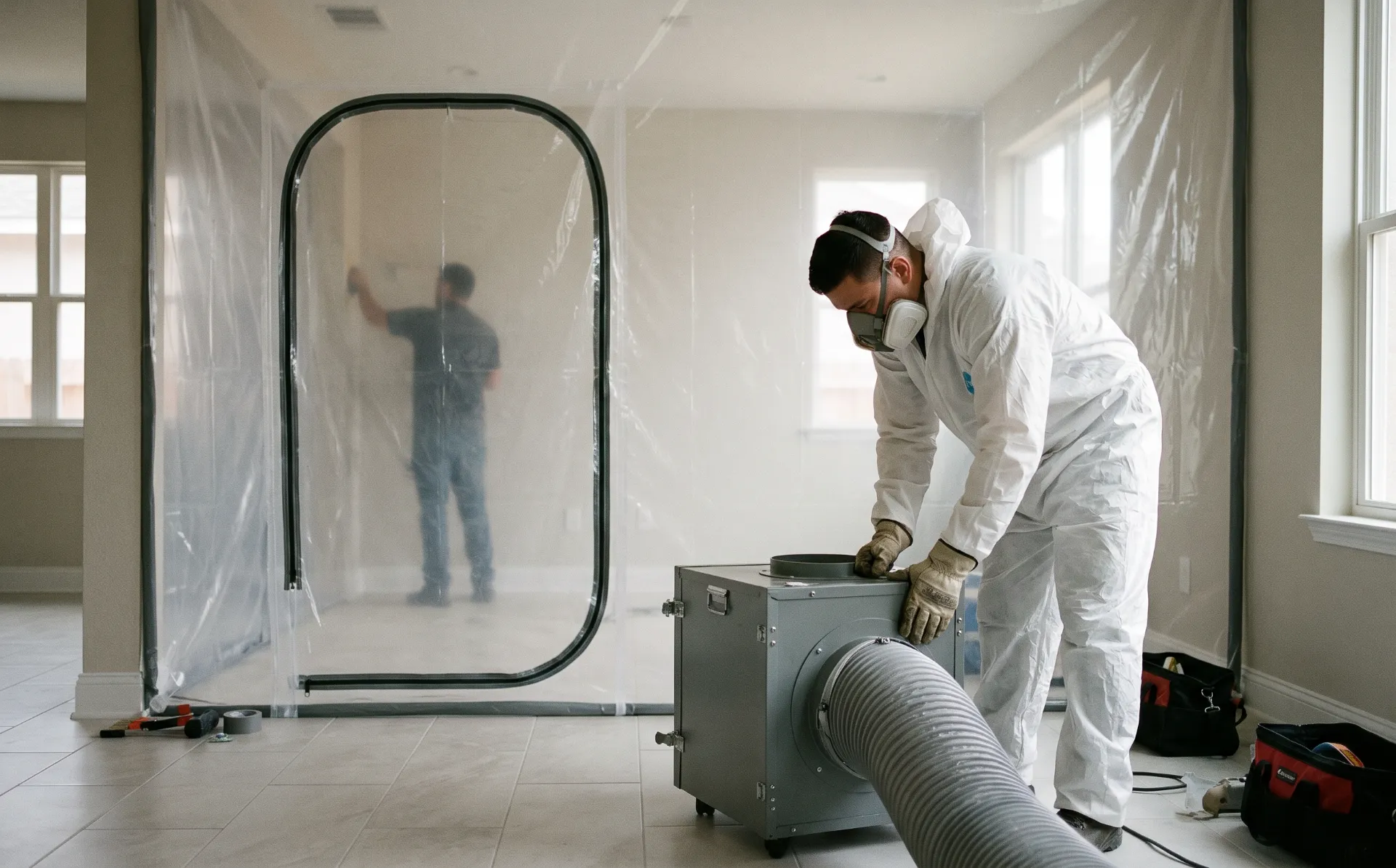
According to the EPA, small mold patches covering under about 10 square feet can usually be cleaned by the building occupant, while larger affected areas or widespread water damage call for professional remediation. When mold develops after a leak, trained crews isolate the work zone with containment barriers, filter airborne particles through HEPA air scrubbers, remove affected porous materials, and clean remaining surfaces under Applied Microbial Remediation Technician supervision.
- Areas under roughly 10 square feet often suit occupant handling
- Larger areas or significant water damage warrant professional help
- Containment and HEPA air scrubbers help isolate remediation areas
Removal, independent testing, and clearance
According to the EPA, simply killing mold with a surface product is not enough because dead spores and fragments can still cause reactions and must be physically removed. When laboratory sampling before work or clearance testing afterward is needed, the property owner hires an independent assessor so the company performing cleanup never tests its own work. Remediation crews perform IICRC trained mold removal and cleaning rather than holding a separate state mold license or doing testing.
- Physical removal matters alongside killing mold
- Hire an independent assessor for pre-work and clearance testing
- Keep testing separate from the crew performing physical removal
Reaching Dryline in the Las Vegas valley
When an indoor leak or storm intrusion leaves floors, walls, or ceilings wet in the Las Vegas valley, stopping the water source and checking hidden dampness early helps limit spread into nearby materials. During valley-wide storms, field visits follow safety risks and active water entry ahead of routine moisture checks. Once inspection and extraction begin, logged meter readings and a clear written drying plan let property owners follow moisture progress at each scheduled monitoring visit.
- Address active water entry and on-site safety concerns before repairs
- Check slab floors, baseboards, and wall cavities for trapped moisture
- Review logged moisture readings at each scheduled monitoring visit
What to remember
Control indoor moisture early, keep relative humidity within EPA guidelines, and hire an independent assessor whenever mold testing or clearance is needed. If water is actively coming into your building, call for cleanup help.