Basin drainage toward the Las Vegas Wash
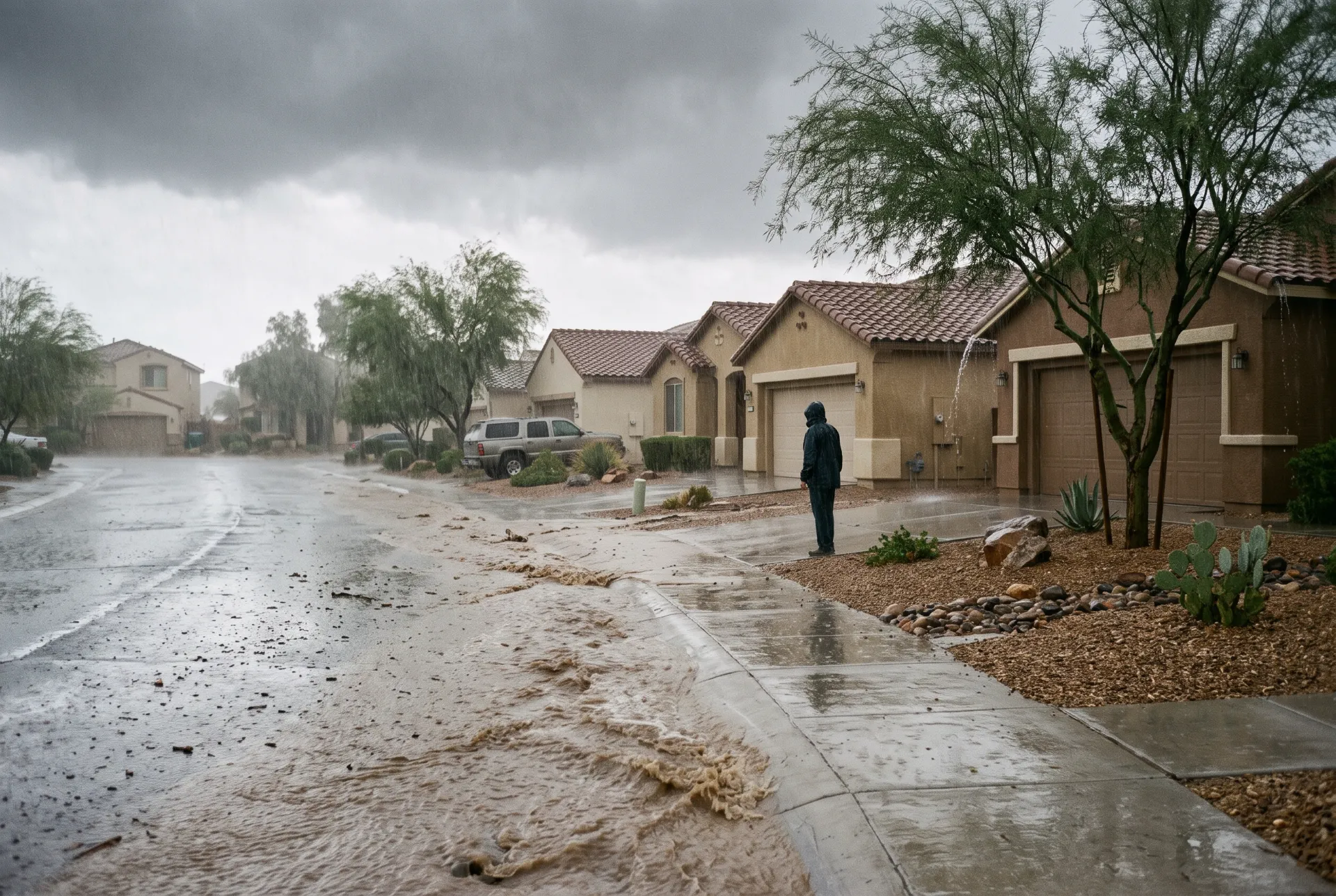
The Las Vegas valley sits in a basin where runoff drains toward the Las Vegas Wash and continues on to Lake Mead. According to the City of Las Vegas, hard, dry soil absorbs rain slowly while pavement and buildings reduce natural drainage, allowing runoff to flow downstream to a property even when no rain is falling at that exact spot. Because storm water travels downhill from higher ground toward the wash, low spots and streets downslope can flood under clear skies.
- Valley runoff moves through the basin toward the Las Vegas Wash and Lake Mead.
- Runoff can reach an address where no rain is falling per the City of Las Vegas.
- Dry ground and hard surfaces speed surface runoff during short, heavy downpours.
Speed and contaminants in floodwater
According to the Clark County Regional Flood Control District, floodwater can move up to 30 mph and carries chemicals, oil, pet waste and debris. Because moving runoff pushes storm debris against doors, low walls and entry points while carrying surface contaminants across streets and yards, both flowing water and standing puddles create physical and sanitation hazards. Keeping children, pets and bystanders out of floodwater helps prevent injury and contact with waste.
- Floodwater can reach speeds up to 30 mph per the Clark County Regional Flood Control District.
- Runoff carries chemicals, oil, pet waste and debris per the Regional Flood Control District.
- Keep children, pets and bystanders away from floodwater and moving runoff.
Detention basins and flood control channels
According to the Clark County Regional Flood Control District, detention basins hold storm runoff and release it slowly, and the district has built 113 detention basins along with about 722 miles of channels and storm drains as of June 2026. These basins and channels guide storm water across the valley toward downstream drainage paths rather than letting all runoff arrive at once. Even with regional infrastructure in place, intense downpours can still overwhelm neighborhood streets and yard drainage paths before water reaches a channel.
- Detention basins store runoff and release it gradually per the Regional Flood Control District.
- District totals as of June 2026 include 113 detention basins and about 722 miles of channels and drains.
- Local street and yard paths may still experience high water during intense rain.
Past events and official warning sources
FEMA identifies the July 8, 1999 flood as Las Vegas’s worst flash flood on record, showing how heavy rain over a short period can send large volumes of water across the valley. Official flood warnings come from the National Weather Service when sudden downpours threaten washes, streets and low crossings. During warnings, the National Weather Service urges drivers to follow Turn Around Don’t Drown and never drive through flooded roads.
- FEMA notes July 8, 1999 as the worst flash flood on record in Las Vegas.
- Official flood warnings are issued by the National Weather Service.
- Never drive through flooded roads; follow the National Weather Service Turn Around Don’t Drown message.
How water categories apply after storm events
Under the ANSI/IICRC S500 water damage standard, water is grouped into Category 1 from a clean source, Category 2 with significant contamination and Category 3 grossly contaminated such as sewage or rising outdoor floodwater. Storm and wind-driven rain water is not automatically Category 3 and is assessed on-site based on how it entered the building and what materials it contacted. When rising outdoor floodwater soaks porous materials, those contaminated materials generally must be removed and affected surfaces cleaned and disinfected.
- ANSI/IICRC S500 defines three water categories from clean to grossly contaminated.
- Rising outdoor floodwater is an example of Category 3 under ANSI/IICRC S500.
- Storm and wind-driven rain is not automatically Category 3 and is assessed on-site.
What cleanup covers after storm water gets in
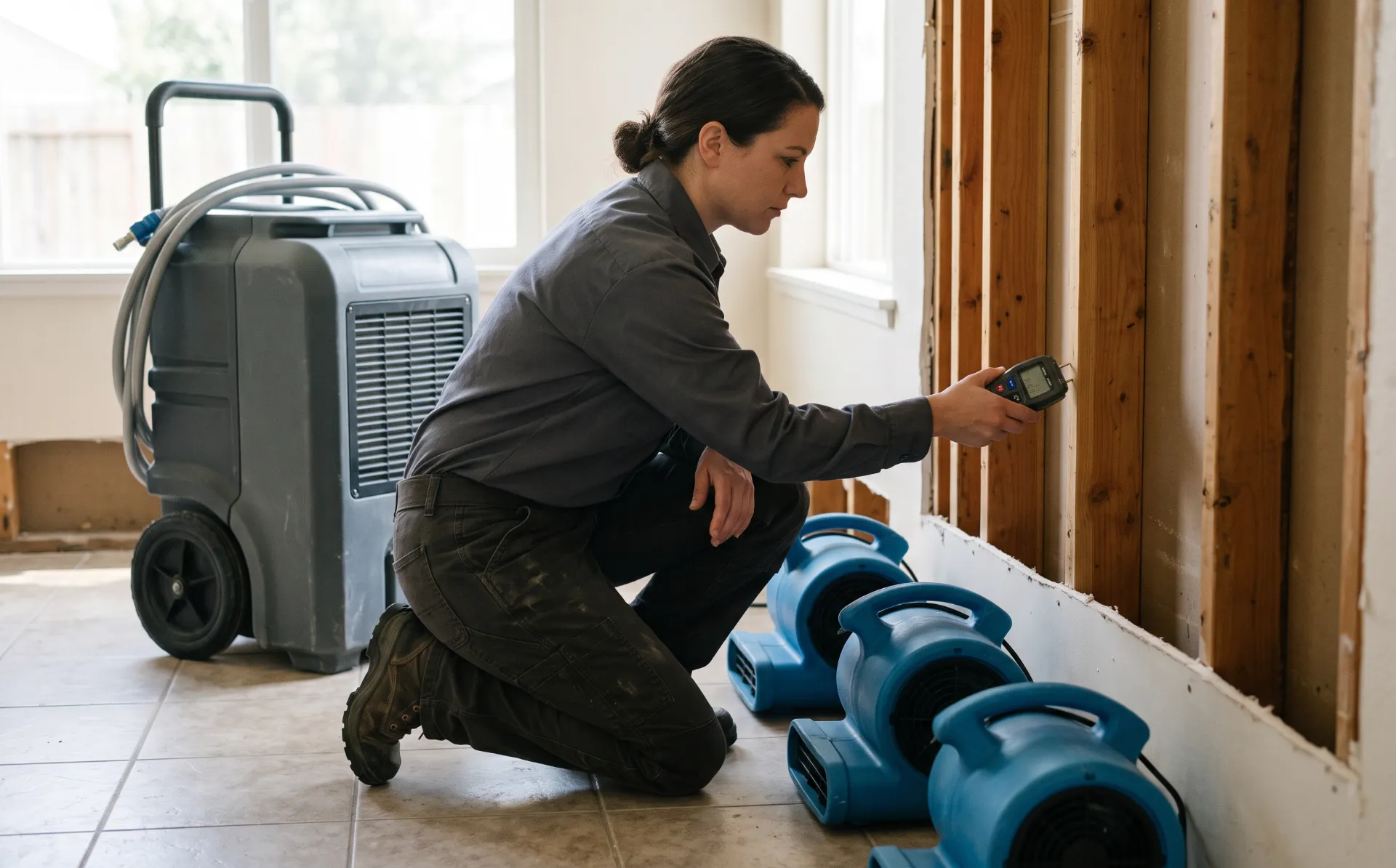
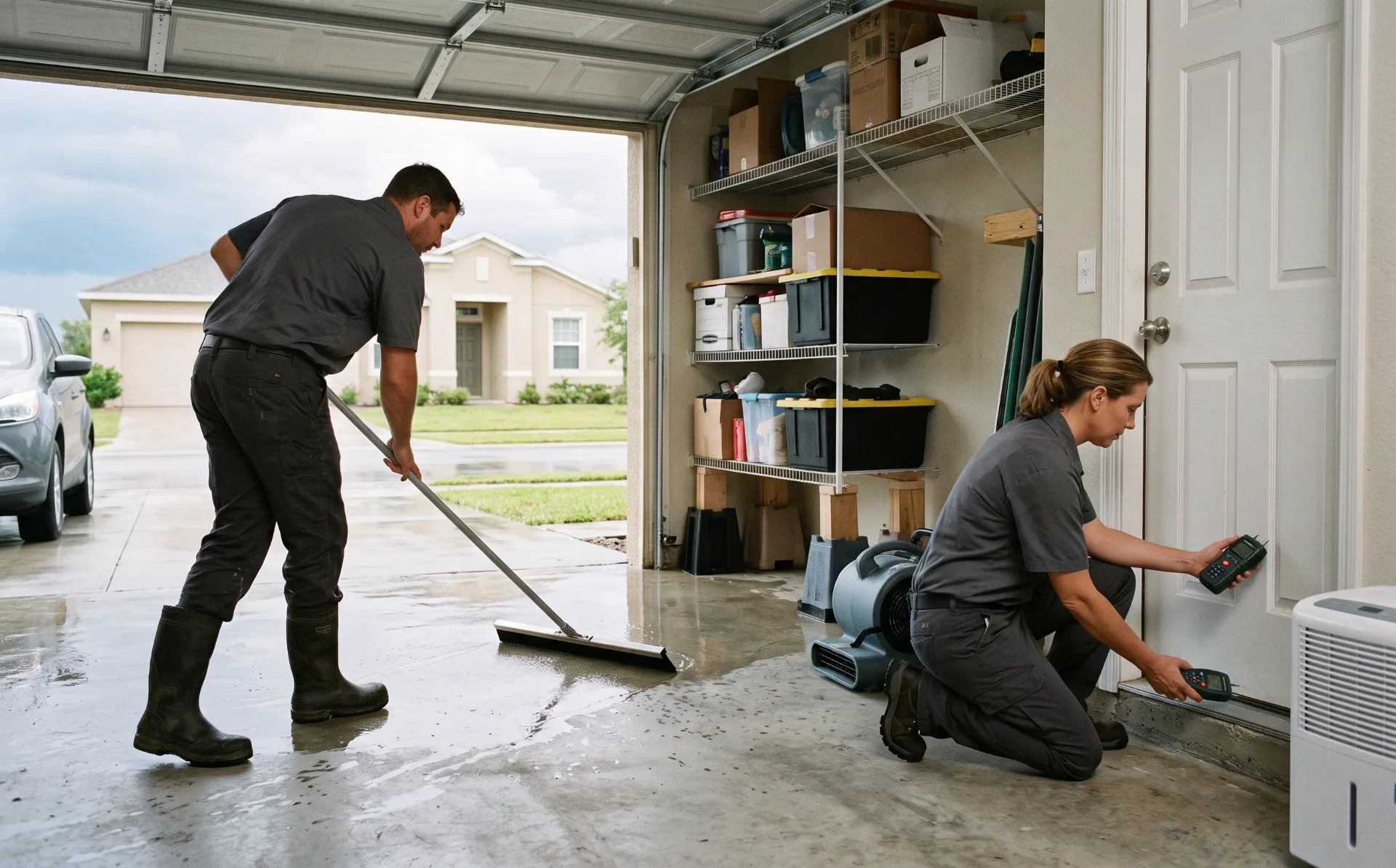
After storm water enters a building, Dryline provides a written scope before work begins for water extraction, storm debris clearing inside and at entry points, temporary roof tarping or board-up and structural drying, along with a written reason before any wet material is cut out. No restoration company can tell anyone by phone that a damaged building is safe to enter or live in. Structural engineering, foundation repair, waterproofing, drainage correction and public adjusting fall outside water cleanup and go to separate specialists.
- No restoration team can confirm by phone that a building is safe to enter or live in.
- Structural engineering, foundation repair and drainage correction are referred to other specialists.
- A written scope covers water extraction, debris clearing, temporary tarping and drying.
What to remember
Stay clear of moving storm runoff and flooded roadways until official warnings end and water recedes. Call if water is actively coming into your building.