What a roof tarp actually does
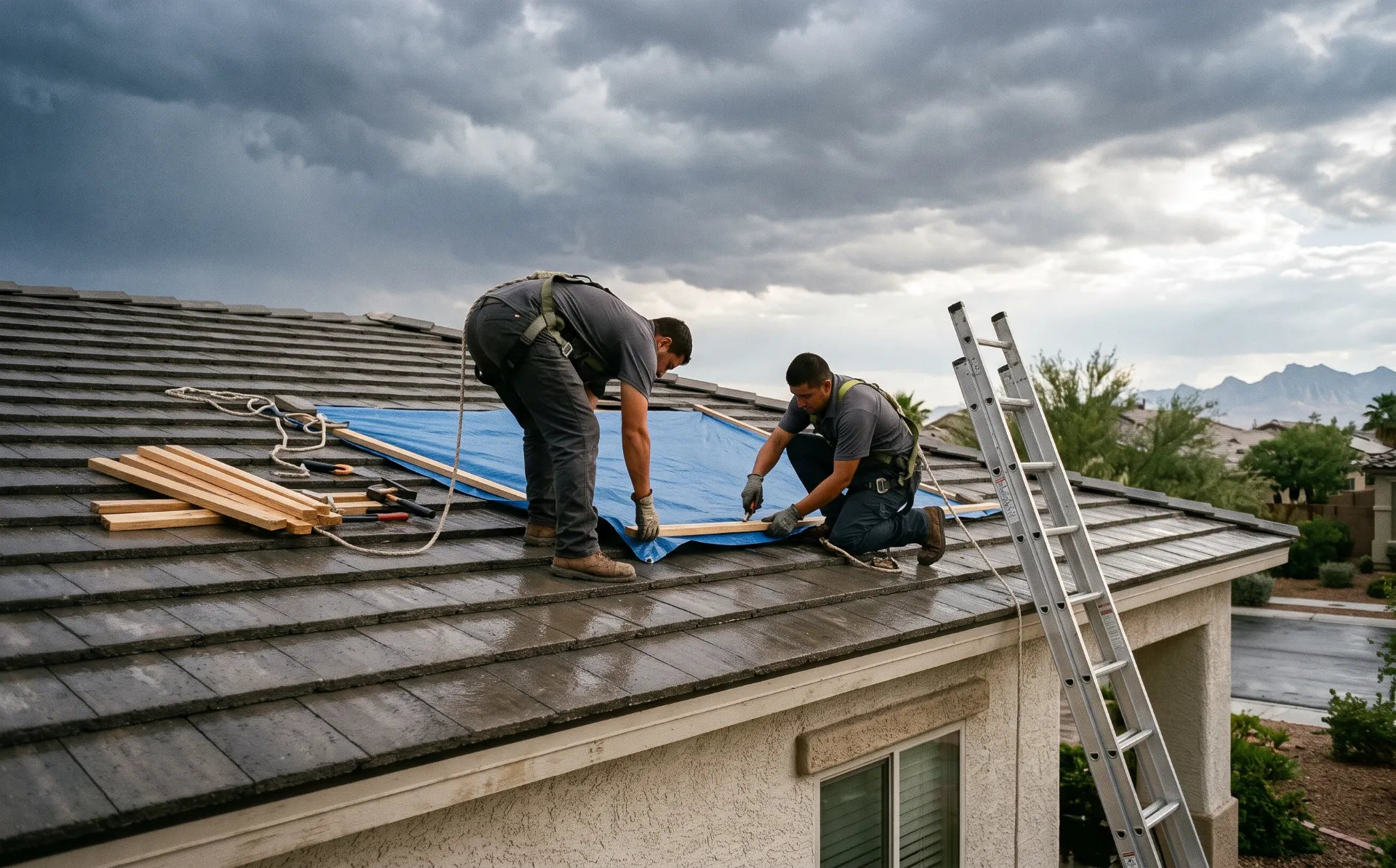
Emergency roof tarping provides temporary weather protection that limits additional rain entry until a licensed roofer completes a permanent repair. Across the Las Vegas valley, residential and commercial roofs are typically concrete tile or flat roofs rather than shingle roofs. Covering an exposed roof section or boarding up broken windows and doors reduces further indoor wetting while interior drying gets underway, yet temporary protection never replaces permanent roof repair or replacement.
- Emergency tarping is temporary protection that limits rain entry until permanent roof work happens.
- Las Vegas valley homes and buildings typically have concrete tile or flat roofs.
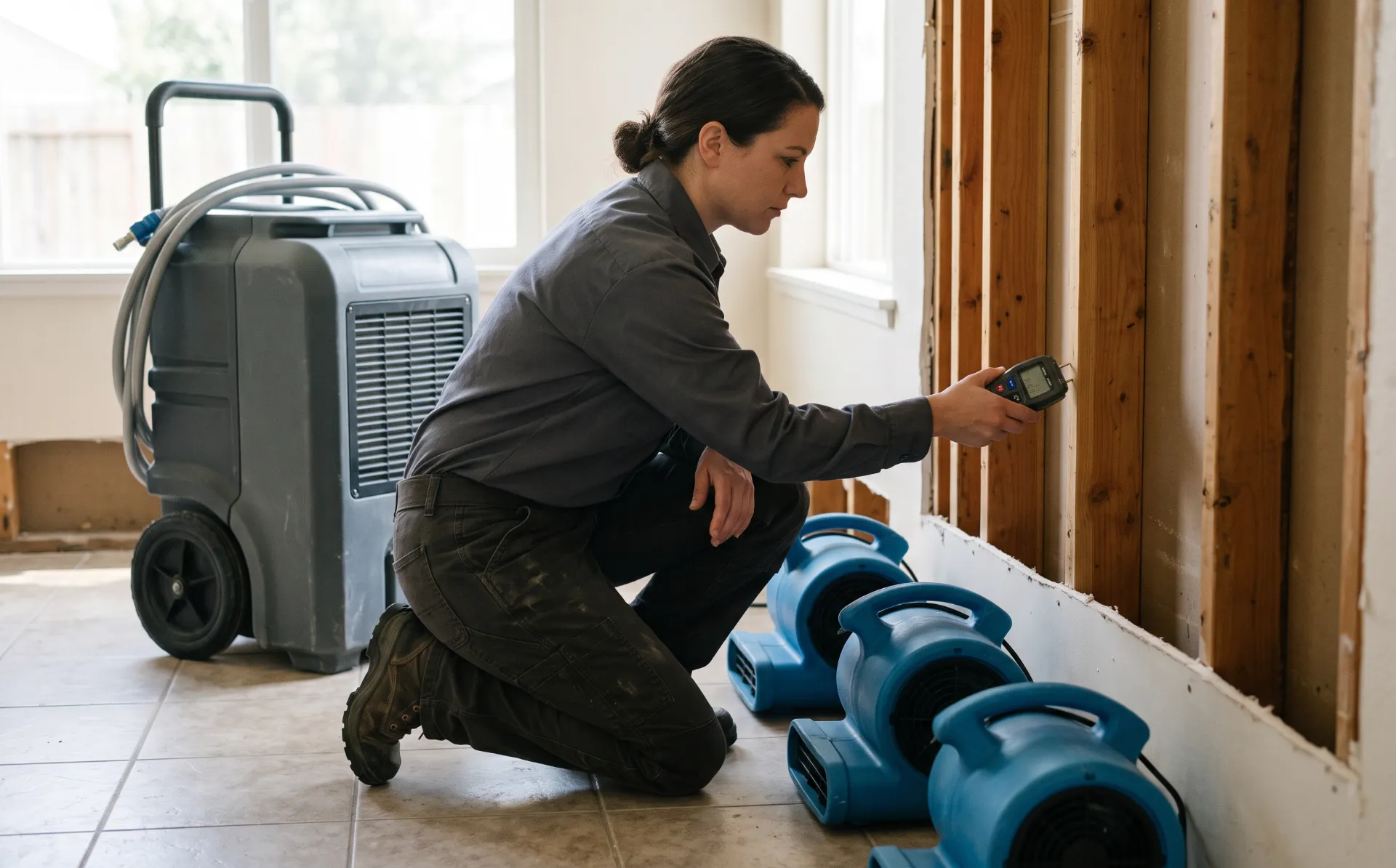
- Temporary board-up of broken windows and doors pairs with interior water extraction and drying.
Storm safety and valley weather
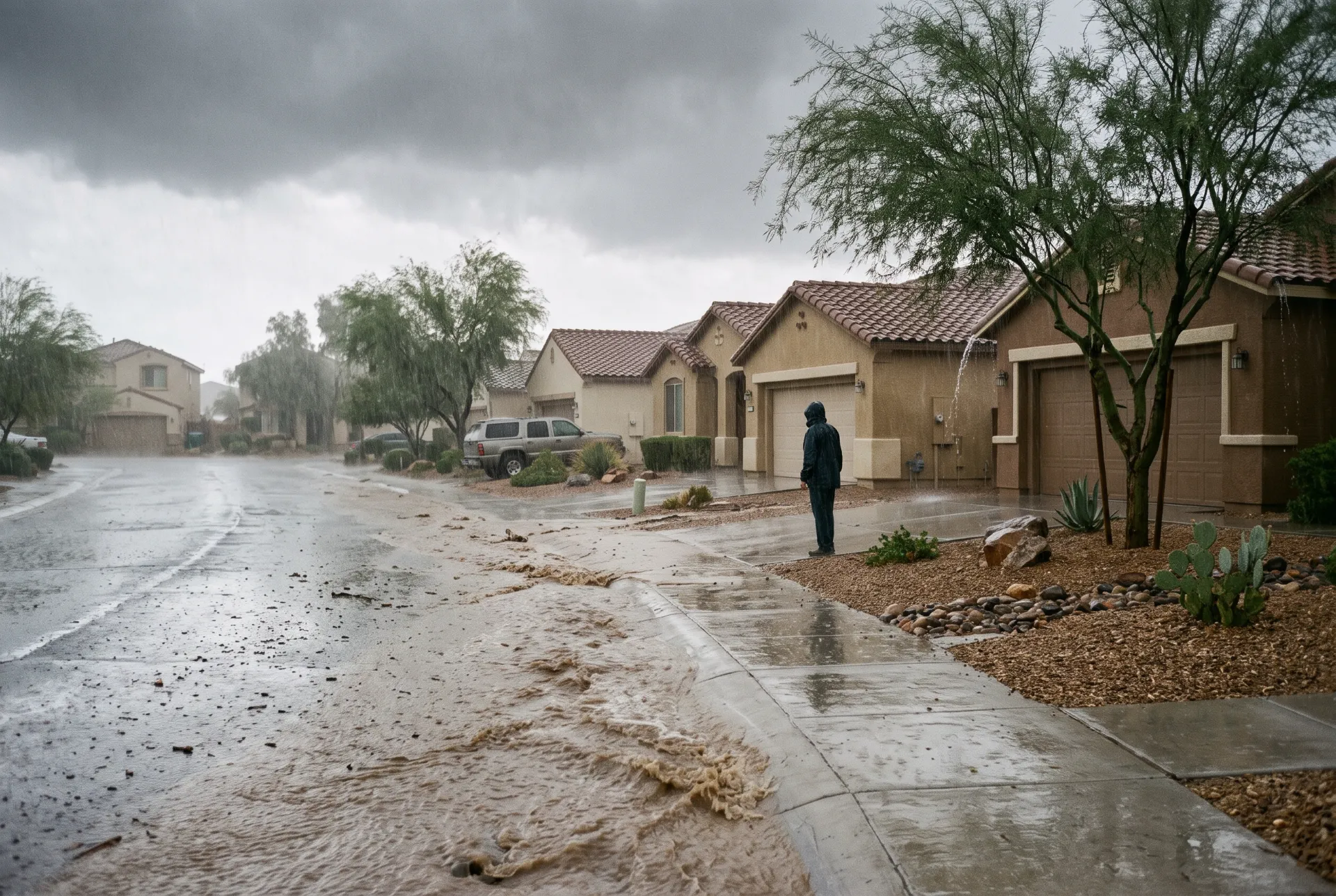
Personal safety comes first during valley weather events, especially when wind, rain, or surface runoff is active around a building. Never climb onto a roof during a storm to inspect tiles or place coverings yourself. Most Las Vegas valley storms last a couple of hours, and official monsoon season runs June 15 to September 30, with most storms arriving in July, August, and early September. Surface runoff can also flow downstream to a property even when rain is not falling at that address.
- Monsoon season runs June 15 to September 30, with most storms in July, August, and early September.
- Most Las Vegas valley storms pass within a couple of hours, yet runoff can still travel downstream.
- During valley-wide storms, response order follows life safety risks and active indoor water entry.
Water category and attic insulation
Rainwater entering through damaged roofing or wind-driven openings is evaluated on-site rather than automatically treated as Category 3 water. Under ANSI/IICRC S500, technicians inspect the path water traveled through roof materials and ceilings before classifying contamination. When roof leaks soak overhead cavities, wet attic insulation is discarded and replaced according to the EPA. Crews also clear storm debris from entry points, and Dryline provides a written reason before wet materials are cut out.
- Storm and wind-driven rain is assessed on-site rather than assumed to be Category 3 under S500.
- According to the EPA, wet attic insulation should be discarded and replaced after a roof leak.
- Storm cleanup includes clearing indoor debris and giving a written reason before cutting materials.
Who repairs the roof permanently
Once storms pass and temporary tarping stabilizes the opening, permanent roof work is needed so future rain cannot enter the structure again. Water mitigation crews do not perform permanent roof repair or roof replacement with their own staff. Instead, a licensed roofing partner coordinated by the project manager or a licensed roofer chosen by the property owner completes the roof work. Tree removal, structural engineering, and electrical repairs also stay with separate qualified specialists.
- Property owners may use a coordinated licensed roofing partner or hire their own licensed roofer.
- Tree removal, structural engineering, and electrical repairs require separate outside specialists.
- One project manager stays with the job from the first site visit through the final walkthrough.
Policy duties and insurance decisions
Property owners carry specific duties under most insurance policies after wind or rain damages a roof or window opening. The Nevada Division of Insurance notes that policies require owners to prevent further damage by making temporary repairs or hiring a licensed professional and keeping receipts. The insurance carrier decides claim coverage, and standard homeowners policies generally do not cover flood from rising surface water. Claim records include dated photos, moisture maps, drying logs, and itemized estimates.
- Check your policy or ask your agent, as standard homeowners policies exclude rising surface flood.
- The insurance carrier decides coverage rather than the mitigation or roofing contractor.
- Dated photos, moisture maps, drying logs, equipment records, and itemized estimates support claims.
Checking the roof before monsoon season
Inspecting roof coverings and exterior entry points ahead of summer monsoon storms helps catch vulnerable areas before heavy rain arrives. When storm water gets inside, an on-site inspection and written estimate outline the needed temporary protection, drying plan, and interior repair scope before reconstruction starts. Coordinators give an honest arrival estimate for the address during the call, while arrival times, drying times, mold outcomes, and material salvage are never promised ahead of time.
- Inspecting roof coverings and entry points before monsoon season helps reduce indoor storm leaks.
- An on-site inspection and written estimate clarify temporary protection and interior drying needs.
- Coordinators share an honest arrival estimate by phone without promising fixed drying timelines.
What to remember
A roof tarp only slows water entry temporarily, so stay off the roof during storms and keep receipts for temporary protection under policy rules. If storm water is coming into your building, call for help.