What moisture meters measure and track
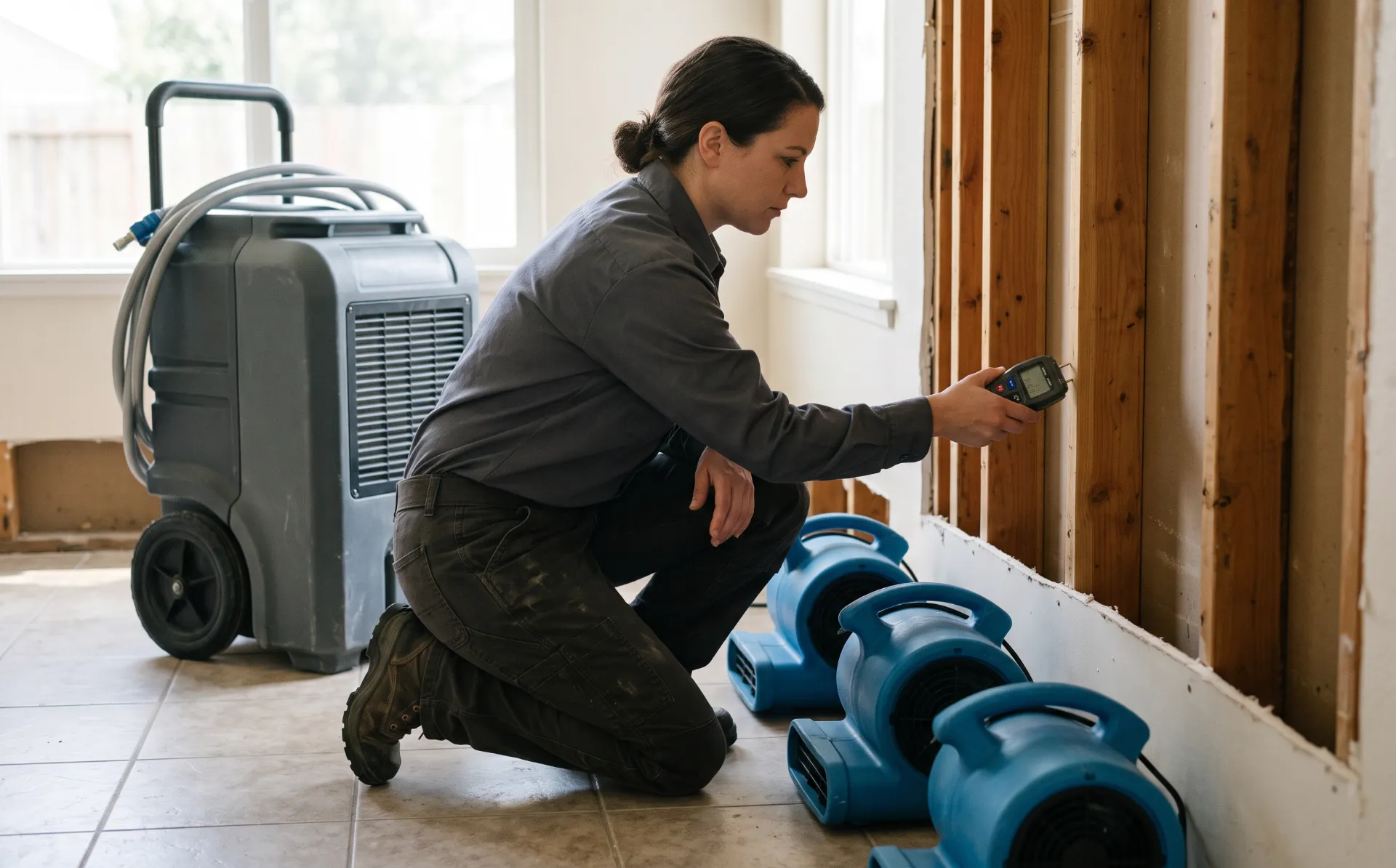
According to the EPA, moisture meters measure moisture in carpet, wallboard, wood, brick and concrete and help track drying progress over time. Because floors, baseboards and walls can feel dry at the surface while holding moisture underneath, meter readings replace touch and guesswork with repeatable measurements. Checking the same points across monitoring visits shows whether dehumidifiers and air movers are steadily lowering moisture, though a single reading cannot predict a fixed completion date.
- Moisture meters measure moisture in carpet, wallboard, wood, brick and concrete per the EPA.
- Meters track drying progress across affected materials during restoration per the EPA.
- A single reading does not predict a fixed drying completion date.
Thermal imaging cameras versus moisture meters
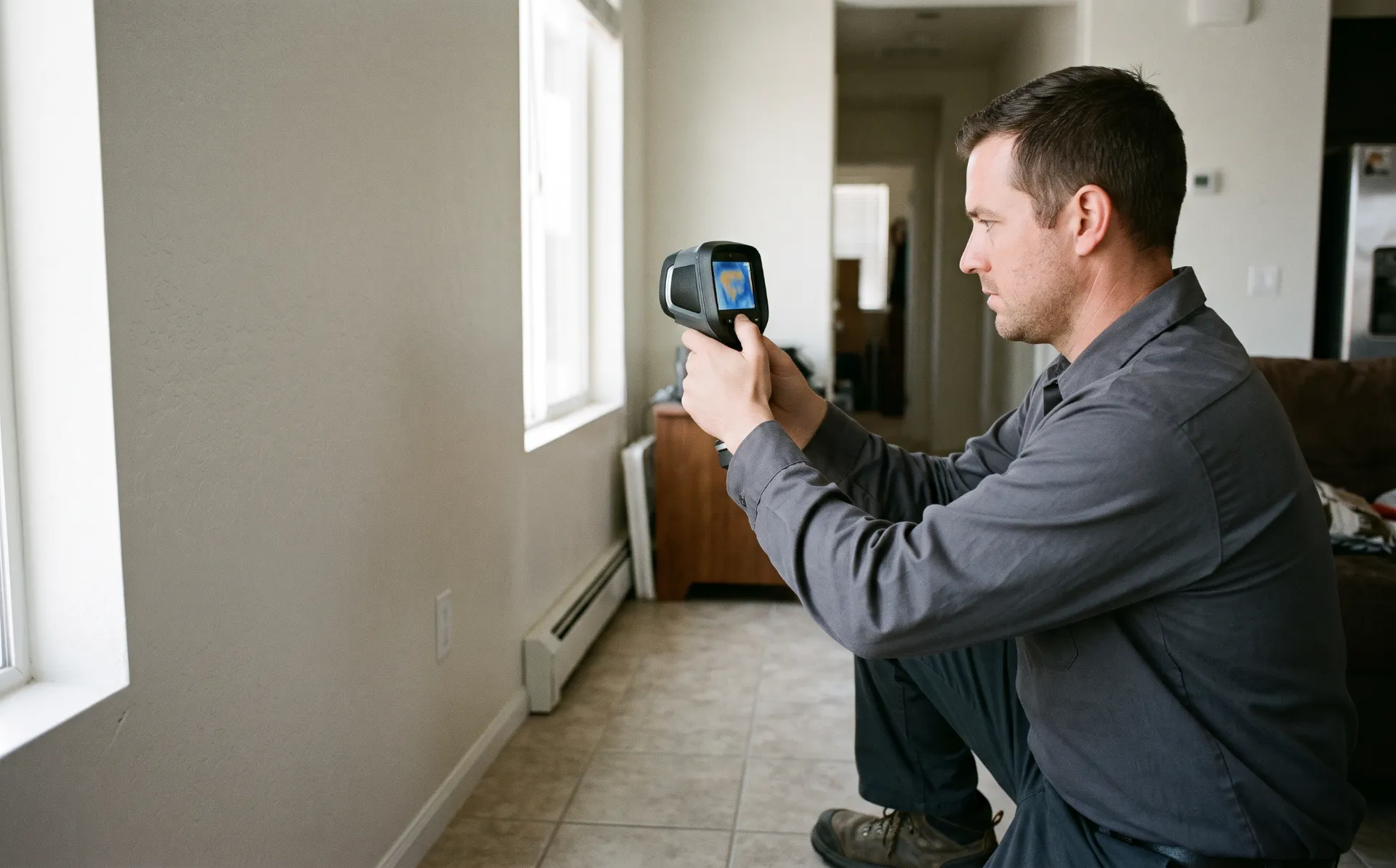
Thermal imaging cameras show surface temperature differences where wet areas often read cooler from evaporation, helping locate suspect spots across walls, ceilings and floors during an inspection. Scanning rooms with a thermal camera helps map hidden water paths from roof, window or pipe leaks before any material is opened. However, thermal imaging does not measure moisture content or detect mold on its own, so every cooler area is confirmed directly with a moisture meter.
- Thermal imaging shows surface temperature differences; wet spots often read cooler.
- Thermal cameras do not measure moisture or detect mold on their own.
- Suspect thermal areas are verified with moisture meter readings.
Drying logs and the dry standard
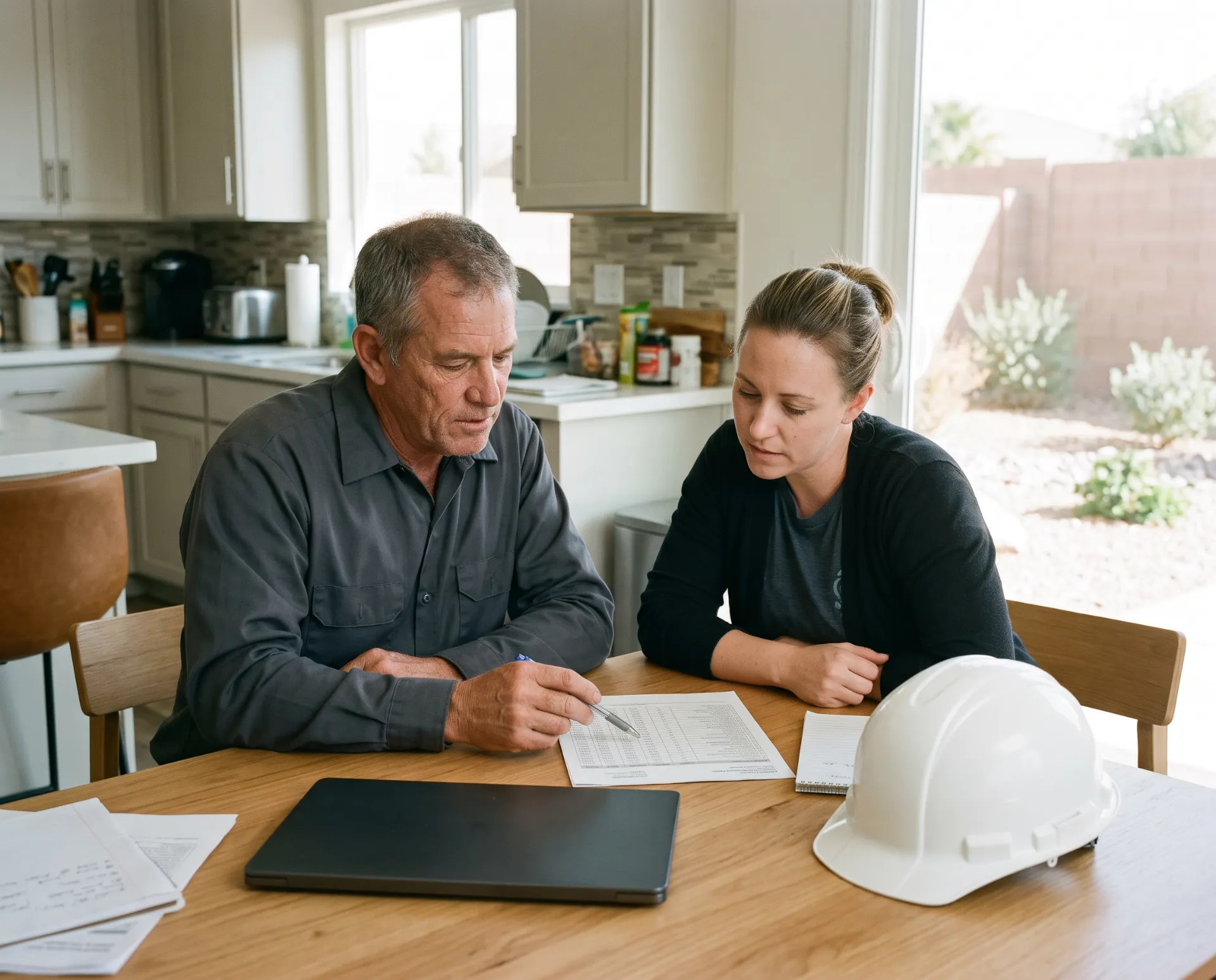
A drying log records temperature, relative humidity and material readings with locations along with the dry standard, which is a reading from known-dry material in the same building, plus the drying goal. FEMA calls a properly completed drying log an industry standard. Comparing affected rooms to unaffected material in the same structure sets a realistic target for local conditions, and the finished drying log and moisture map document progress for the property owner and insurance adjuster.
- Drying logs record temperature, relative humidity, locations, dry standard and drying goal.
- The dry standard comes from known-dry material in the same building.
- FEMA identifies a properly completed drying log as an industry standard.
The 15 percent reading and concrete slab test
According to the EPA, materials should read 15 percent moisture content or less before walls or floors are closed up. Closing wall cavities or installing flooring before readings reach that benchmark can seal residual dampness inside wood, wallboard or subfloor layers. For concrete slabs, the EPA describes taping plastic to the concrete surface for about 16 hours, where visible moisture trapped under the plastic shows the slab is still too wet for new flooring to be installed.
- Materials should read 15 percent moisture content or less before closing up per the EPA.
- The EPA slab test tapes plastic to concrete for about 16 hours.
- Visible moisture under the plastic means the slab is too wet for new flooring.
Equipment used in Dryline moisture mapping
Dryline uses moisture meters and thermal imaging cameras for inspection and moisture mapping, logging readings at every monitoring visit on a schedule written into the drying plan so the customer can see the log. Based on those mapped readings, technicians run portable or truck-mounted extractors, air movers, low-grain refrigerant or desiccant dehumidifiers for dense structures, drying containment and HEPA air scrubbers, and give a written reason before any wet material is cut out.
- Moisture mapping pairs meter readings with thermal imaging across affected rooms.
- Customers can view logged readings recorded at each monitoring visit.
- Equipment selections match the structure and water conditions on-site.
Limits of meters and independent testing
Moisture meters and thermal cameras show dampness and surface temperature patterns, yet they do not detect mold, test indoor air quality or confirm that a damaged building is safe to occupy. When mold testing before remediation or clearance testing afterward is needed, an independent third-party assessor hired by the property owner performs that work separately from the cleanup crew. Keeping testing independent separates clearance results from containment, HEPA air filtration and material removal.
- Moisture meters and thermal imaging do not detect mold or confirm building safety.
- Independent third-party assessors hired by the customer handle mold testing and clearance.
- Testing stays separate from containment, HEPA air filtration and material removal.
What to remember
Use moisture meters and drying logs to verify drying progress against a dry reference in the building, and confirm concrete before installing flooring.