Contaminants and staying out of floodwater
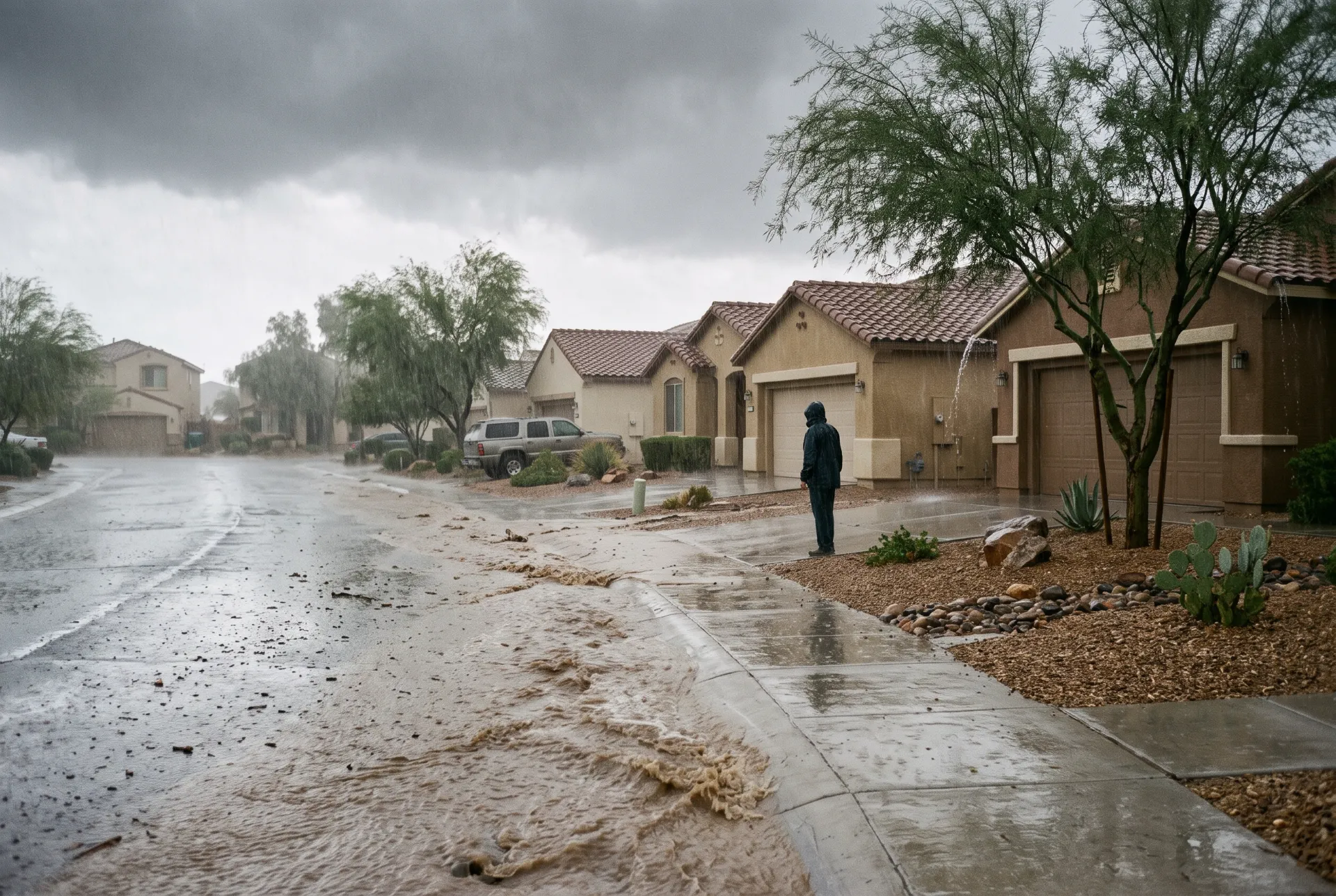
According to the CDC, floodwater entering a street or building can carry human and animal waste, household, medical, and industrial hazardous waste, sharp debris, and displaced wildlife such as rodents or snakes. Because those hazards are often hidden beneath murky water, the CDC advises people to stay out of floodwater and never let children play in standing water or handle flood soaked toys until items have been thoroughly cleaned and disinfected.
- Stay out of floodwater and keep children away until items are disinfected
- Watch for sharp debris, hazardous waste, and wildlife around water
- Treat murky standing water indoors as a potential health hazard
Las Vegas valley runoff and storm dynamics
According to the Clark County Regional Flood Control District, valley floodwater can move up to 30 mph and picks up street chemicals, motor oil, pet waste, and loose debris along the way. Across the valley, 113 detention basins and about 722 miles of channels and storm drains carry runoff, yet sudden cloudbursts over hard, dry desert soil and pavement can still push water downstream to properties where no rain has fallen.
- Runoff can carry chemicals, oil, pet waste, and debris
- Downstream flow can reach a property without local rain
- The valley has 113 detention basins and about 722 miles of channels and drains
How ANSI/IICRC S500 sorts water categories
Under the ANSI/IICRC S500 industry standard, intruding water is sorted into three contamination categories to guide cleanup steps. Category 3 covers grossly contaminated water, including sewage backups and surface floodwater that rose outside and flowed into a structure. By contrast, rain driven indoors through a roof or window during a storm is not automatically treated as Category 3; technicians inspect how the water entered and what surfaces it crossed on-site.
- Rising outside floodwater and sewage fall into Category 3
- Storm and wind-driven rain is assessed on-site rather than assumed
- Contaminated water calls for protective gear and proper cleaning
Porous materials and what can be saved
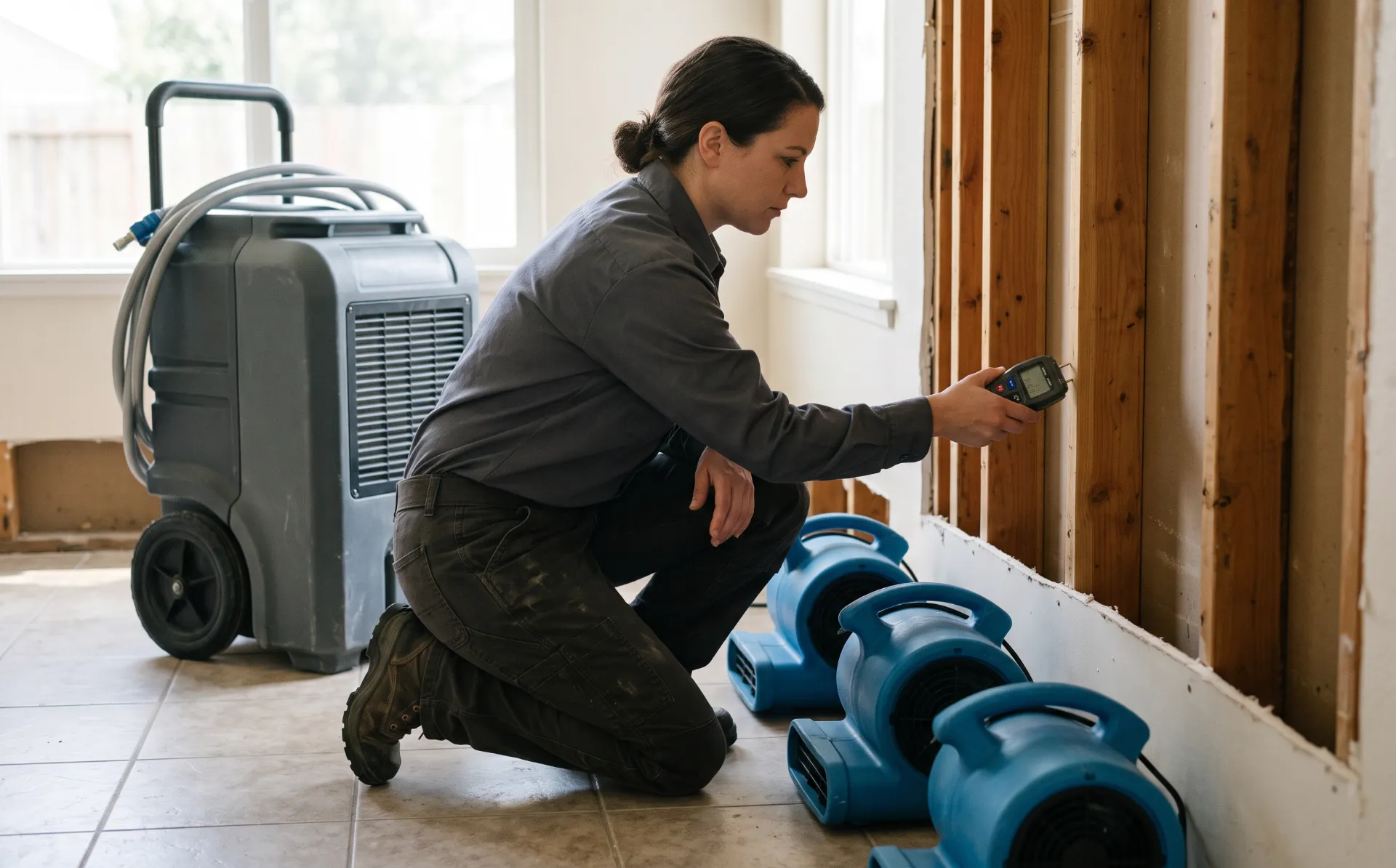
According to the EPA, porous furnishings and building materials that cannot be thoroughly cleaned and dried after floodwater exposure should be thrown away. Whether a given material can be saved depends on the water source, how long it stayed wet, and how deeply contaminants soaked in. Soaked carpet pad is usually replaced, and when saturated drywall, insulation, or baseboards must come out, Dryline provides a written reason before cutting anything out.
- Discard porous materials that cannot be cleaned and dried
- Wet drywall, insulation, or baseboards often require removal
- Soaked carpet pad is usually replaced after floodwater contact
Cleanup, contents, and work Dryline does not do
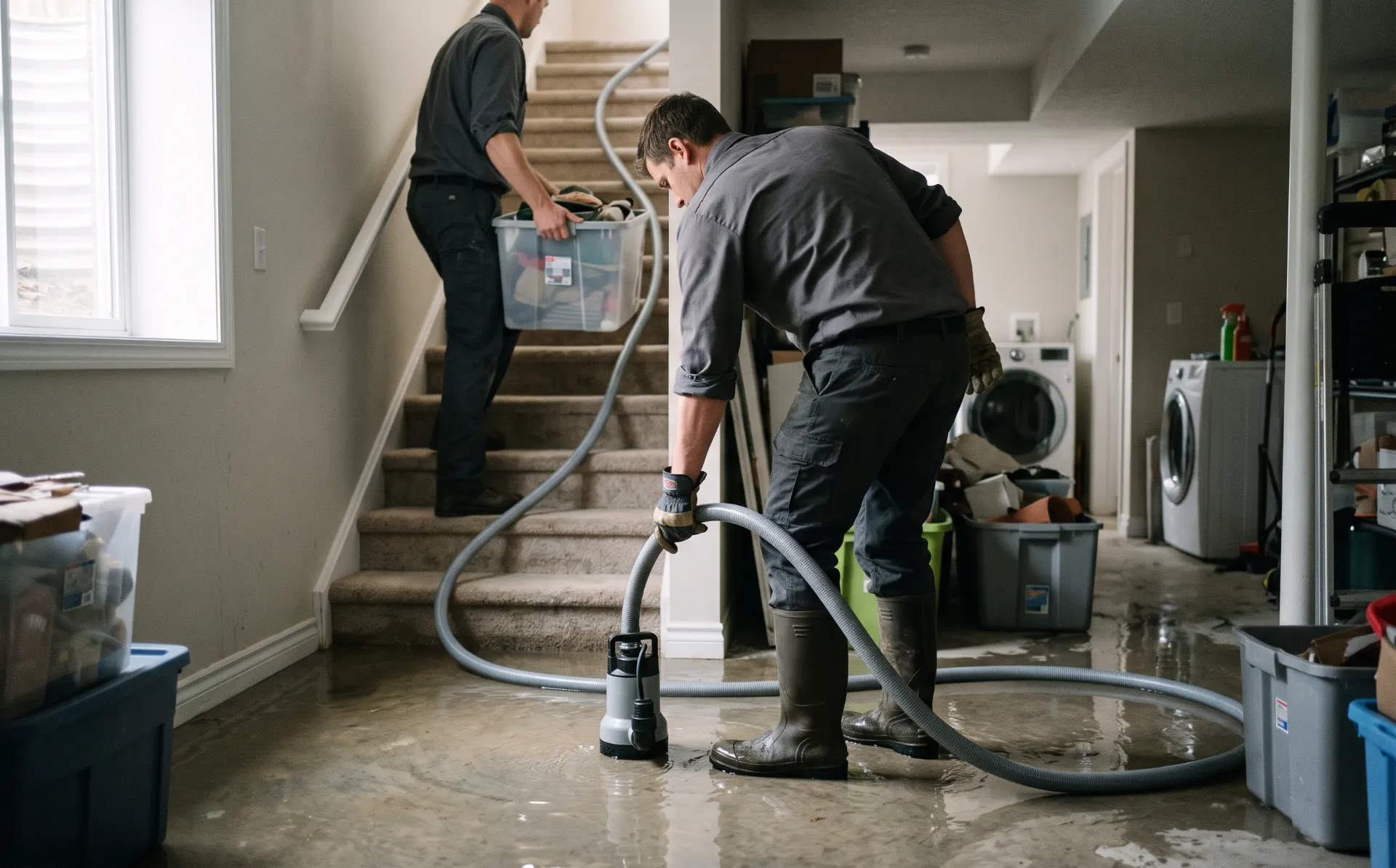
Recovering from muddy storm runoff often involves both contaminated cleanup crews and separate licensed building trades. Mitigation crews working in protective equipment extract standing water, remove unsalvageable porous finishes, apply antimicrobial surface treatments where appropriate, and pack-out belongings for cleaning and storage. Separate specialists handle plumbing repairs, permanent roof work, electrical repairs, tree removal, structural engineering, asbestos abatement, and testing.
- Licensed trade partners handle plumbing, roofing, electrical, and HVAC
- Separate specialists handle environmental testing and asbestos work
- Contents can be packed out for off site cleaning and secure storage
When a storm floods many homes at once
When a desert storm sends runoff into multiple neighborhoods at once, restoration crews prioritize properties facing active water entry and urgent safety concerns ahead of routine inspections. Because no one can determine over the phone whether a flooded structure is safe to enter, waiting in a safe location away from moving runoff and sharp or contaminated debris comes first until trained crews inspect site conditions, water categories, and affected materials in person.
- Valley storm response prioritizes safety hazards and active water entry
- Building safety requires an in person inspection rather than a phone check
- Keep clear of wet rooms until site hazards and water sources are checked
What to remember
Stay out of floodwater, keep uncleaned items away from children, and let trained crews evaluate water contamination and porous materials on-site. If water is actively coming into your building, call for cleanup help.