Per unit visual and moisture records
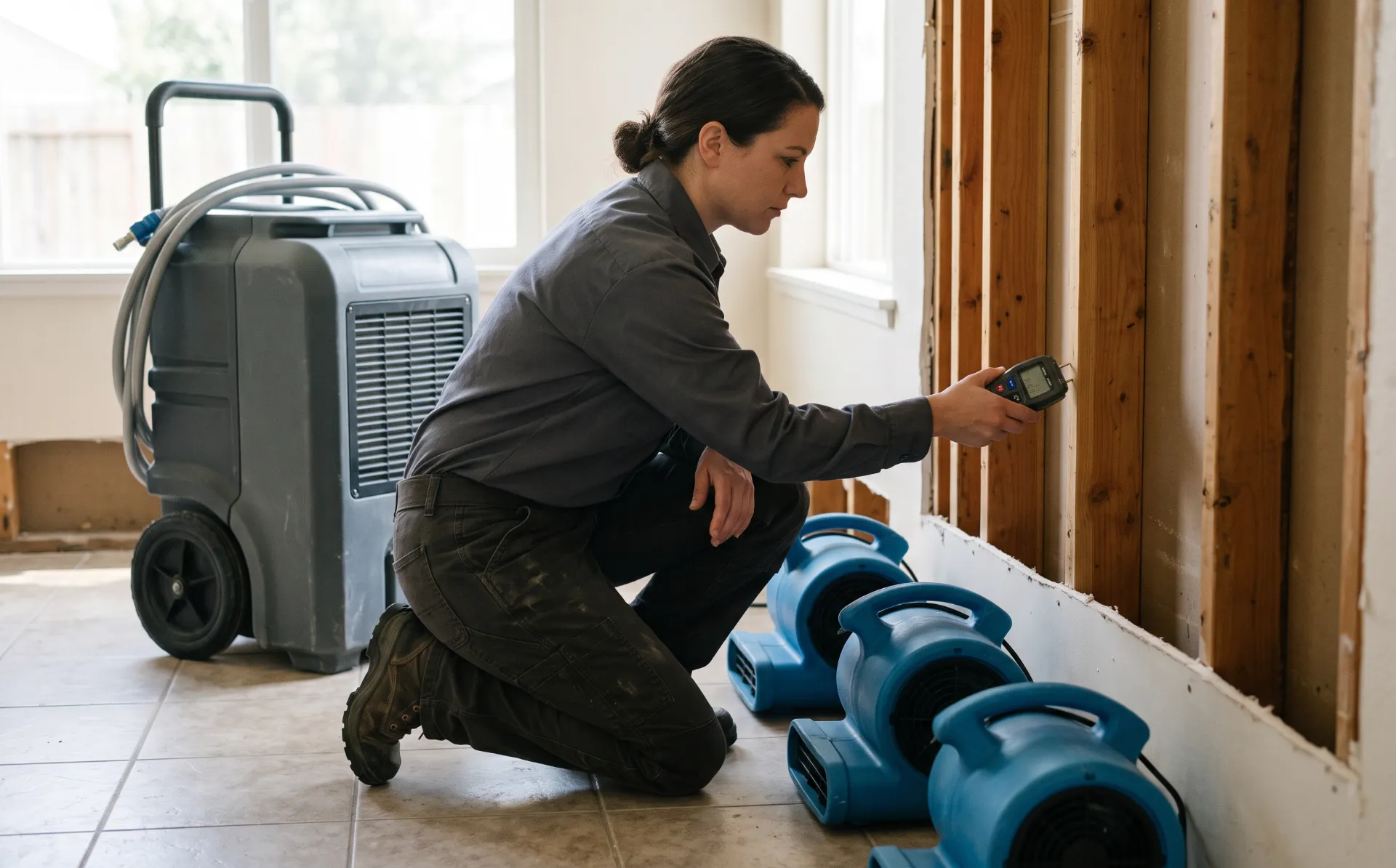
Organized per unit documentation helps property managers track building conditions across separate apartments, suites, or common areas and supports insurance claim reviews. Per unit files should include dated photographs, a moisture map showing wet areas, an individual drying log per unit, and equipment placement records. FEMA calls a properly completed drying log an industry standard. Monitoring readings logged at each visit along with itemized estimates and invoices complete the claim file.
- Keep dated photographs and a clear moisture map organized separately for every affected unit.
- FEMA calls a properly completed drying log an industry standard for tracking water mitigation.
- Include equipment records, logged moisture readings, itemized estimates, and final invoices.
Material removals and work authorizations
When saturated finishes cannot be dried in place safely, detailed removal records prevent disputes among property owners, associations, residents, and adjusters later on. Per unit files should list every removed material alongside the specific reason for removal and the name of the person who authorized the work. Dryline provides a written reason before cutting out wet materials such as drywall, insulation, carpet pad, baseboards, or laminate, and keeps signed work authorizations in the job file.
- List every removed building material per unit along with the written reason for removing it.
- Record who authorized mitigation work and retain signed work authorizations in unit records.
- Obtain a written reason before wet drywall, insulation, pad, trim, or laminate is cut out.
Resident notices, access, and relocation
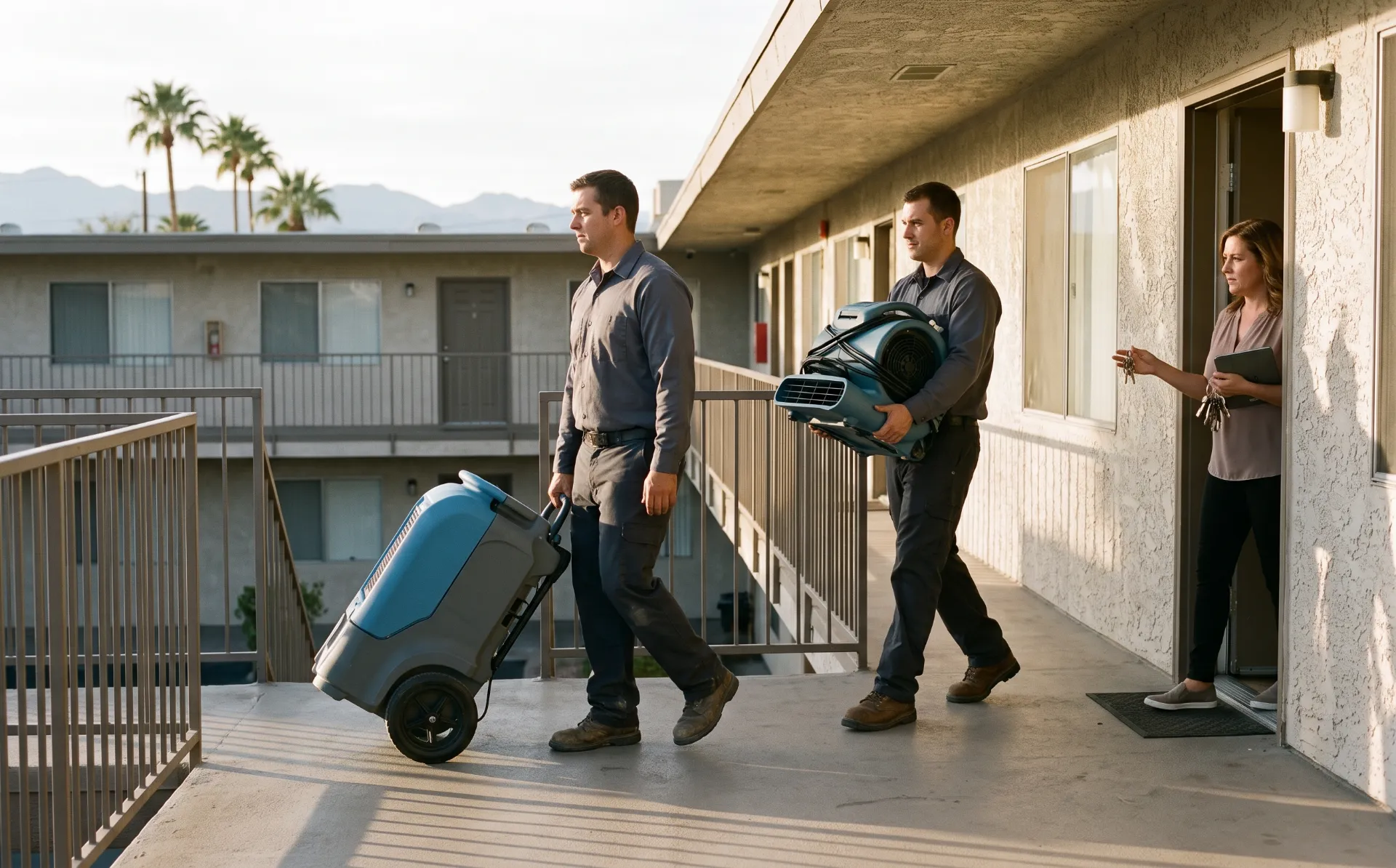
Coordinating multi-unit residential communities or leased spaces after water intrusion requires consistent communication logs and clear authority boundaries. Per unit documentation should record all resident notices sent as well as scheduled entry and monitoring access times for technicians. Restoration crews contact residents through the property manager unless another arrangement is agreed upon in advance, while any temporary relocation decisions remain between the property owner and resident.
- Log all resident notices and scheduled unit access times in each affected unit’s file.
- Coordinate resident communication through the property manager unless agreed otherwise.
- Temporary relocation decisions belong to the property owner and the resident, not crews.
Responsibility and insurance boundaries
Questions over repair duties and payment often come up when water crosses between separate units, shared assemblies, or managed common areas. Responsibility among a unit owner, an association, and a resident follows the lease and community governing documents, and restoration contractors cannot give legal advice or act as public adjusters. Insurance carriers decide policy coverage, adjusters can review records with permission without preferred vendor ties, and customers owe any deductible.
- Responsibility among owner, association, and resident follows leases and governing documents.
- Contractors cannot offer legal advice or public adjusting, and insurers decide claim coverage.
- Deductibles are never waived or absorbed, and uncovered items remain the customer’s duty.
Priority Response and scope limits
Property managers and associations can organize vendor files and emergency procedures before leaks occur at no cost, with no contract or retainer and no promised arrival time. Understanding trade boundaries also keeps multi-unit repairs moving smoothly without scope confusion. Water mitigation crews do not perform plumbing pipe repair, permanent roof repair, electrical work, tree removal, structural engineering, or mold testing, and no one can confirm building safety over the phone.
- Plumbing pipe repair, permanent roofing, and electrical work go to licensed specialty trades.
- Tree removal, structural engineering, and independent mold testing stay outside crew scope.
- No contractor can confirm over the phone that a wet building is safe to enter or occupy.
Reaching Dryline during and after-hours
Water leaks in managed properties often surface on nights, weekends, or holidays when regular property management offices are closed. On call mitigation crews respond outside standard business schedules to address active water and set up drying equipment once authorized. Before reconstruction or mitigation work begins, property managers receive an on-site inspection along with a clear written scope and estimate so owners, boards, and insurance adjusters can review planned work per unit.
- On call crews handle active water events across nights, weekends, and holiday schedules.
- An on-site inspection precedes written scopes and estimates so managers can review planned work.
- Separating scope records by unit helps owners, boards, and adjusters review multi-unit claims.
What to remember
Organizing separate unit files for visual records, drying logs, removal approvals, and resident notices keeps owners, managers, and adjusters aligned under governing rules. If water is coming in now, call for help.